Over 50 percent of American decks are over twenty years old and at higher risk for hidden safety issues. Neglecting regular inspection can lead to unexpected injuries and costly repairs, especially as weather can quickly wear down even well-constructed decks. By learning which tools and techniques professional inspectors use, you can confidently identify problems before they become dangerous and keep your outdoor space secure for everyone.
Table of Contents
- Step 1: Gather Essential Tools And Inspection Materials
- Step 2: Assess Structural Supports And Ledger Connections
- Step 3: Inspect Decking Boards And Surface Fasteners
- Step 4: Evaluate Railings, Stairs, And Safety Features
- Step 5: Test For Stability And Repair Hazards
Quick Summary
| Important Insight | Explanation |
|---|---|
| 1. Gather essential inspection tools | Assemble a tape measure, flashlight, moisture meter, and safety gear for a thorough deck safety inspection. |
| 2. Inspect ledger connections carefully | Check for wood rot, corrosion, or separation at ledger board connections to ensure structural integrity. |
| 3. Examine decking boards and fasteners | Look for deterioration like cracking or loose boards, and test fasteners for stability to prevent safety hazards. |
| 4. Assess railings and stairs | Verify stability, secure attachments, and proper height of railings, and ensure stairs are not uneven or rotting. |
| 5. Conduct stability testing | Walk across the deck, checking for soft spots or unusual movements, and prioritize repairs if any instability is detected. |
Step 1: Gather Essential Tools and Inspection Materials
Preparing for a thorough deck safety inspection requires assembling the right tools and equipment. Professional inspectors recommend gathering specific materials that will help you comprehensively assess your deck’s structural integrity and potential safety risks. According to the North American Deck and Railing Association’s Deck Evaluation Guide, having the proper tools is crucial for an effective inspection.
Your essential toolkit should include a reliable tape measure (25 feet recommended), flashlight, protective gloves, safety glasses, moisture meter, screwdriver, hammer, ladder, and notebook for documentation. The screwdriver will help you probe wood for soft spots or decay, while the moisture meter can detect hidden moisture problems that might compromise structural strength. A sturdy ladder allows you to inspect hard-to-reach areas like connection points and overhead beams. InterNACHI’s deck inspection guidelines emphasize using personal protective equipment and maintaining careful documentation throughout your assessment.
One critical tip: Always wear closed-toe shoes with good traction and work gloves during your inspection. Uneven or potentially weak deck surfaces can present unexpected hazards, so maintaining personal safety is just as important as evaluating the deck’s condition. Your next step will involve a systematic walkthrough examination of the entire deck structure, checking each component for potential issues.
Step 2: Assess Structural Supports and Ledger Connections
The ledger connection represents the most critical point of deck structural integrity, serving as the primary attachment between your deck and house frame. According to the North American Deck and Railing Association’s Deck Evaluation Guide, thoroughly examining these connections can prevent potential catastrophic structural failures that might compromise your deck’s safety.
Carefully inspect the ledger board for signs of wood rot, insect damage, or improper fastening. Look for corroded or missing bolts and examine the connection points where the ledger meets the house wall. Currituck County’s Deck Safety Inspection Guide recommends checking for adequate flashing and ensuring no water penetration exists between the ledger and house wall. Pay special attention to signs of water damage, wood deterioration, or separation between the ledger board and house frame. Use a screwdriver to gently probe wooden surfaces for soft spots or signs of decay.
A critical warning: Any significant separation, extensive rot, or compromised fasteners require immediate professional consultation. Structural support failures can lead to sudden deck collapse, posing serious safety risks. Your next step will involve carefully examining individual support posts and their connection points to ensure complete structural stability.
Step 3: Inspect Decking Boards and Surface Fasteners
Examining your deck’s surface and fasteners is a critical step in ensuring overall structural safety and longevity. According to the North American Deck and Railing Association’s Deck Evaluation Guide, systematic inspection of decking boards can reveal potential safety hazards before they become serious structural problems.

Begin by visually scanning the entire deck surface for signs of deterioration such as cracking, warping, splintering, or loose boards. Check each board individually by walking across the surface and applying gentle pressure to identify any soft spots or areas of significant movement. Pay close attention to fastener conditions checking for signs of rust, loosening, or corrosion. Use a screwdriver to test the stability of each fastener connections gently probing around nail and screw heads to ensure they remain securely embedded. Look for signs of wood rot around fastener points which can indicate moisture penetration and potential structural weakening.
A critical warning: Any board that shows significant decay, extensive cracking, or has multiple loose fasteners should be replaced immediately. Deck contractors in Massachusetts can provide professional assessment if you discover extensive damage. Your next step will involve carefully examining the railings and stairs to complete your comprehensive deck safety inspection.
Step 4: Evaluate Railings, Stairs, and Safety Features
According to the North American Deck and Railing Association’s Deck Evaluation Guide, comprehensive safety assessment of railings and stairs is crucial for preventing potential accidents and ensuring structural integrity. This step focuses on systematically examining the critical safety components that protect deck users from falls and structural failures.
Carefully inspect all railings by checking for stability, proper height, and secure attachment points. Apply moderate pressure to each railing section to test for any wobbling or movement that might indicate loose connections. Measure the distance between balusters to confirm they meet current safety standards typically requiring no more than 4 inches of spacing to prevent children from slipping through. For stairs, examine each tread and riser for signs of rot, cracking, or uneven surfaces. Verify that stair treads are securely fastened and provide consistent depth and height across all steps. Pay special attention to handrail connections ensuring they can support an average adult’s weight without flexing or coming loose.
Home safety for seniors in Massachusetts becomes particularly critical when deck safety is compromised. A critical warning: Any railing that moves more than a quarter inch when pressure is applied or shows significant wood deterioration should be professionally repaired or replaced immediately. Unstable railings and stairs represent serious fall risks that can lead to severe injuries. Your next step will involve documenting your findings and determining which repairs are most urgent for maintaining a safe outdoor living space.
Step 5: Test for Stability and Repair Hazards
According to the North American Deck and Railing Association’s Deck Evaluation Guide, comprehensive stability testing is crucial for identifying potential structural weaknesses before they become serious safety risks. This step involves a systematic approach to assessing your deck’s overall structural integrity and identifying areas that require immediate attention.
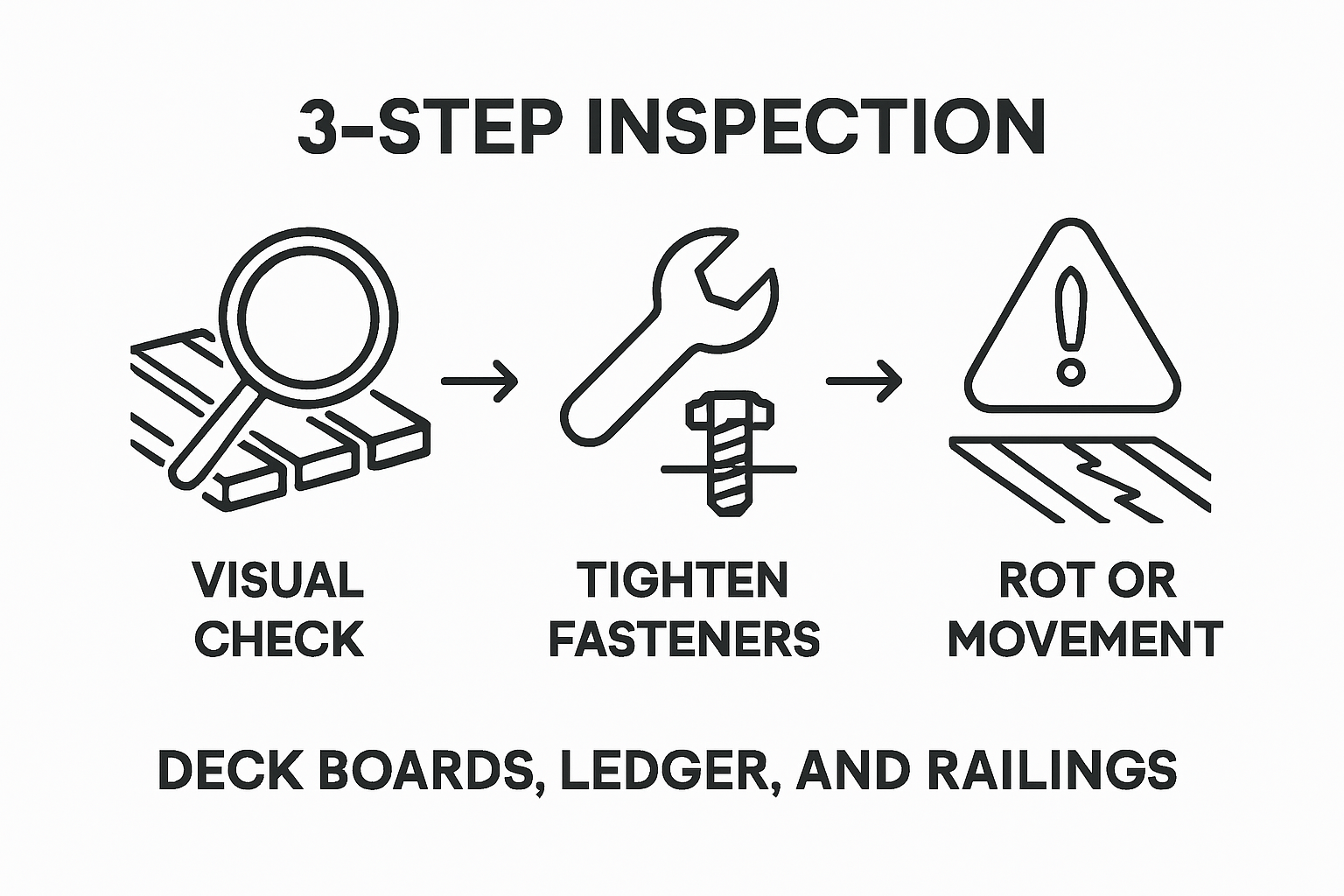
Begin by walking across the entire deck surface, paying close attention to any areas that feel soft, springy, or create unusual movement. Apply controlled pressure to different sections of the deck framework, checking for signs of excessive flexing or unexpected movement. Currituck County’s Deck Safety Inspection Guide recommends gently shaking support posts and railings to detect any instability. Listen for creaking sounds or observe any slight movements that might indicate loose connections or underlying structural damage. Focus on key stress points such as ledger board attachments, support beam connections, and areas where different structural components meet.
A critical warning: Any noticeable movement greater than a quarter inch, unusual sounds during pressure testing, or visible signs of structural compromise require immediate professional evaluation. Structural instability can lead to sudden and catastrophic deck failure, posing serious risks to anyone using the outdoor space. Your next step will involve carefully documenting all findings and prioritizing repairs to ensure the continued safety of your deck.
Ensure Your Massachusetts Deck Stands Strong and Safe Today
Deck safety inspections reveal critical risks like ledger board rot, loose fasteners, and unstable railings that can threaten your family’s security and peace of mind. If your deck shows signs of wear or structural weakness following this guide, don’t wait for a dangerous accident to happen. Protect your home and loved ones by addressing these vulnerabilities with trusted professionals who understand local conditions.
Discover how Home Maintenance | Sabatalo Contracting can help extend the life and safety of your deck with expert repairs and upgrades. Every homeowner deserves a safe outdoor space they can enjoy confidently.

Take action now by visiting Sabatalo Contracting to request a consultation. Our skilled team specializes in delivering durable, quality craftsmanship backed by years of Massachusetts expertise. Let us help you protect and enhance your home’s exterior while ensuring your deck remains a safe haven for years to come.
Frequently Asked Questions
What tools do I need for a deck safety inspection?
To conduct a thorough deck safety inspection, gather essential tools such as a tape measure, flashlight, moisture meter, screwdriver, hammer, ladder, and protective gear like gloves and safety glasses. Create a checklist with these items to ensure you have everything you need before starting your inspection.
How do I assess the structural supports and ledger connections on my deck?
Start by inspecting the ledger board for signs of rot, insect damage, or loose connections. Look for corroded bolts and ensure proper flashing to prevent water penetration. Document any damage and consider consulting a professional if you find significant issues.
What are the signs of potential hazards in decking boards?
Examine the decking boards for cracking, warping, or loose boards. Walk across the surface while applying pressure, and check fasteners for rust or looseness. If you find any deteriorated boards, plan to replace them promptly to ensure safety.
How can I evaluate the safety of railings and stairs on my deck?
Check all railings for stability and secure attachment by applying pressure to different sections. Measure the spacing between balusters to ensure it complies with safety standards. If you notice any unsafe conditions, prioritize repairs or replacements before use.
What should I do if I find structural instability during my inspection?
If you detect noticeable movement or creaking sounds while testing stability, take immediate action to document these findings. Contact a professional for a comprehensive evaluation before allowing people to use the deck, as this could prevent potential accidents.
How often should I perform a deck safety inspection?
Aim to conduct a deck safety inspection at least once a year or after severe weather events. Regularly assess the condition of your deck to address any issues early and maintain a safe outdoor space for family and guests.
Recommended
- 7 Steps to a Seasonal Home Maintenance Checklist for MA Owners | Sabatalo Contracting
- 7 Essential Home Safety Tips for Seniors in Massachusetts | Sabatalo Contracting
- Annual Roof Inspections in Massachusetts: A 2025 Guide for Homeowners | Sabatalo Contracting
- 7 Essential Door Installation Tips for Massachusetts Homeowners | Sabatalo Contracting
- Security Compliance for Door Hardware: Meeting Safety Laws – A To Z Locksmith Inc
