
Every Massachusetts homeowner with a vision for a refreshed exterior knows the challenge begins with choosing the perfect paint color. The right palette boosts curb appeal and can increase property value, but getting it right goes far beyond picking a favorite shade. By evaluating your home’s architectural features and understanding how different materials influence color appearance, you can create a harmonious look that respects both character and local context. Discover strategies for making informed choices that ensure lasting beauty and neighborhood harmony.
Table of Contents
- Step 1: Assess Your Home’s Exterior Features
- Step 2: Consider Neighborhood and Environmental Factors
- Step 3: Select a Harmonious Color Palette
- Step 4: Test Your Chosen Colors on Exterior Surfaces
- Step 5: Confirm Color Choices for Lasting Satisfaction
Quick Summary
| Key Point | Explanation |
|---|---|
| 1. Assess existing exterior features | Evaluate architectural elements and materials to inform color choices effectively. |
| 2. Consider neighborhood aesthetics | Ensure your color selections align with local styles and community guidelines for cohesion. |
| 3. Test colors on surfaces | Apply large samples directly onto your home to observe how colors react under different lighting. |
| 4. Choose durable, long-lasting paints | Select high-performance paint that offers fade resistance and weather protection for longevity. |
| 5. Create a harmonious color palette | Use strategic color combinations to enhance visual unity and resonate with your home’s design. |
Step 1: Assess Your Home’s Exterior Features
Choosing the perfect exterior color starts with a comprehensive evaluation of your home’s architectural features. Understanding how color interacts with different surfaces and architectural styles is crucial for creating a harmonious and visually appealing look that enhances your property’s character.
Begin by conducting a detailed survey of your home’s exterior components. Identifying surface materials is the foundational step in selecting appropriate colors. Look carefully at these key elements:
- Brick or stone foundations
- Wood siding or trim
- Roofing material and color
- Window frames and architectural details
- Existing landscaping and surrounding environment
Each material reflects and absorbs color differently, which means the same paint shade can appear dramatically different depending on the surface. Brick and stone surfaces, for instance, have natural textures that interact uniquely with paint colors. Wood surfaces, meanwhile, might require specific preparation and color considerations to maintain their integrity.
Here’s a quick comparison of how common exterior materials interact with paint colors:
| Surface Material | Typical Color Appearance | Key Consideration |
|---|---|---|
| Brick or Stone | Muted, earthy tones | Natural texture affects hue |
| Wood Siding | True to paint sample | Needs proper prep, priming |
| Metal/Aluminum | Enhanced color richness | Requires weatherproof paint |
| Stucco | Subtle shade variations | Porous, colors may lighten |
| Vinyl Siding | Limited color adherence | Needs vinyl-safe formulas |
Historic homes demand special attention. Historic architectural styles often have traditional color palettes that respect the original design. If you own an older home, research its architectural period to select colors that complement its inherent character.
Pro tip: Take detailed photographs of your home’s exterior in different lighting conditions to help you accurately assess potential color interactions and test paint samples.
Step 2: Consider Neighborhood and Environmental Factors
Selecting an exterior home color isn’t just about personal preference – it’s about creating harmony within your broader neighborhood and environmental context. Your color choice impacts not only your home’s aesthetic but also contributes to the overall community visual landscape.
Sustainable neighborhood design requires thoughtful consideration of several critical environmental factors. Consider these key elements when making your color selection:
- Local architectural styles and color palettes
- Climate and sunlight exposure
- Heat reflection and energy efficiency
- Surrounding landscape and vegetation
- Neighborhood aesthetic guidelines
Your color choice can significantly influence how your home interacts with its environment. In areas with intense sunlight, lighter colors might help reduce heat absorption, while in cooler regions, warmer tones could provide visual warmth. Neighborhood environmental factors play a crucial role in determining colors that not only look attractive but also contribute to community well-being.

Municipalities and homeowners associations often have specific guidelines about exterior colors. Research local regulations to ensure your selected palette complies with community standards while still expressing your personal style.
Pro tip: Create a color board with swatches photographed against your actual home and neighborhood background to visualize how the colors will truly appear in context.
Step 3: Select a Harmonious Color Palette
Choosing an exterior color palette is more than just picking a few shades you like – it’s about creating a sophisticated visual harmony that elevates your home’s aesthetic and emotional impact. The right color combination can transform your property from ordinary to extraordinary.
Color harmony principles provide a scientific approach to selecting colors that work beautifully together. Consider these strategic approaches to developing your palette:
- Complementary color schemes (opposite colors on the wheel)
- Analogous color ranges (colors next to each other)
- Triadic color combinations (evenly spaced colors)
- Monochromatic variations (different shades of one color)
- Neutral base with accent colors
Understanding color temperature and visual balance is crucial. Warm tones like terracotta and deep browns can create a welcoming feel, while cooler blues and grays offer a more modern, crisp appearance. Color harmony concepts help guide selections that create visual unity and emotional resonance.
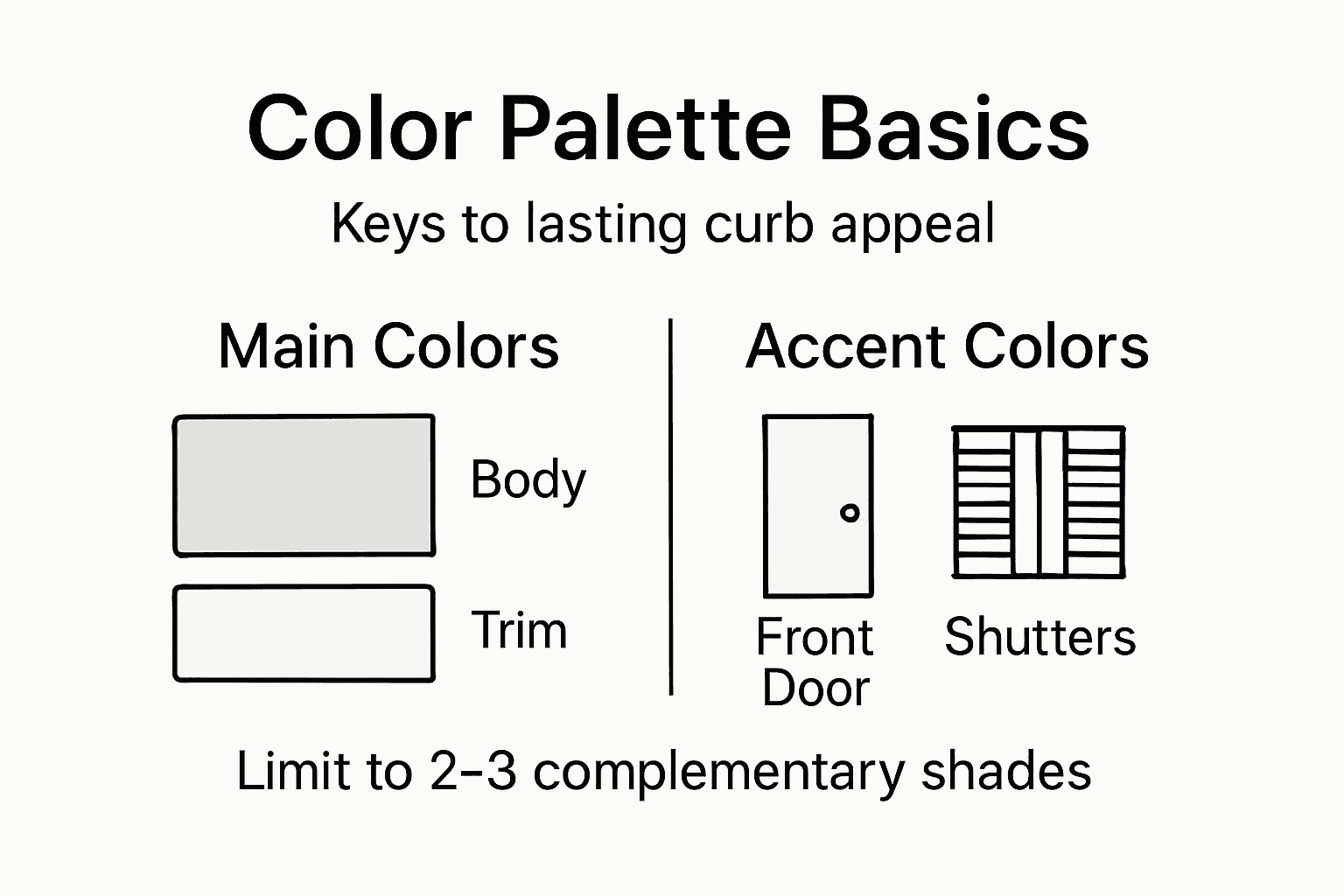
When developing your palette, aim for a primary color that covers 60-70% of your exterior, a secondary color for 20-30% of architectural details, and an accent color for 10% to create visual interest. This balanced approach ensures a professional, cohesive look that enhances your home’s architectural features.
The following table summarizes key methods for creating a harmonious color palette for exteriors:
| Color Strategy | Visual Effect | Ideal For |
|---|---|---|
| Complementary | Strong, dynamic contrast | Modern or eclectic homes |
| Analogous | Calm, unified look | Traditional designs |
| Triadic | Balanced, lively feel | Creative expression |
| Monochromatic | Sophisticated simplicity | Minimalist exteriors |
| Neutrals w/ Accents | Subtle elegance | Homes with bold features |
Pro tip: Purchase large poster-sized color samples and tape them directly on your home’s exterior to see how colors interact with natural light throughout different times of day.
Step 4: Test Your Chosen Colors on Exterior Surfaces
Testing your selected exterior colors is a critical step that bridges your vision with reality. Before committing to a full paint job, you’ll want to understand exactly how those carefully chosen colors will look on your home’s actual surfaces.
Paint application standards provide professional guidance for thorough color testing. Follow these strategic approaches to ensure your color selection looks perfect:
- Apply large paint samples directly on exterior walls
- Test colors in multiple lighting conditions
- Observe color interactions with existing architectural features
- Check how colors appear at different times of day
- Examine color performance under various weather conditions
Your testing process should simulate real-world conditions. Large sample boards are essential for accurate assessment. Consumer testing recommendations suggest painting sections at least 2-3 square feet to get a comprehensive view of how colors truly perform.
Pay close attention to how colors shift throughout the day. Sunlight, shade, and surrounding landscape can dramatically alter a color’s appearance. What looks perfect in morning light might appear completely different by afternoon or evening.
Pro tip: Take digital photos of your test patches at different times of day to create a comprehensive color comparison record that you can review side by side.
Step 5: Confirm Color Choices for Lasting Satisfaction
Selecting exterior paint colors is an art and science that requires careful consideration beyond initial visual appeal. Your goal is to choose colors that will look stunning today and continue to enhance your home’s character for years to come.
Historic color preservation techniques emphasize the importance of selecting colors that respect your home’s architectural heritage. Consider these critical factors for long-term satisfaction:
- Paint durability and fade resistance
- Pigment quality and color retention
- Compatibility with existing architectural features
- Maintenance requirements
- Potential future property value impact
Professional painters recommend looking beyond immediate aesthetics. Paint quality matters tremendously. Consumer paint selection strategies suggest investing in high-performance exterior paints that offer superior protection against weathering, UV rays, and environmental stress.
Remember that colors evolve over time. What looks perfect today might change with weathering, so choose timeless hues that will gracefully age with your home. Consider consulting with local color experts who understand regional architectural styles and environmental conditions.
Pro tip: Request manufacturer color performance data and warranty information to ensure your chosen paint will maintain its vibrant appearance for the longest possible time.
Enhance Your Home’s Curb Appeal with Expert Exterior Color and Siding Solutions
Choosing the right exterior colors can feel overwhelming given the many factors to consider such as material textures, neighborhood harmony, and long-term durability. This article highlights how selecting harmonious palettes and testing colors carefully can transform your home’s appearance and value while respecting its architectural character. At Sabatalo Contracting, we understand these challenges and specialize in turning your vision into reality with professional expertise and personalized service.
Whether you are updating your siding to complement your new color palette or starting a full exterior upgrade, our team provides expert guidance to ensure lasting satisfaction. We emphasize craftsmanship, energy efficiency, and color longevity to protect and beautify your home. Explore our comprehensive Siding | Sabatalo Contracting services to see how we can help you achieve perfect exterior harmony.

Ready to make a bold impression that lasts with a color selection and siding transformation tailored to your Massachusetts home? Visit Sabatalo Contracting today to request a consultation and take the first step toward a stunning and durable exterior upgrade that enhances your curb appeal for years to come.
Frequently Asked Questions
How can I assess my home’s exterior features before choosing colors?
Start by conducting a detailed survey of your home’s exterior elements, such as siding, roofing, and landscaping. Document materials and colors to determine how they will interact with your potential paint choices.
What environmental factors should I consider when selecting home colors?
Consider local architectural styles, climate conditions, and surrounding vegetation when selecting colors. Being aware of your neighborhood’s aesthetic and community guidelines can help you make a choice that blends well with the environment.
How do I create a harmonious color palette for my home?
Develop a color palette by utilizing color harmony principles, such as complementary or analogous schemes. Aim for a primary color that covers 60–70% of your home’s exterior, a secondary color for 20–30%, and an accent color for 10%.
What is the best way to test chosen paint colors on my home?
Apply large paint samples directly to your exterior walls to see how colors interact with your specific surfaces. Test colors at different times of day to understand how light and weather conditions affect their appearance.
How can I ensure my color choices will look good for years to come?
Select high-quality, durable paints that offer fade resistance and good pigment quality. Research color performance data and ask for warranties to help ensure that the colors maintain their vibrancy long-term.
Why is it important to respect a home’s architectural style when choosing colors?
Historic homes often have traditional color palettes that should complement their original design. Research your home’s architectural period to select colors that enhance its character without detracting from its heritage.
Recommended
- How to Clean Siding on House: Easy Tips for a Fresh Look | Sabatalo Contracting
- How to Increase Home Value with Exterior Upgrades | Sabatalo Contracting
- Exterior Doors in Massachusetts | Sabatalo Contracting
- How to Plan a Remodel for Exterior Home Upgrades | Sabatalo Contracting
- Bold Colour Choices to Make People Notice
