Roof replacement is one of the biggest investments Massachusetts homeowners face, and the numbers prove it. A new roof installation in Massachusetts typically takes just 2 to 5 days, even with our wild weather swings and strict local codes. Most people expect endless delays and hidden costs from such a major project. Surprise. The real difference-maker is not the timeline or the price, but the choice of material. Pick wrong and you lose out on energy savings and long-term durability no matter how fast the job gets done.
Table of Contents
- Understanding The Roof Replacement Process Steps
- Choosing The Right Roofing Materials In Massachusetts
- What To Expect During Your Roof Replacement Project
- Local Tips For A Smooth Roof Replacement Experience
Quick Summary
| Takeaway | Explanation |
|---|---|
| Initial Roof Assessment is Crucial | Homeowners should begin with a professional roof inspection to identify damage and structural concerns before proceeding with replacement. |
| Select Climate-Appropriate Materials | Choose roofing materials that can withstand Massachusetts’ extreme weather, including temperature fluctuations, heavy snowfall, and wind resistance. |
| Understand the Installation Process | The roof replacement typically takes 2-5 days and involves several critical steps, including roof deck inspection, material installation, and final inspections to ensure code compliance. |
| Prepare Your Property | Before the project begins, clear outdoor spaces, protect sensitive landscaping, and secure items inside the home to minimize disruption and potential damage. |
| Stay Informed About Local Regulations | Ensure all necessary permits are obtained and that the contractor meets local building and safety standards during the replacement process. |
Understanding the Roof Replacement Process Steps
Roof replacement represents a critical home maintenance project that protects your property’s structural integrity and value. For Massachusetts homeowners, navigating this complex process requires careful planning and understanding of each essential step.
Initial Roof Assessment and Evaluation
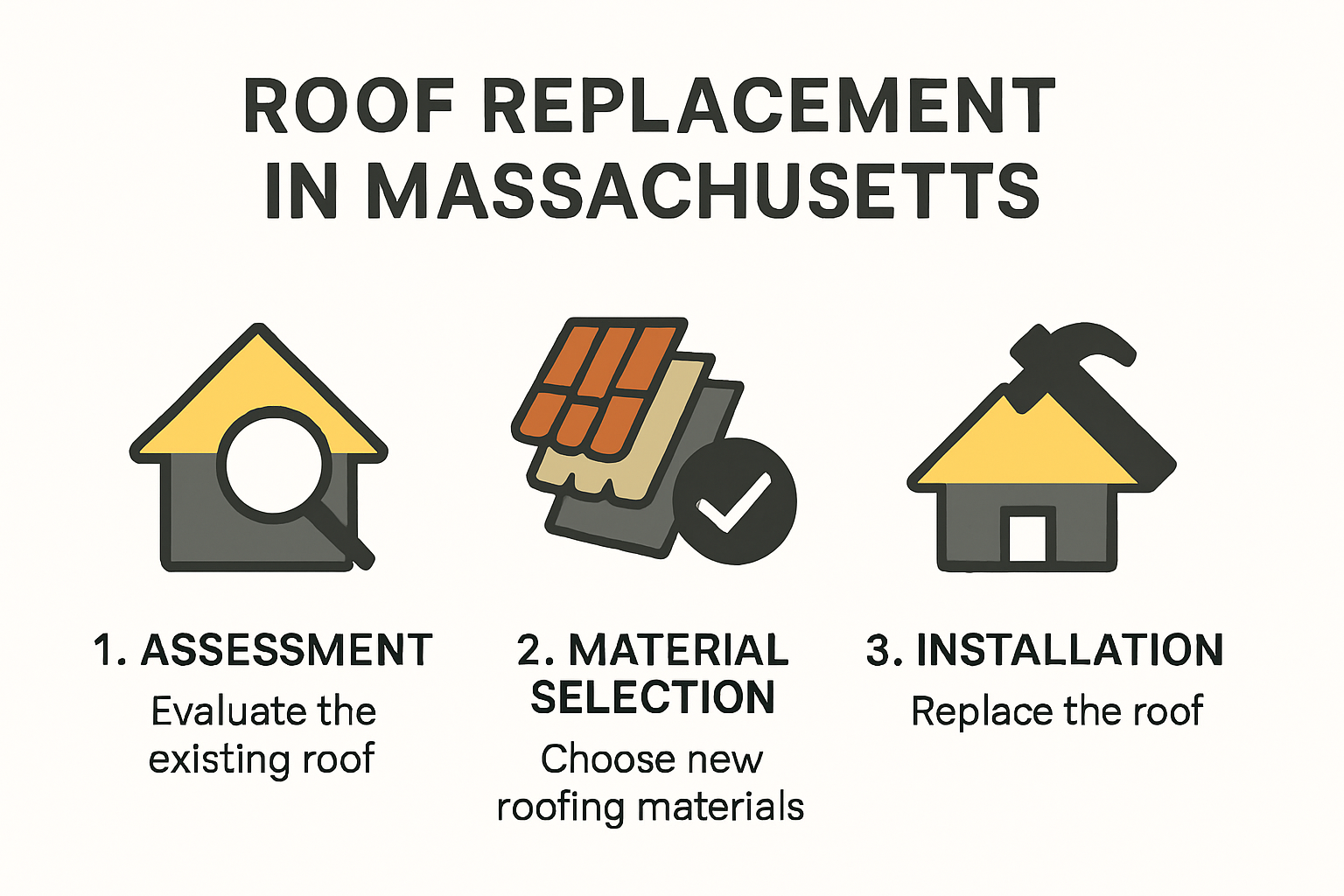
The roof replacement process begins with a comprehensive professional inspection. Experienced contractors will thoroughly examine your existing roof, looking for critical signs of damage such as water stains, missing or curled shingles, granule loss, and potential structural weaknesses. According to International Association of Certified Home Inspectors, most roofing professionals recommend a detailed evaluation every 3-5 years to catch potential issues early.
During this assessment, contractors will document:
- Roof Age: Determining the current roof’s lifespan and remaining durability
- Structural Condition: Identifying potential deck damage or underlying structural concerns
- Material Degradation: Examining shingle condition, flashing integrity, and overall roof performance
Preparation and Material Selection
After the initial assessment, homeowners work closely with contractors to select appropriate roofing materials. Massachusetts’ unique climate demands materials that can withstand significant temperature variations, heavy snowfall, and occasional severe storms. National Roofing Contractors Association recommends considering factors like:
- Local Climate Resistance: Materials must endure cold winters and humid summers
- Energy Efficiency: Selecting materials that provide adequate insulation
- Aesthetic Compatibility: Choosing roofing that complements your home’s architectural style
Typical roofing material options include asphalt shingles, metal roofing, and architectural composites. Each material offers unique benefits in terms of durability, cost, and performance specific to Massachusetts’ environmental conditions.
Installation and Final Inspection
The actual roof replacement involves multiple precise steps. Professional contractors will carefully remove existing roofing materials, inspect the underlying deck for potential damage, and prepare the surface for new installation. According to Massachusetts Building Code, specific guidelines must be followed during roof replacement to ensure structural integrity and safety.
The installation process typically includes:
- Removing old roofing materials
- Inspecting and repairing the roof deck
- Installing protective underlayment
- Applying new roofing materials according to manufacturer specifications
- Ensuring proper ventilation and flashing
- Conducting a final comprehensive inspection
A professional installation ensures your new roof meets all local building codes, provides maximum protection, and carries appropriate warranty coverage. Homeowners should expect the entire process to take 2-5 days, depending on the roof’s complexity and selected materials.
By understanding these critical steps, Massachusetts homeowners can approach roof replacement with confidence, knowing they are making a strategic investment in their property’s long-term protection and value.

Choosing the Right Roofing Materials in Massachusetts
Selecting the appropriate roofing materials for your Massachusetts home involves more than aesthetic considerations. The region’s unique climate and environmental challenges demand strategic material selection that balances durability, energy efficiency, and long-term performance.
Climate-Specific Material Considerations
Massachusetts experiences extreme weather variations that significantly impact roofing material performance. U.S. Climate Data reveals the state encounters temperature ranges from below zero in winter to humid summers exceeding 90°F, creating substantial stress on roofing systems.
Critical factors influencing material selection include:
- Temperature Fluctuation Resistance: Materials must withstand rapid temperature changes
- Snow and Ice Performance: Ability to prevent ice dam formation
- Wind Resistance: Capacity to remain intact during coastal and inland wind events
Roofing Material Performance Analysis
Different roofing materials offer unique advantages for Massachusetts homeowners. According to the Massachusetts State Building Code, specific performance standards must be met to ensure structural integrity.
Top roofing material options include:
- Asphalt Shingles: Most common and cost-effective option
- Affordable installation
- Moderate durability (20-30 year lifespan)
- Multiple color and style options
- Metal Roofing: Superior performance in challenging conditions
- Exceptional durability (50-70 year lifespan)
- Excellent snow and ice shedding capabilities
- Highly energy-efficient
- Architectural Composites: Advanced synthetic materials
- Enhanced weather resistance
- Lightweight design
- Improved insulation properties
Below is a table summarizing and comparing the main roofing material options for Massachusetts homeowners, based on durability, weather resistance, energy efficiency, and key features:
| Roofing Material | Durability | Snow/Ice & Wind Resistance | Energy Efficiency | Key Features |
|---|---|---|---|---|
| Asphalt Shingles | 20-30 years | Moderate | Fair | Affordable, widely available, multiple styles |
| Metal Roofing | 50-70 years | Excellent | High | Superior durability, energy savings, best for snow shedding |
| Architectural Composites | 30-50 years | High | High | Lightweight, advanced weather resistance, good insulation |
Energy Efficiency and Long-Term Value
The U.S. Environmental Protection Agency emphasizes the importance of energy-efficient roofing. In Massachusetts, selecting materials with high solar reflectance can reduce cooling costs by up to 25%. Metal and specialized composite roofing materials provide superior thermal performance, helping homeowners manage energy expenses throughout challenging seasonal transitions.
Additionally, Massachusetts homeowners should consider:
- Local building code compliance
- Manufacturer warranties
- Professional installation requirements
- Potential insurance premium implications
Investing in high-quality, climate-appropriate roofing materials represents a strategic decision that protects your home’s structural integrity, enhances energy efficiency, and provides long-term financial benefits. Consulting with local roofing professionals who understand Massachusetts-specific environmental challenges ensures you make an informed selection tailored to your specific property needs.
What to Expect During Your Roof Replacement Project
A roof replacement project represents a significant home improvement undertaking that requires careful planning and understanding. Massachusetts homeowners can navigate this complex process more confidently by knowing exactly what to anticipate from start to finish.
Project Preparation and Initial Steps
Before the first shingle is removed, comprehensive preparation is essential. Massachusetts Home Improvement Contractor (HIC) Program recommends homeowners take several critical preparatory actions. These include verifying the contractor’s credentials, ensuring proper licensing, and understanding the project’s full scope.
Key preparation activities include:
- Documentation Review: Examining detailed written contracts
- Permit Verification: Confirming all necessary municipal permits
- Property Protection: Preparing your property for construction activity
Homeowners should plan for potential disruptions, such as noise, temporary access limitations, and the presence of construction equipment. Protecting landscaping, moving vehicles, and securing outdoor items becomes crucial during the roof replacement process.
Timeline and Project Execution
According to Massachusetts State Building Code, roof replacement projects must adhere to strict technical standards. The typical residential roof replacement in Massachusetts takes 2-5 days, depending on the home’s size, complexity, and selected materials.
The standard project workflow typically includes:
- Initial roof deck preparation
- Removing existing roofing materials
- Inspecting and repairing underlying structures
- Installing new underlayment and protective barriers
- Applying new roofing materials
- Final cleanup and comprehensive inspection
Below is a table outlining the standard steps involved in the Massachusetts roof replacement process and a brief description of each stage for easy reference:
| Step | Description |
|---|---|
| Initial deck preparation | Prepare roof deck, set up work area |
| Remove old materials | Strip existing shingles and underlayment |
| Structural inspection/repair | Check for damage, repair decking if needed |
| Install underlayment/barriers | Lay moisture & ice barriers, reinforce roof protection |
| Apply new roofing materials | Install shingles, metal, or composite roofing |
| Final cleanup & inspection | Remove debris, inspect for code compliance, warranty |
Professional contractors will establish a detailed project timeline, communicating expected milestones and potential challenges throughout the process.
Navigating Potential Challenges
Massachusetts Consumer Affairs and Business Regulation advises homeowners to be prepared for unexpected situations during roof replacement. Weather conditions, hidden structural damage, or material availability can impact project timelines and costs.
Important considerations include:
- Contingency Planning: Maintaining flexibility with project schedules
- Communication: Establishing clear channels with your roofing contractor
- Budget Management: Understanding potential additional costs
Homeowners should maintain open communication with their contractor, requesting regular updates and addressing any concerns promptly. A comprehensive written contract that outlines potential scenarios and change order processes helps mitigate misunderstandings.
By understanding the roof replacement process, Massachusetts homeowners can approach this significant home improvement project with confidence. Proper preparation, realistic expectations, and collaboration with experienced professionals ensure a successful roof replacement that protects your home for years to come.
Local Tips for a Smooth Roof Replacement Experience
Massachusetts homeowners understand that a roof replacement is more than a simple home improvement project—it’s a strategic investment in property protection and value. Navigating this complex process requires local knowledge, careful planning, and strategic insights specific to the region’s unique environmental challenges.
Preparing Your Property for Roof Replacement
Massachusetts Emergency Management Agency recommends comprehensive property preparation before roof replacement begins. Local contractors emphasize the importance of creating a clear workspace that allows efficient project execution while minimizing potential damage.
Essential preparation steps include:
- Exterior Clearance: Removing outdoor furniture, potted plants, and decorative items
- Vehicle Relocation: Parking vehicles away from the work zone
- Landscape Protection: Covering sensitive landscaping and garden areas
- Interior Precautions: Securing fragile items on walls and shelves that might be affected by construction vibrations
Homeowners should communicate closely with their roofing contractor to understand specific preparation requirements unique to their property’s layout and surrounding environment.
Navigating Local Regulations and Permits
Massachusetts State Building Code mandates specific requirements for roof replacement projects. According to local building regulations, homeowners must obtain appropriate permits and ensure all work complies with municipal guidelines.
Key regulatory considerations include:
- Permit Acquisition: Securing necessary municipal approvals before project commencement
- Contractor Verification: Confirming contractor holds valid Home Improvement Contractor (HIC) registration
- Code Compliance: Ensuring installation meets local building and safety standards
- Inspection Requirements: Scheduling mandatory inspections at critical project stages
Maximizing Long-Term Roof Performance
Mass Save Energy Efficiency Program highlights the importance of post-installation maintenance and strategic planning. Massachusetts’ extreme weather conditions demand proactive approaches to roof care and preservation.
Recommended strategies for long-term roof performance include:
- Seasonal Inspections: Conducting thorough roof evaluations in spring and fall
- Ventilation Management: Ensuring proper attic insulation and airflow
- Gutter Maintenance: Regular cleaning to prevent water damage and ice dam formation
- Professional Evaluations: Scheduling periodic professional assessments
By understanding these local nuances, Massachusetts homeowners can transform their roof replacement from a potential stress point into a smooth, strategic home improvement experience. Careful preparation, regulatory compliance, and proactive maintenance ensure your new roof provides maximum protection and value for years to come.
Remember that each home is unique, and consulting with local roofing professionals who understand Massachusetts’ specific environmental challenges remains the most reliable approach to a successful roof replacement project.
Frequently Asked Questions
What is the typical timeline for a roof replacement in Massachusetts?
A roof replacement in Massachusetts typically takes 2 to 5 days, depending on the complexity of the roof and selected materials.
How do I prepare my property for a roof replacement?
Before starting the roof replacement, clear outdoor spaces, relocate vehicles, protect landscaping, and secure fragile items inside your home.
What roofing materials are best for Massachusetts weather?
Materials like asphalt shingles, metal roofing, and architectural composites are recommended for Massachusetts due to their durability and ability to withstand extreme weather conditions.
Do I need a permit for roof replacement in Massachusetts?
Yes, homeowners must obtain the necessary permits, and ensure that the contractor complies with local building codes before starting the roof replacement project.
Tackle Massachusetts Roof Replacement Challenges with Sabatalo’s Local Expertise
Are you worried about stressful roof replacement, choosing the right materials for our unpredictable Massachusetts weather, or running into local code and permit headaches? You are not alone. This article highlighted the exact issues so many local homeowners face: how to protect your home, navigate strict regulations, and avoid costly mistakes when it comes time to upgrade your roof. The risks are real, but the right partner can turn uncertainty into confidence.
Experience the difference of having Sabatalo Contracting & Home Improvement on your side for your next roof replacement. Our team understands both the Massachusetts climate and local building codes, and our proven process makes each stage clear, from the first inspection to the final walkthrough. See real results in our portfolio gallery and discover why local homeowners trust our dedicated service. Do not settle for guesswork or hidden costs when protecting your home and boosting its value. Visit Sabatalo Contracting & Home Improvement today to request your free consultation. Your new roof starts now.
