Most American homeowners underestimate how much damage missing or faulty drip edge protection can cause. Studies show that improper roof water management leads to costly repairs for thousands of American houses each year. Understanding how drip edges work is more than a technical detail—it’s a crucial part of protecting your investment from water damage. This article breaks down the common myths and surprising facts every American homeowner needs to know before tackling roof maintenance or repairs.
Table of Contents
- Drip Edge Basics And Common Misunderstandings
- Types Of Drip Edge Used In Roofing
- How Drip Edges Protect Homes From Moisture
- Installation Methods And Massachusetts Building Codes
- Risks Of Skipping Or Improper Drip Edge Installation
Key Takeaways
| Point | Details |
|---|---|
| Drip Edge Functionality | Drip edges are essential for redirecting water away from critical roofing components to protect against moisture damage. |
| Types of Drip Edges | There are various profiles, including L-shaped, T-shaped, and F-style, tailored to specific roofing needs and climates. |
| Importance of Proper Installation | Adhering to installation guidelines is vital to prevent water intrusion and ensure long-term roof integrity. |
| Risks of Neglect | Skipping drip edge installation can lead to severe structural damage, costly repairs, and decreased property value. |
Drip Edge Basics and Common Misunderstandings
A drip edge is a critical yet often overlooked component of roof design that plays a significant role in protecting your home’s structural integrity. Installed along roof edges and eaves, these metal flashings serve as a strategic barrier against water damage and moisture intrusion.
Contrary to popular belief, drip edges are not merely decorative accessories but essential engineering elements that redirect water away from vulnerable areas of your roof. While not universally mandated by building codes, professional contractors strongly recommend their installation to prevent potential long-term structural damage. The primary functions of a drip edge include:
- Guiding water away from fascia boards
- Preventing wood rot and moisture penetration
- Protecting roof decking from water-related deterioration
- Enhancing overall roof system performance
Most homeowners misunderstand drip edges, assuming they are optional or unnecessary. In reality, these metal strips are precision-engineered to manage water flow and protect critical roof components. By extending slightly beyond the roof’s edge, drip edges create a controlled water discharge mechanism that prevents moisture from seeping underneath shingles or pooling near foundational structures. Professional roofers recognize that proper drip edge installation can significantly extend a roof’s lifespan and prevent costly water damage repairs.
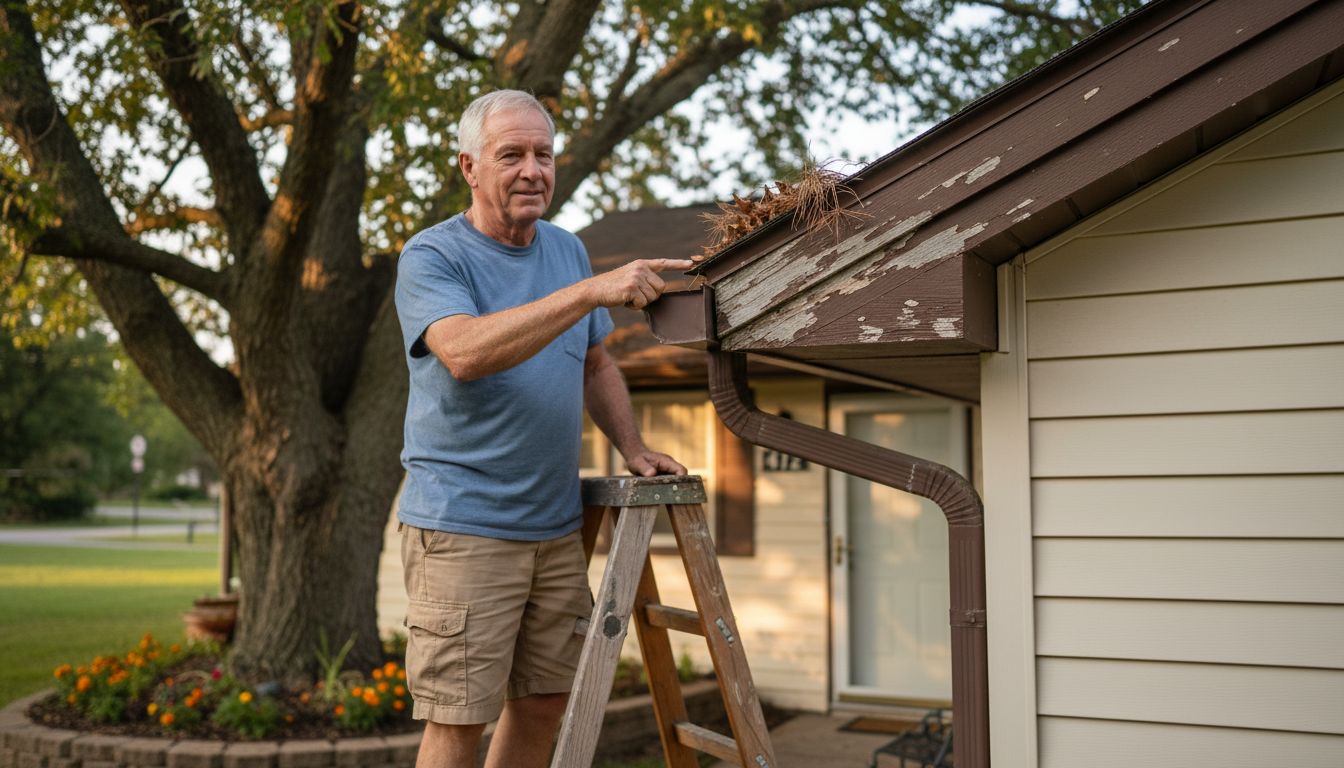
Understanding the nuanced role of drip edges requires recognizing their strategic placement. Typically installed at roof eaves and rake edges, they work in conjunction with underlayment to create a comprehensive water management system. Homeowners should view drip edges not as an additional expense but as a critical investment in their property’s long-term protection and structural integrity.
Types of Drip Edge Used in Roofing
Roofing professionals recognize multiple drip edge profiles that serve distinct purposes in water management and roof protection. Drip edges come in three primary configurations: L-shaped, T-shaped, and D-shaped designs, each engineered to address specific roofing challenges and environmental conditions.
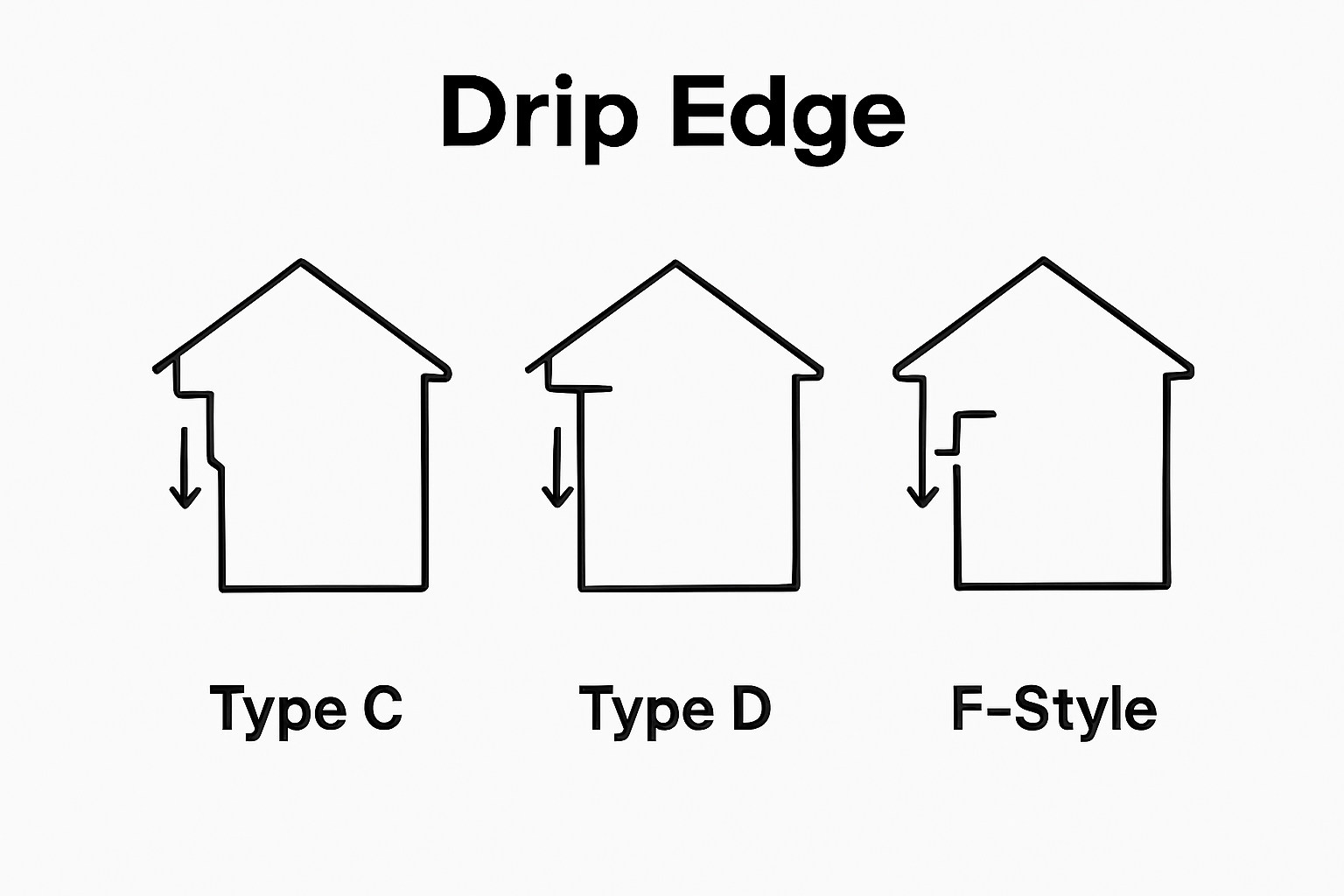
The most common drip edge types include Type C, Type D, and F-style, each offering unique advantages for water redirection and roof system integrity. Here’s a detailed breakdown of these profiles:
- L-Shaped (Type C) Drip Edge
- Basic 90-degree bend design
- Simple water drainage mechanism
- Most economical option
- Suitable for standard residential roofing
- T-Shaped (Type D) Drip Edge
- Incorporates a lower flange for enhanced protection
- Prevents wind-driven rain penetration
- Provides superior water shedding capabilities
- Recommended for areas with high wind and precipitation
- F-Style Drip Edge
- Designed for easier installation over existing shingles
- Offers superior water intrusion protection
- Provides flexible mounting options
- Ideal for roof retrofit and renovation projects
Choosing the right drip edge depends on specific roofing requirements, local climate conditions, and architectural design. Homeowners should consult professional roofing contractors to determine the most appropriate profile for their specific roof structure and environmental challenges. While each type offers unique benefits, the underlying goal remains consistent: protecting the roof’s structural integrity and preventing water-related damage.
Material selection is equally crucial when considering drip edge types. Corrosion-resistant materials like galvanized steel, aluminum, and copper ensure longevity and sustained performance. Professional installation is key, with experts recommending a minimum two-inch extension onto roof sheathing to maximize water management effectiveness.
How Drip Edges Protect Homes From Moisture
Moisture is a homeowner’s silent enemy, capable of causing extensive damage to a home’s structural integrity. Drip edges serve as a critical defensive barrier against water infiltration, strategically designed to redirect water away from vulnerable roof components and prevent potential long-term structural deterioration.
Proper installation of drip edges is fundamental in mitigating wood rot and moisture-related damage. These precision-engineered metal strips work by creating a controlled water discharge mechanism that prevents moisture from seeping underneath shingles and penetrating critical roof structures. The protective functions of drip edges extend far beyond simple water redirection:
- Preventing water from collecting near fascia boards
- Blocking moisture penetration into roof decking
- Reducing the risk of wood decay and structural weakness
- Protecting against wind-driven rain intrusion
- Extending overall roof system longevity
In high-wind regions, drip edges become even more critical. They act as a sophisticated water management system, channeling rainwater and melting snow away from the roof’s most vulnerable points. By creating a precise gap between the roof deck and the edge, these metal flashings ensure that water droplets are guided away from the underlying wooden structures, significantly reducing the potential for moisture-related damage.
Homeowners should view drip edges as an essential investment in their property’s long-term protection. While often overlooked, these small metal strips play an outsized role in preventing costly water damage, wood rot, and potential structural compromises. Professional installation by experienced contractors ensures that drip edges are positioned precisely to maximize their water-shedding capabilities and provide comprehensive moisture defense for your home.
Installation Methods and Massachusetts Building Codes
Massachusetts building codes provide specific guidelines for drip edge installation, reflecting the state’s unique environmental challenges and commitment to structural integrity. In high-wind zones throughout Massachusetts, precise installation methods are critical for roof protection, with detailed requirements that go beyond basic roofing practices.
Local building regulations mandate specific technical specifications for drip edge installation. The essential installation requirements include:
- Material Specifications
- Must be corrosion-resistant metal
- Minimum 2-inch extension onto roof sheathing
- ¼ to ½ inch overhang below sheathing edge
- Fastening Requirements
- Roofing nails spaced 8-10 inches apart
- Avoid nailing into vertical portions
- Mechanical fastening with maximum 4-inch spacing
- Placement Guidelines
- Installation at both roof eaves and gable rakes
- Proper overlap with roof sheathing
- Precise alignment to ensure water redirection
Massachusetts building codes recognize drip edges as a critical component of roof system integrity. Homeowners and contractors must adhere to these stringent guidelines to ensure proper water management, prevent moisture infiltration, and maintain the structural resilience of residential roofing systems. Professional installation becomes paramount, as even minor deviations can compromise the roof’s ability to protect against water damage and environmental stressors.
Ultimately, understanding and implementing these detailed installation methods is not just about code compliance. It represents a proactive approach to home maintenance, protecting your property from potential water-related damage and ensuring the long-term durability of your roofing system.
Risks of Skipping or Improper Drip Edge Installation
Homeowners who overlook drip edge installation are unknowingly exposing their properties to significant structural risks. Omitting drip edge flashing can create catastrophic moisture-related damage to roof structures, transforming what seems like a minor installation detail into a potential long-term financial burden.
Improper installation dramatically increases the likelihood of water penetration and subsequent structural deterioration. The most critical risks associated with neglecting or incorrectly installing drip edges include:
- Structural Damage Risks
- Accelerated wood rot in roof decking
- Compromised fascia board integrity
- Potential foundation moisture issues
- Increased risk of mold and mildew growth
- Water Intrusion Consequences
- Uncontrolled water seepage under shingles
- Potential ceiling and wall water damage
- Reduced roof system performance
- Increased vulnerability during extreme weather
- Long-Term Financial Implications
- Premature roof system failure
- Expensive structural repairs
- Reduced property value
- Potential voiding of roofing warranties
The financial and structural consequences of neglecting proper drip edge installation far outweigh the minimal upfront investment. Water is an incredibly destructive force, capable of silently compromising your home’s structural integrity over time. Professional roofers understand that drip edges are not optional accessories but critical components of a comprehensive roof protection strategy.
Ultimately, homeowners must recognize that seemingly minor installation details can have profound long-term implications. Investing in proper drip edge installation is not an expense but a strategic preventative measure that protects your most valuable asset – your home.
Protect Your Home with Expert Drip Edge Installation
Water damage and moisture intrusion pose serious threats to your home’s structure as detailed in our article on “What Is a Drip Edge and Why It Matters”. Improper or missing drip edges can lead to wood rot, compromised fascia boards, and costly repairs. You deserve peace of mind knowing your roof has the precise protection it needs against these risks.
Sabatalo Contracting & Home Improvement brings over 15 years of experience serving Massachusetts homeowners with durable roofing solutions tailored to local climates. We specialize in high-quality drip edge installation that meets Massachusetts building codes and prevents water penetration before it starts. Trust our expert team to enhance your roof’s performance and extend its lifespan with corrosion-resistant materials and professional craftsmanship.

Don’t wait until moisture damages your home. Visit Sabatalo Contracting & Home Improvement today to learn more and schedule a consultation. Protect your investment, improve your roof’s durability, and experience trusted service from a local expert. See how our comprehensive exterior services can guard your home against moisture and weather by exploring our offerings at Sabatalo Contracting & Home Improvement now.
Frequently Asked Questions
What is the purpose of a drip edge?
A drip edge is a metal flashing installed along roof edges to redirect water away from the roof and prevent moisture intrusion, protecting essential roof components from water damage.
How does improper installation of a drip edge affect my roof?
Improper installation can lead to water penetration, increased risk of wood rot, mold growth, and potential structural damage to the home, which may result in costly repairs.
What are the different types of drip edges?
The most common types of drip edges are L-shaped (Type C), T-shaped (Type D), and F-style. Each type is designed for specific roofing challenges, such as water redirection and protection against wind-driven rain.
Why should homeowners invest in drip edge installation?
Investing in drip edge installation is crucial for long-term protection against water damage, extending the lifespan of the roof, and maintaining the structural integrity of the home.
