Most American homeowners will face the reality that exterior siding will not last forever, especially with Massachusetts weather on the attack. A single storm can shave years off outdated siding, putting your house at risk for damage and energy loss. Residing brings more than a fresh look—it is an investment in your property’s durability, efficiency, and value. With so many choices and costs involved, knowing the basics can help you make the smartest decision for long-term protection.
Table of Contents
- Residing a House: Definition and Basics
- Popular Siding Materials and Price Ranges
- Factors That Influence Residing Costs in Massachusetts
- Local Labor Rates and Hidden Expenses
- Comparing Residing to Other Exterior Upgrades
Key Takeaways
| Point | Details |
|---|---|
| Understanding Residing | Residing involves applying new exterior materials to enhance a home’s protection and aesthetic, requiring careful planning and execution. |
| Material Selection | Popular siding options like vinyl, fiber cement, and wood vary in cost, durability, and maintenance, impacting the project’s overall effectiveness. |
| Cost Influencers | Factors such as home size, geographic location, and architectural complexity significantly affect residing costs in Massachusetts. |
| Comparative Benefits | Residing offers comprehensive protection and improved energy efficiency, making it a superior choice compared to other home upgrades like window replacement and painting. |
Residing a House: Definition and Basics
In home improvement, residing is more than just a simple term. It refers to the comprehensive process of applying new exterior material to cover and protect a home’s existing structure. When homeowners discuss residing, they’re talking about completely renewing the outer layer of their house, typically with materials like vinyl, fiber cement, wood, or aluminum siding.
The core concept of residing involves permanently establishing a protective covering for your home’s exterior. Unlike temporary repairs, residing represents a significant investment in your property’s longevity and aesthetic appeal. Homeowners choose to reside their houses for multiple reasons: improving energy efficiency, increasing property value, preventing structural damage, and enhancing overall curb appeal.
Understanding the technical aspects of residing requires recognizing its multifaceted nature. A proper residing project involves carefully removing old siding, inspecting the underlying structure for potential damage, preparing the surface, and then installing new exterior materials. This process demands precision and expertise, as each step impacts the home’s protection, insulation, and visual presentation.
- Key Components of Residing:
- Comprehensive exterior material replacement
- Structural assessment and preparation
- Installation of new protective covering
- Enhanced home performance and appearance
Pro Tip: Consult with local Massachusetts contractors who specialize in exterior renovations before starting your residing project to ensure you select materials best suited for New England’s unique climate conditions.
Popular Siding Materials and Price Ranges
Homeowners in Massachusetts have several excellent siding material options, each with unique characteristics, durability, and price points. Vinyl siding remains the most popular choice, offering affordability and low maintenance at approximately $2 to $7 per square foot. This budget-friendly option comes in numerous colors and styles, making it attractive for cost-conscious homeowners looking to refresh their exterior without significant investment.
Fiber cement siding represents a more premium option, providing superior durability for Massachusetts homes. Priced between $5 and $10 per square foot, this material offers exceptional resistance to harsh New England weather conditions, including extreme temperature fluctuations, heavy snow, and coastal humidity. Its composition of cement, sand, and cellulose fibers creates a robust protective layer that mimics traditional wood appearance while requiring minimal upkeep.
Wood siding offers classic aesthetic appeal but demands more maintenance and investment. Traditional wood options range from $6 to $12 per square foot, with premium woods like cedar commanding higher prices. Aluminum siding presents another alternative, typically costing $3 to $6 per square foot, offering lightweight protection and reasonable durability. Each material brings distinct advantages, making selection dependent on budget, architectural style, and long-term maintenance considerations.
Here’s a concise comparison of popular siding materials for Massachusetts homes:
| Siding Material | Weather Resistance | Maintenance Needs | Color & Style Variety |
|---|---|---|---|
| Vinyl | Good in moderate conditions | Low, occasional cleaning | Wide range, many textures |
| Fiber Cement | Excellent for harsh weather | Minimal, periodic painting | Moderate, wood-like options |
| Wood | Susceptible to rot and pests | High, requires sealing or staining | Classic, natural appearance |
| Aluminum | Good for coastal exposure | Low, may dent easily | Limited, mostly solid colors |
- Siding Material Price Comparison:
- Vinyl Siding: $2 – $7 per sq ft
- Fiber Cement: $5 – $10 per sq ft
- Wood Siding: $6 – $12 per sq ft
- Aluminum Siding: $3 – $6 per sq ft
Pro Tip: Always request multiple material samples and conduct on-site consultations to understand how different siding materials perform specifically in your local Massachusetts microclimate before making a final selection.
Factors That Influence Residing Costs in Massachusetts
The cost of residing a house in Massachusetts is influenced by several complex and interconnected factors that homeowners must carefully consider. Home size stands as the most fundamental determinant, with larger homes requiring more materials and labor, directly impacting overall project expenses. A typical Massachusetts home ranging from 1,500 to 2,500 square feet will experience significant variation in residing costs based on square footage alone.
Geographic location within Massachusetts plays a critical role in determining residing expenses. Coastal regions like Cape Cod and Martha’s Vineyard often require more durable materials that can withstand harsh maritime conditions, potentially increasing installation costs. Understanding regional weather impact helps homeowners make strategic renovation choices. Urban areas like Boston might also incur higher labor rates compared to rural western Massachusetts regions, adding another layer of cost complexity.
Additional cost factors include the condition of existing underlying structures, complexity of architectural design, and selected material quality. Homes with intricate architectural features such as multiple gables, dormers, or challenging structural configurations will require more intricate installation techniques. Some older Massachusetts homes might need extensive preparatory work, including structural repairs or insulation upgrades, which can substantially increase the total residing project budget.
- Key Cost Influencing Factors:
- Total home square footage
- Geographic location
- Existing structure condition
- Architectural complexity
- Material quality
- Labor market rates
- Seasonal installation timing
Pro Tip: Schedule your residing project during shoulder seasons like early spring or late fall to potentially negotiate better rates and avoid peak construction pricing in Massachusetts.
Local Labor Rates and Hidden Expenses
Local labor rates for residing projects in Massachusetts can vary significantly, with professional contractors typically charging between $40 and $80 per hour depending on the region and project complexity. Urban labor rates in metropolitan areas like Boston tend to be substantially higher compared to rural western Massachusetts communities, reflecting differences in living costs and market dynamics. Skilled siding installation professionals often command premium rates due to the specialized expertise required for precise exterior home renovations.

Unexpected expenses frequently emerge during residing projects, making comprehensive home assessments crucial before beginning work. Homeowners can mitigate financial surprises through thorough pre-installation inspections. Common hidden costs include structural repairs, underlying wood damage, insulation upgrades, and potential permit requirements that can add thousands of dollars to the initial project estimate. Massachusetts homes, especially those in coastal regions or with older construction, are particularly susceptible to these unforeseen expenses.
Additional labor-related expenses encompass preparation work, debris removal, and potential temporary housing costs during extensive renovations. Specialized architectural features like intricate trim work, multiple gables, or complex geometric designs can exponentially increase labor time and associated costs. Professional contractors often charge premium rates for navigating challenging structural configurations, with complexity-based surcharges ranging from 15% to 35% above standard installation rates.
- Potential Hidden Expenses:
- Structural repairs
- Wood rot remediation
- Insulation upgrades
- Permit acquisition costs
- Debris removal
- Temporary housing
- Architectural complexity surcharges
Pro Tip: Request detailed, written estimates from multiple contractors that explicitly outline potential additional costs and include comprehensive site assessments to prevent unexpected financial surprises during your residing project.
Comparing Residing to Other Exterior Upgrades
Homeowners considering exterior improvements must carefully evaluate residing against alternative renovation options. Window replacement and residing represent two distinct approaches to enhancing home protection and aesthetic appeal, with significant differences in cost, duration, and overall impact. While window upgrades typically range from $300 to $1,000 per window, a full residing project can transform an entire home’s exterior appearance and structural integrity.
Comprehensive exterior renovation strategies require understanding the unique benefits of each upgrade. Residing offers more extensive protection against environmental elements, potentially improving home insulation and energy efficiency more comprehensively than singular upgrades like painting or minor repairs. Roofing projects, another major exterior renovation, can cost between $5,000 to $15,000, often making residing a more holistic and potentially more cost-effective solution for comprehensive home improvement.
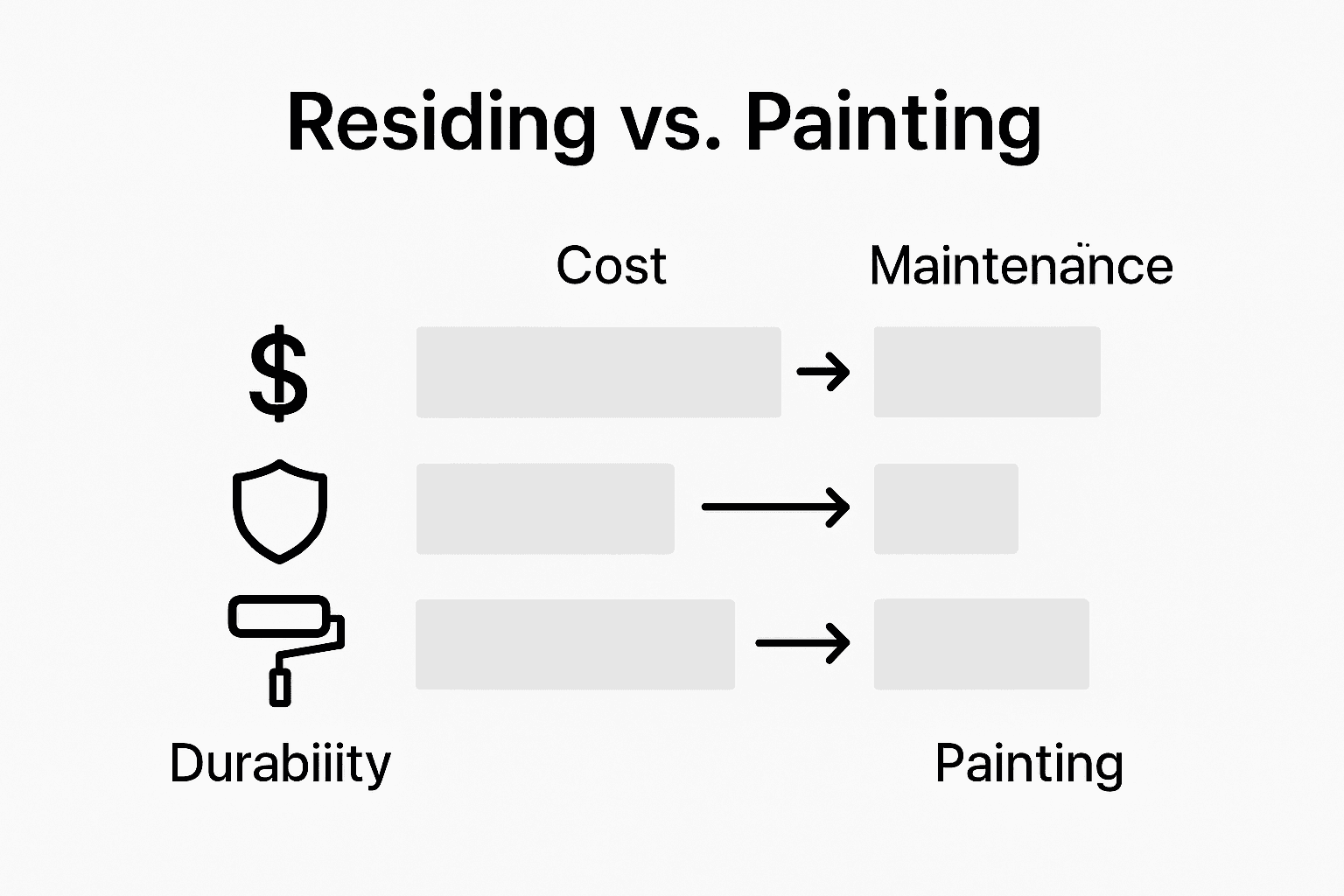
Each exterior upgrade provides distinct advantages. Painting offers a cosmetic refresh at lower costs but provides minimal structural protection. Window replacements improve energy efficiency and interior comfort but do not address broader exterior vulnerabilities. Residing stands out by simultaneously enhancing aesthetic appeal, structural integrity, insulation, and overall home value. Massachusetts homeowners must consider long-term performance, with residing potentially offering the most comprehensive protection against harsh New England weather conditions.
Compare the impact and benefits of various exterior home upgrades:
| Upgrade Type | Key Benefit | Typical Cost (Massachusetts) | Longevity/Impact |
|---|---|---|---|
| Residing | Full exterior protection | $8,000–$25,000+ | 20–50 years, major effect |
| Window Replacement | Improves energy efficiency | $300–$1,000 per window | 15–25 years, room comfort |
| Painting | Cosmetic refresh | $2,000–$7,000 | 5–10 years, minor impact |
| Roofing | Protects from leaks | $5,000–$15,000+ | 20–30 years, vital system |
| Gutter Installation | Water management | $1,000–$3,000 | 15–25 years, prevents damage |
- Comparative Exterior Upgrade Characteristics:
- Residing: Full exterior protection
- Window Replacement: Energy efficiency focus
- Painting: Cosmetic improvement
- Roofing: Structural top-layer protection
- Gutter Installation: Water management
Pro Tip: Prioritize a comprehensive home exterior assessment that evaluates multiple upgrade options simultaneously, allowing you to strategically sequence improvements for maximum long-term value and protection.
Secure Your Massachusetts Home with Expert Residing Services
Understanding the true cost and complexities of residing a house in Massachusetts can feel overwhelming. From choosing the right siding material to navigating hidden expenses and labor rates, homeowners face tough decisions that impact their home’s protection and value. If you want to avoid costly surprises and ensure your exterior upgrades are handled with precision and care, partnering with a trusted local contractor is essential. Sabatalo Contracting & Home Improvement offers over 15 years of experience specializing in durable, energy-efficient siding installations tailored for New England’s unique climate.
Our team understands the importance of a thorough inspection, transparent pricing, and quality craftsmanship highlighted in your home’s residing journey. Whether you need vinyl siding that balances affordability with style or fiber cement for superior weather resistance, we provide personalized recommendations that fit your budget and goals. Visit our main service page to explore how we protect and enhance your home’s exterior with skill and integrity. Dive deeper into preparing your home for renovations with our guidance on financing home improvements and energy audits to maximize your investment.
Take control of your residing project today and avoid unexpected costs by choosing a reliable Massachusetts contractor committed to excellence and customer satisfaction.
Are you ready to transform your home’s exterior with confidence and expert support?

Contact Sabatalo Contracting now to request a free consultation and detailed estimate tailored to your specific residing needs. Visit Sabatalo Contracting & Home Improvement and start protecting your home the right way.
Frequently Asked Questions
What is the average cost to reside a house?
The cost to reside a house in Massachusetts typically ranges from $8,000 to $25,000+, depending on factors like home size, material choice, and labor costs.
What factors influence the cost of residing a home?
Factors that influence the cost of residing a home include the total square footage, geographic location, existing structure condition, architectural complexity, and material quality.
What are the most popular siding materials for residing a home?
The most popular siding materials include vinyl, fiber cement, wood, and aluminum, each offering different durability levels and price ranges.
How can homeowners avoid hidden costs when residing their home?
Homeowners can avoid hidden costs by conducting thorough pre-installation inspections, obtaining detailed estimates from contractors, and being aware of potential structural repairs or upgrades needed.
Recommended
- Roof Replacement Process for Massachusetts Homeowners 2025 | Sabatalo Contracting
- Benefits of Energy Audits for Massachusetts Homes | Sabatalo Contracting
- How to Finance Home Renovations for Massachusetts Homes | Sabatalo Contracting
- Annual Roof Inspections in Massachusetts: A 2025 Guide for Homeowners | Sabatalo Contracting
- 7 Essential Tips for First Home Buyers in Melbourne – Onyx Removals
- Why Schedule Move-Out Cleanings for Stress-Free Moves
- Mortgage Terms Explained: Keys to Smarter Home Buying – Craigburn Capital
