Every year, American homeowners spend more than $20 billion recovering from flood damage, and many in Massachusetts face this threat with little warning. As climate patterns shift and storms grow stronger, the need to protect your property becomes more urgent than ever. This guide offers practical steps that help you assess risks, secure vulnerable spots, and build lasting defense so you can face rising waters with greater confidence.
Table of Contents
- Step 1: Assess Flood Risks Around Your Property
- Step 2: Seal Vulnerable Openings and Foundations
- Step 3: Install Water-Resistant Exterior Systems
- Step 4: Upgrade Drainage and Gutter Systems
- Step 5: Verify Protection with Routine Checks
Quick Summary
| Key Point | Explanation |
|---|---|
| 1. Assess Your Flood Risk | Use FEMA flood maps and physical assessments to determine your property’s vulnerability to flooding. |
| 2. Seal Vulnerable Areas | Check for water entry points and seal them with waterproof materials to prevent flooding. |
| 3. Install Water-Resistant Systems | Choose durable, moisture-resistant materials for your home’s exterior to combat potential water intrusion. |
| 4. Upgrade Drainage Systems | Redesign your gutter and drainage systems to efficiently redirect water away from your property. |
| 5. Conduct Routine Inspections | Create a maintenance schedule to regularly check and maintain all flood protection features around your home. |
Step 1: Assess Flood Risks Around Your Property
Understanding your property’s flood vulnerability is critical for protecting your Massachusetts home from potential water damage. In this step, you’ll learn how to systematically evaluate your flood risk using local and federal resources that provide precise geographic insights.
Start by consulting FEMA flood zone maps specific to your Massachusetts neighborhood. These official documents outline areas prone to flooding, categorizing risk levels based on historical water surge patterns and topographical data. You can access these maps through the Massachusetts Office of Coastal Zone Management website, which offers comprehensive guidance on coastal hazards including erosion rates and storm surge potential.
Beyond digital maps, conduct a physical property assessment. Walk your land and note low lying areas, proximity to water bodies, drainage patterns, and soil conditions. Check basement walls for previous water intrusion signs like water stains or efflorescence. Local topographical variations can significantly impact flood risk, so understanding your specific terrain is crucial. Pay special attention to natural water flow directions during rainfall to predict potential flooding scenarios.
Pro Tip: Consider consulting a local Massachusetts surveyor who can provide a professional assessment of your property’s flood vulnerability.
Next, you’ll want to verify your exact flood zone classification and potential insurance requirements. Local energy resources can help you determine precise FEMA flood zone designations that impact building codes and insurance needs. Understanding these details early can save you significant time and money in potential damage prevention.
Step 2: Seal Vulnerable Openings and Foundations
Protecting your Massachusetts home from potential flood damage requires strategic sealing of vulnerable entry points and reinforcing your foundation’s resilience. This step focuses on identifying and fortifying the weak spots where water can potentially infiltrate your home’s critical structural areas.

Begin by comprehensively examining your home’s exterior and foundation for potential water entry points. Dry floodproofing methods recommended by the U.S. Department of the Interior emphasize sealing all openings below the anticipated flood risk level. Inspect basement windows, crawl space vents, utility penetrations, and foundation cracks carefully. Use high-quality waterproof sealants specifically designed for masonry and concrete surfaces to close any gaps or potential water entry routes.
Next, apply waterproof coatings to your foundation walls as an additional protective barrier. Massachusetts coastal zone management experts recommend retrofitting techniques that include anchoring structures and installing protective covers. Consider using hydraulic cement for crack repairs and apply waterproofing membranes that create an impermeable barrier against moisture penetration.
Pro Tip: Prioritize foundation wall sealants that remain flexible after application to accommodate natural structural movements.
Remember that proper sealing is not a one time task. Plan to inspect and maintain these protective measures annually, especially after severe weather events that might compromise your initial sealing work. Your proactive approach now can save thousands in potential water damage repairs later.
Step 3: Install Water-Resistant Exterior Systems
Protecting your Massachusetts home from potential flood damage requires strategic installation of water-resistant exterior systems. This crucial step involves selecting and implementing materials and techniques that can withstand and redirect potential water intrusion.
Massachusetts coastal zone management experts recommend comprehensive retrofitting approaches that include installing flood-resistant materials and systems designed to minimize water damage. Start by evaluating your home’s current exterior components and identifying areas most vulnerable to water penetration. Focus on installing waterproof siding materials that can repel moisture and resist potential flood impacts. Consider options like fiber cement siding or specialized water-resistant vinyl that provide superior protection against moisture infiltration.
The U.S. Department of the Interior’s guidelines emphasize the importance of selecting exterior systems that can withstand prolonged water exposure. When choosing materials, prioritize those with proven water resistance and durability. Pay special attention to your home’s ground level and lower exterior areas, using materials specifically engineered to prevent water absorption. Siding contractors in Massachusetts can provide expert guidance on selecting the most appropriate water-resistant materials for your specific home design and local environmental conditions.
Pro Tip: Choose exterior materials with high moisture resistance ratings and consider additional waterproofing treatments for added protection.
Remember that water-resistant exterior systems are an investment in your home’s long-term protection. Regular maintenance and periodic professional inspections will help ensure these systems continue to perform effectively against potential flood risks.
Step 4: Upgrade Drainage and Gutter Systems
Protecting your Massachusetts home from flood risks requires a strategic approach to water management through advanced drainage and gutter systems. This critical step involves redesigning how water moves away from your property to prevent potential water damage and flooding.
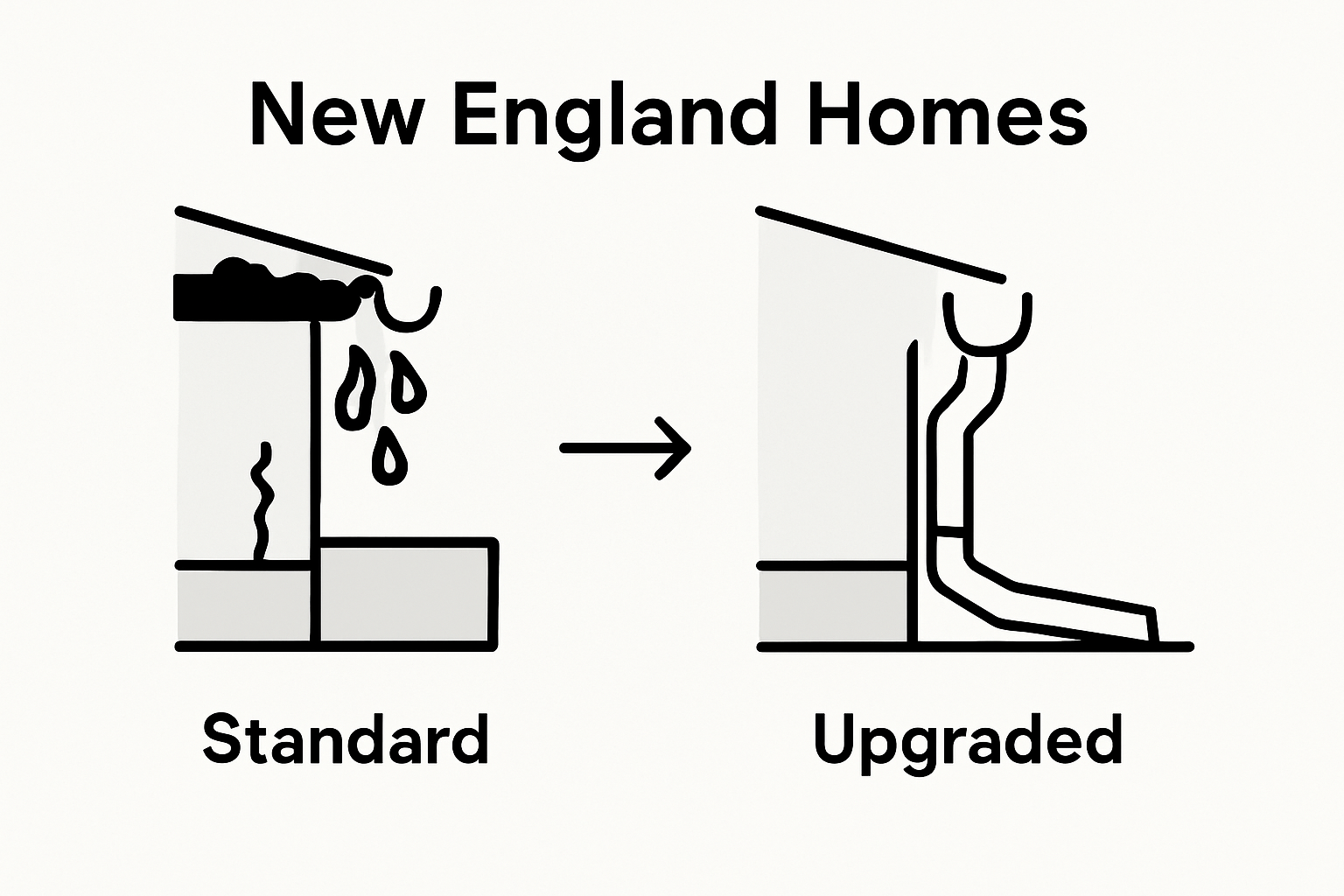
Massachusetts coastal zone management experts emphasize the importance of engineered drainage solutions that effectively redirect water flow. Begin by assessing your current gutter system and identifying potential weak points. Install wider gutters with larger downspouts that can handle high volume water runoff, ensuring they extend at least 5 feet away from your home’s foundation. Consider adding underground drainage pipes that channel water further from your property, creating a comprehensive water management system.
The U.S. Department of the Interior’s guidelines recommend implementing dry floodproofing techniques that include strategic water redirection. Grade your landscape to create a gentle slope away from your home, allowing water to naturally flow away from the foundation. Gutter installation contractors in Massachusetts can help customize a drainage solution tailored to your specific property’s topography and water management needs.
Pro Tip: Install gutter guards to prevent debris buildup and ensure consistent water flow during heavy rainfall.
Remember that an effective drainage system is an ongoing investment in your home’s structural integrity. Regular maintenance and periodic professional assessments will help keep your water management systems functioning optimally throughout Massachusetts changing seasonal conditions.
Step 5: Verify Protection with Routine Checks
Maintaining your flood prevention investments requires consistent and strategic monitoring to ensure your home remains protected against potential water damage. This final step focuses on developing a comprehensive routine inspection process that will help you catch and address potential vulnerabilities before they become serious problems.
Massachusetts coastal zone management experts recommend creating a structured inspection schedule that systematically evaluates your home’s flood protection systems. Conduct thorough visual assessments every three to six months, paying close attention to foundation seals, drainage systems, gutter performance, and exterior waterproofing. Look for subtle signs of water intrusion like minor cracks, moisture stains, efflorescence on walls, or unexpected dampness in basement areas. Document your findings with dated photographs to track any changes over time and establish a clear maintenance history.
The U.S. Department of the Interior’s guidelines emphasize the importance of comprehensive floodproofing maintenance. Schedule professional assessments annually, particularly after severe weather events that could compromise your existing protective systems. During these checks, evaluate the integrity of your waterproofing membranes, check underground drainage pipes for blockages, and ensure all water redirection systems remain fully functional.
Pro Tip: Create a dedicated home maintenance log to track inspection dates, observations, and any repairs or improvements made.
Remember that flood protection is an ongoing process. Your consistent attention and proactive approach will help safeguard your Massachusetts home against potential water damage, potentially saving you thousands in future repair costs.
Strengthen Your Massachusetts Home Against Flooding with Expert Exterior Solutions
Flood risks pose serious challenges that require more than just awareness. From assessing flood vulnerabilities to sealing foundations and upgrading drainage systems, comprehensive protection demands skilled craftsmanship and durable materials. If your goal is to safeguard your property from water damage while boosting curb appeal and energy efficiency, the right professional partner is essential.
At Sabatalo Contracting & Home Improvement, we specialize in high-quality exterior improvements tailored to Massachusetts homes facing these exact challenges. Whether you need expert siding installation to create water-resistant barriers, foundation sealing, or enhanced gutter and drainage systems our local expertise and dedication ensure lasting protection that aligns with the floodproofing strategies outlined in this guide.

Ready to take decisive action for your home s flood protection and resilience? Discover how our full-service exterior contracting solutions can bring peace of mind and value to your property today. Visit Sabatalo Contracting & Home Improvement to request a consultation and learn more about how our siding, gutter installation, and waterproofing services can keep your Massachusetts home safe from flooding risks.
Frequently Asked Questions
How can I assess the flood risk around my property in Massachusetts?
To assess the flood risk, start by consulting local FEMA flood zone maps specific to your area. Conduct a physical inspection of your property, noting low-lying areas and previous water intrusion signs, to better understand your flood vulnerability.
What are effective methods to seal openings in my home to prevent flooding?
Seal vulnerable openings by inspecting basement windows, foundation cracks, and utility penetrations. Use high-quality waterproof sealants to close any gaps and apply waterproof coatings to foundation walls for added protection.
What water-resistant exterior materials should I consider for my home?
Consider using waterproof siding materials such as fiber cement or specialized water-resistant vinyl. These options are designed to repel moisture and withstand potential flood impacts, helping protect your home effectively.
How can I upgrade my drainage and gutter systems to reduce flood risk?
Upgrade your drainage systems by installing wider gutters and larger downspouts that extend at least five feet away from your foundation. Additionally, grade your landscape to create a gentle slope that directs water away from your home, minimizing flooding potential.
What routine checks should I perform to maintain my flood protection systems?
Conduct visual inspections of your flood protection systems every three to six months, looking for signs of water intrusion or damage. Document your findings and schedule professional assessments annually, especially after severe weather events, to ensure everything remains in good condition.
Recommended
- 7 Steps to a Seasonal Home Maintenance Checklist for MA Owners | Sabatalo Contracting
- 7 Essential Door Installation Tips for Massachusetts Homeowners | Sabatalo Contracting
- Annual Roof Inspections in Massachusetts: A 2025 Guide for Homeowners | Sabatalo Contracting
- Signs You Need New Siding: Complete Guide for MA Homes | Sabatalo Contracting
- 7 Essential Examples of Home Repairs Every Owner Should Know – Astrotech Construction
- Understanding Waterproof Window Coverings for Your Home
