Most american homeowners do not realize that siding protects over 90 percent of homes in the United States from harsh weather and moisture damage. Reliable siding acts as a powerful shield for your home, especially with Massachusetts weather bringing heavy rain, snow, and intense temperature changes. The right siding helps protect both your property value and your family’s comfort, while the wrong choice can lead to costly repairs. Discover what every homeowner should know about choosing and maintaining this vital part of your home’s exterior.
Table of Contents
- Defining Siding And Its Essential Role
- Common Types Of Siding In Massachusetts
- Key Warning Signs Of Siding Failure
- Impacts Of Damaged Siding On Homes
- Repair Vs. Replacement: Weighing Your Options
Key Takeaways
| Point | Details |
|---|---|
| Importance of Siding | Siding is crucial for protecting homes from weather elements, preserving structural integrity, and improving energy efficiency. |
| Types of Siding | Homeowners should consider materials like vinyl, fiber cement, wood, and engineered wood based on climate, aesthetics, and maintenance needs. |
| Warning Signs of Damage | Visible cracks, warping, or moisture issues indicate siding failure, which can lead to major structural problems if ignored. |
| Repair vs. Replacement | Assessing the extent of damage is essential—localized issues may require repairs, while extensive damage likely needs full replacement to ensure long-term protection. |
Defining Siding and Its Essential Role
Siding is the protective exterior covering that shields your home from Massachusetts’ unpredictable weather conditions. According to Wikipedia, siding functions as the “protective material attached to the exterior side of a wall,” serving as your home’s critical first line of defense against environmental elements like sun, rain, snow, heat, and cold.
At its core, siding is more than just a decorative exterior feature – it’s a complex protective system designed to maintain your home’s structural integrity and comfort. The right siding acts as a thermal barrier, preventing heat loss during harsh New England winters while also blocking moisture that could potentially cause significant damage to your home’s underlying structure. Explore our guide on siding contractors in Massachusetts to understand how professional installation can maximize these protective benefits.
Typically, siding materials range from traditional wood and vinyl to more modern fiber cement and engineered wood products. Each material offers unique advantages in terms of durability, maintenance requirements, aesthetic appeal, and energy efficiency. The selection process involves carefully balancing factors like local climate conditions, budget constraints, architectural style, and long-term performance expectations. Proper siding installation not only enhances your home’s visual appeal but also provides critical protection against environmental wear and tear, ultimately preserving your property’s value and structural soundness.
Key protective functions of quality siding include:
- Blocking moisture infiltration
- Providing thermal insulation
- Preventing structural wood rot
- Defending against wind and storm damage
- Improving overall energy efficiency
Common Types of Siding in Massachusetts
Massachusetts homeowners have several siding options to protect their homes against the region’s challenging weather conditions. The most popular siding materials include vinyl, fiber cement, wood, and engineered wood, each offering unique advantages for local residential properties. Learn more about our comprehensive siding services to understand which material might best suit your specific home needs.
Vinyl siding remains a top choice for many Massachusetts homeowners due to its affordability, low maintenance requirements, and excellent durability. Modern vinyl options come in a wide range of colors and styles, mimicking traditional wood appearances while providing superior resistance to moisture, insects, and temperature fluctuations. Fiber cement siding has also gained significant popularity, especially in areas prone to harsh weather conditions. This material offers exceptional durability, fire resistance, and the ability to withstand extreme temperature changes common in New England’s climate.
Wood siding represents a classic aesthetic that many Massachusetts homeowners cherish, particularly in historic or traditional architectural styles. Options like cedar and pine provide natural insulation and can be painted or stained to match individual design preferences. Engineered wood siding offers a modern alternative, combining the natural look of wood with enhanced durability and moisture resistance. When selecting siding, Massachusetts residents must consider factors like local climate, home architecture, maintenance requirements, and long-term performance.
Key considerations for choosing siding in Massachusetts include:
- Climate resilience
- Energy efficiency
- Maintenance requirements
- Initial and long-term costs
- Aesthetic compatibility with home style
For those looking to maintain their home’s exterior, our guide on cleaning siding can provide additional insights into preserving your chosen siding material’s appearance and longevity.
Key Warning Signs of Siding Failure
Identifying potential siding damage early can save Massachusetts homeowners significant repair costs and prevent extensive structural problems. Visible deterioration represents the most immediate and critical warning sign that your home’s siding may be failing. Learn about wood rot issues that can compromise your home’s exterior to understand the potential long-term consequences of neglected siding damage.
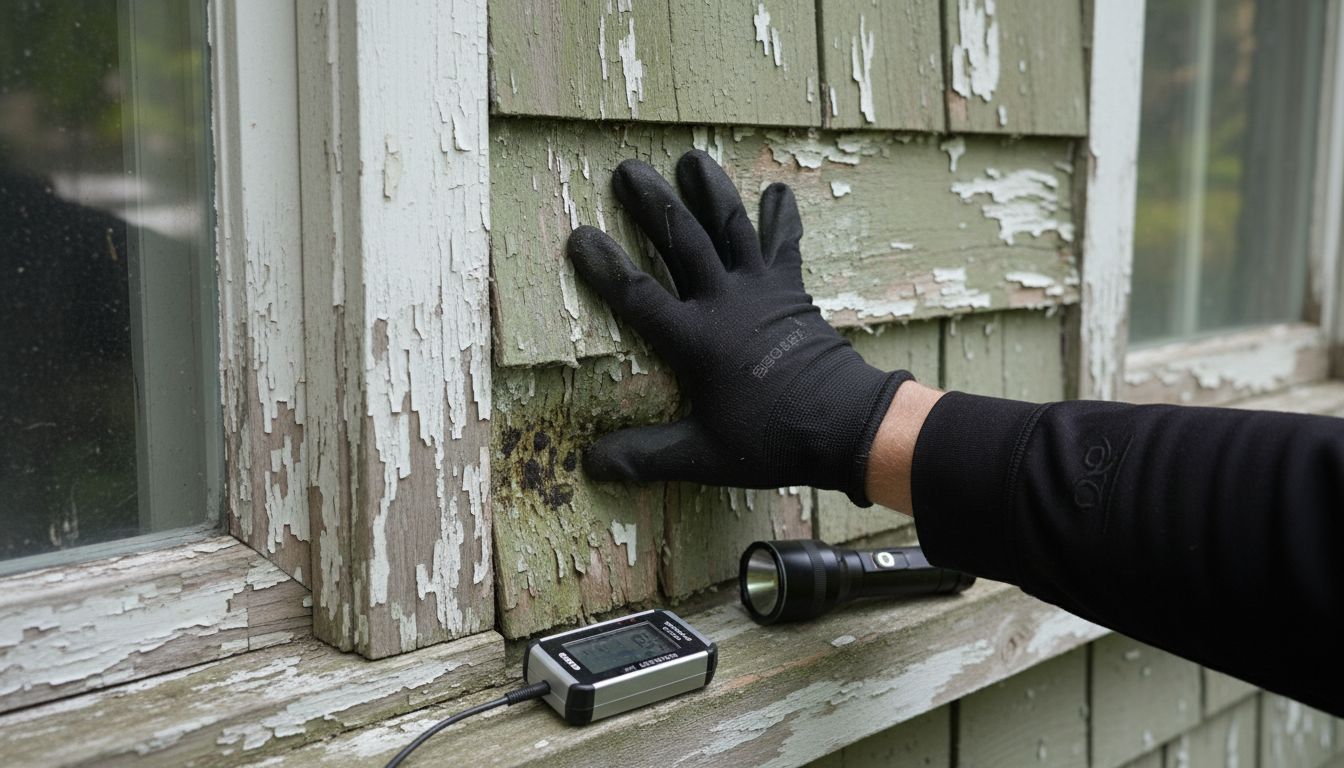
Physical damage manifests in several distinct ways that homeowners should carefully monitor. Cracking, warping, or bulging siding can indicate underlying moisture problems or structural stress. Vinyl siding might show signs of melting or discoloration from intense sun exposure, while wood siding could reveal more pronounced rot, splitting, or extensive paint peeling. Color fading, especially uneven discoloration, suggests the siding material has reached the end of its protective lifecycle and may no longer provide adequate home protection.
Moisture-related issues pose the most significant threat to your home’s structural integrity. Soft or spongy areas when you press against the siding, increased presence of mold or mildew, and water stains inside your walls are critical red flags. These symptoms suggest that your siding has lost its primary protective function and is allowing moisture penetration, which can lead to extensive and expensive interior damage. Pay close attention to areas around windows, doors, and other potential entry points where water might infiltrate more easily.
Key warning signs to watch for include:
- Visible cracks or splits in siding material
- Warping or bulging surfaces
- Extensive paint peeling or bubbling
- Increased presence of mold or mildew
- Soft or spongy areas when touched
- Noticeable color fading or discoloration
- Higher energy bills suggesting poor insulation
Early detection and professional assessment can prevent minor siding issues from becoming major structural problems for your Massachusetts home.
Impacts of Damaged Siding on Homes
Damaged siding represents far more than a cosmetic issue for Massachusetts homeowners – it’s a critical structural vulnerability that can compromise your entire home’s integrity and value. Structural degradation begins subtly, with seemingly minor damage quickly escalating into expensive, comprehensive repairs. Learn when to consider window replacements that might accompany siding repairs to understand the interconnected nature of home exterior maintenance.
Moisture infiltration poses the most significant and immediate threat when siding fails. Water can penetrate damaged areas, leading to wood rot, mold growth, and potential structural weakening of wall frames, insulation, and interior living spaces. The financial implications are substantial – what might start as a small repair can quickly transform into tens of thousands of dollars in comprehensive home restoration, potentially affecting your home’s foundation, electrical systems, and overall structural stability.
Beyond structural concerns, damaged siding dramatically impacts your home’s energy efficiency and comfort levels. Compromised siding creates thermal bridges, allowing heat to escape during Massachusetts’ cold winters and cool air to dissipate during summer months. This inefficiency translates directly into higher energy consumption and increased utility bills. Additionally, damaged siding reduces your property’s curb appeal and market value, potentially deterring potential buyers and lowering overall real estate investment returns.
Key impacts of neglected siding damage include:
- Accelerated structural deterioration
- Increased risk of moisture-related problems
- Reduced home energy efficiency
- Higher utility and repair costs
- Decreased property market value
- Potential health risks from mold and mildew
- Compromised home insulation performance
Proactive maintenance and timely siding replacement can prevent these cascading problems, protecting both your home’s structural integrity and your long-term financial investment.
Repair vs. Replacement: Weighing Your Options
Deciding between repairing or replacing siding is a critical financial and structural decision for Massachusetts homeowners that requires careful analysis of multiple factors. Damage assessment becomes the fundamental first step in determining the most cost-effective and long-term solution for your home’s exterior protection. Learn about comprehensive siding services that can help you make an informed decision to understand the nuanced considerations involved in this evaluation.
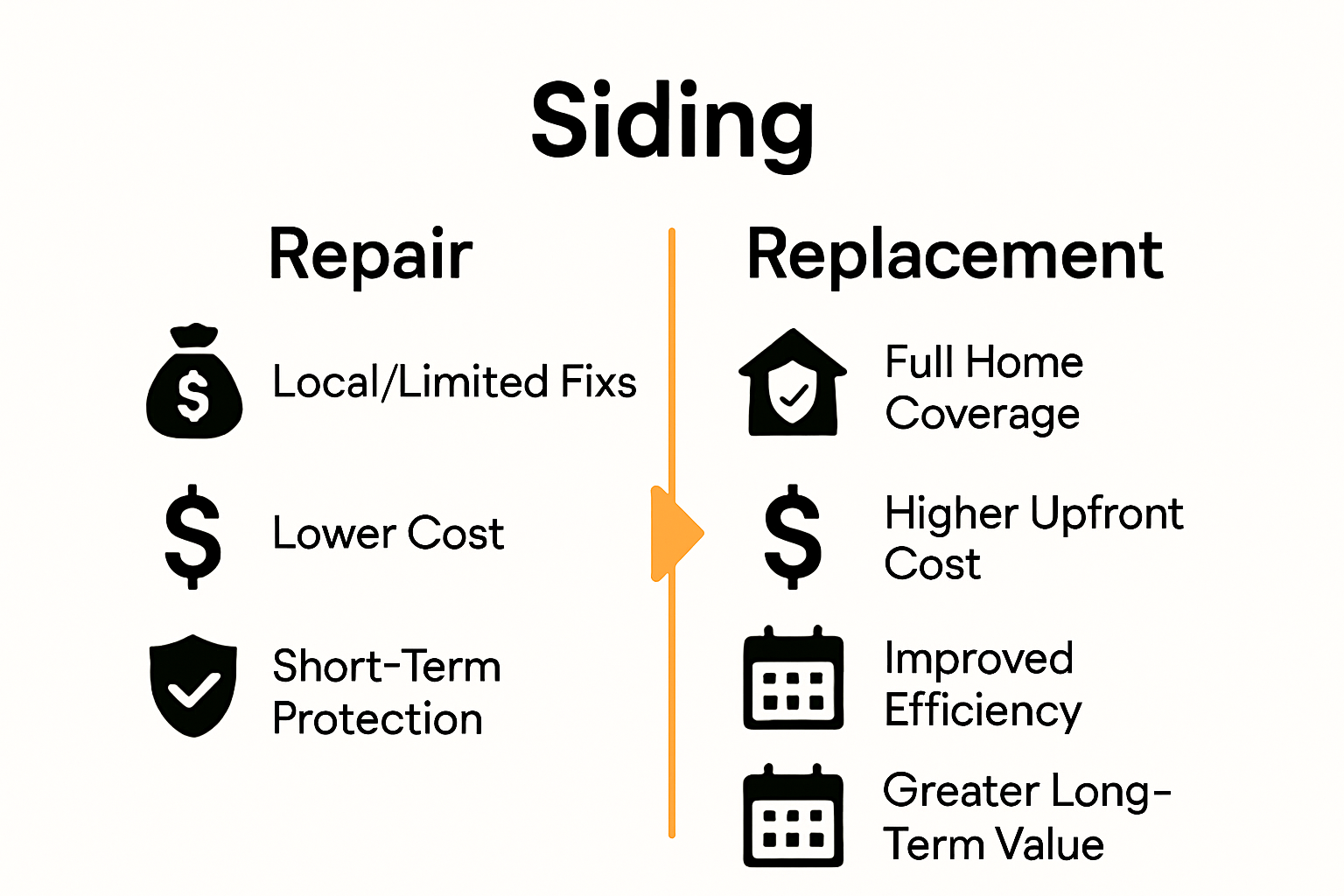
Repair might be the most appropriate choice when damage is localized and limited to small sections of your siding. Minor issues such as small cracks, isolated moisture damage, or limited color fading can often be addressed through targeted repairs that are significantly less expensive than full replacement. However, extensive damage, widespread deterioration, or siding that has reached the end of its expected lifespan typically necessitates complete replacement. Key indicators that replacement is more prudent include significant structural compromise, multiple areas of moisture penetration, or siding that has lost its fundamental protective capabilities.
Financial considerations play a crucial role in this decision-making process. While repairs might seem more budget-friendly in the short term, they can become more expensive over time if they merely delay inevitable replacement. Homeowners should conduct a comprehensive cost-benefit analysis that considers not just immediate expenses, but long-term energy efficiency, potential future repair costs, and the impact on home value. Modern siding materials offer improved durability, better insulation, and enhanced aesthetic appeal, potentially providing more value through full replacement compared to repeated, piecemeal repairs.
Key factors to consider when choosing between repair and replacement:
- Extent and location of existing damage
- Age of current siding material
- Overall structural integrity
- Total repair costs versus replacement expenses
- Energy efficiency improvements
- Potential increase in home market value
- Long-term maintenance requirements
Ultimately, consulting with a professional siding contractor can provide the most accurate assessment of whether your home requires a comprehensive replacement or can be effectively restored through targeted repairs.
Protect Your Massachusetts Home With Expert Siding Solutions
Identifying the warning signs that you need new siding is the first crucial step toward safeguarding your home from costly damage. Moisture infiltration, warping, and fading can threaten your property’s structure and energy efficiency. At Sabatalo Contracting, we understand these challenges and offer tailored siding options designed to protect your home against Massachusetts’ harsh weather while enhancing curb appeal and reducing energy costs. Explore our comprehensive Siding services to discover durable, attractive siding solutions that fit your needs.

Don’t wait until minor issues escalate into major repairs. Take action now by visiting Sabatalo Contracting to request a consultation or quote. Our local expertise and commitment to quality ensure your home receives the protection and aesthetic upgrade it deserves. Also, consider how upgrading your Windows or Roofing together can maximize your home’s comfort and value. Protect your investment today with trusted professionals who prioritize integrity, craftsmanship, and customer satisfaction.
Frequently Asked Questions
What are the common signs that indicate I need new siding?
Common signs of siding failure include visible cracks or splits, warping or bulging surfaces, extensive paint peeling, increased presence of mold or mildew, soft or spongy areas on touch, noticeable color fading, and higher energy bills.
How can damaged siding affect my home’s structural integrity?
Damaged siding can lead to moisture infiltration, which may cause wood rot, mold growth, and structural weakening of your walls and insulation. This can result in extensive repair costs and negatively affect your home’s overall stability.
When should I repair my siding instead of replacing it entirely?
Repairing siding is advisable when damage is localized and limited to small sections, such as minor cracks or isolated moisture damage. If the damage is extensive or widespread, replacement may be the more prudent choice.
What factors should I consider when choosing siding materials for replacement?
When choosing siding materials, consider factors such as climate resilience, energy efficiency, maintenance requirements, initial and long-term costs, and how well the material complements your home’s architectural style.
