
Most American homeowners are surprised to learn that over 30 percent of break-ins start right at the front door. Protecting your Massachusetts residence goes beyond simple locks, especially as modern intruders adapt to outdated security. Today’s front door security devices offer advanced features and peace of mind, but choosing and installing the right solution can feel daunting. This guide helps you understand the smart options available and how professional installation can ensure your safety upgrades work flawlessly.
Table of Contents
- What Are Front Door Security Devices?
- Major Types And Their Key Differences
- Essential Features For Modern Home Safety
- Professional Installation Versus DIY Methods
- Common Mistakes And How To Avoid Them
Key Takeaways
| Point | Details |
|---|---|
| Comprehensive Security Systems | Massachusetts homeowners should invest in integrated security devices to create multi-layered protection against unauthorized entry. |
| Advanced Technologies | Utilizing smart locks, surveillance cameras, and entryway sensors can enhance home safety significantly over traditional methods. |
| Professional vs. DIY Installation | Homeowners must evaluate their technical skills when choosing between professional installation and DIY setups, considering a mixed approach if needed. |
| Regular Security Audits | Conducting bi-annual home security audits can help identify and rectify potential vulnerabilities in security systems. |
What Are Front Door Security Devices?
Front door security devices represent sophisticated technological solutions designed to protect Massachusetts homes from potential unauthorized entry. These advanced systems create multiple layers of defense at the primary home access point, utilizing an integrated approach to prevent intrusions and enhance residential safety.
Typical front door security devices include smart entry sensors that detect when doors are opened unexpectedly, motion sensors strategically positioned near entryways, digital locks with unique access codes, and surveillance cameras with real-time monitoring capabilities. These components work together to create a comprehensive security network that alerts homeowners to potential threats and deters criminal activity.
The primary functions of front door security devices extend beyond simple mechanical locking mechanisms. Modern systems incorporate intelligent technologies that provide real-time alerts, remote access control, and integration with smartphone applications. Homeowners can now monitor their property’s security from anywhere, receiving instant notifications about any suspicious activity near their front entrance.
Pro tip: Consider installing security devices with multiple authentication methods, such as combination locks that require both a digital code and physical key for maximum protection.
Major Types and Their Key Differences
Front door security devices in Massachusetts homes come in several distinct categories, each designed to address specific security needs and provide comprehensive protection against potential intrusions. Comprehensive security systems offer homeowners multiple layers of defense through strategically integrated technologies.
The primary types of front door security devices include entryway sensors, motion detectors, surveillance cameras, and smart locks. Entryway sensors trigger immediate alerts when doors or windows are unexpectedly opened, while motion detectors use advanced technology to recognize movement near entry points. Surveillance cameras provide visual documentation and real-time monitoring, enabling homeowners to track potential security breaches remotely. Smart locks represent the most technologically advanced option, allowing keyless entry through digital codes, smartphone applications, and biometric authentication methods.
Each device type differs in its technological sophistication, installation complexity, and specific security function. Some devices require professional installation, particularly advanced systems with complex networking capabilities, while others are suitable for straightforward do-it-yourself setups. Factors like home layout, budget, and specific security requirements will determine the most appropriate device selection for Massachusetts residential properties.
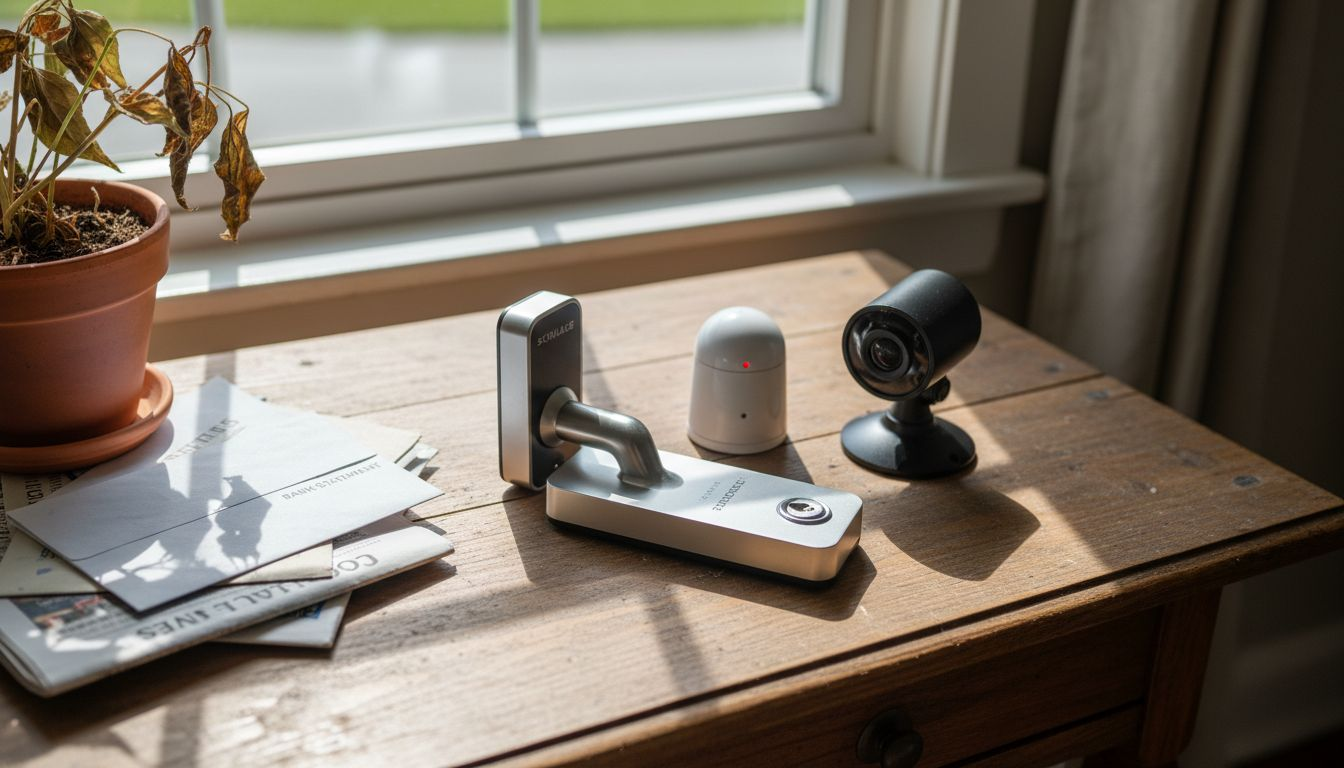
Here’s a quick comparison of major front door security device types to help you choose the best fit for your home:
| Device Type | Main Security Advantage | Typical Setup Complexity | Notable Limitations |
|---|---|---|---|
| Entryway Sensor | Instant alert for door openings | Easy, DIY friendly | Limited to open/close detection |
| Motion Detector | Detects movement near entry | Moderate wiring needed | Can trigger false alarms |
| Surveillance Camera | Real-time visual monitoring | Wired or wireless | Privacy concerns, data storage |
| Smart Lock | Keyless, controlled access | Moderate tech setup | Requires mobile connectivity |
Pro tip: Consult with a local security professional to create a customized security device strategy that addresses your home’s unique architectural and geographical vulnerabilities.
Essential Features for Modern Home Safety
Modern home safety requires sophisticated front door security devices that go far beyond traditional locking mechanisms. Advanced security technologies have transformed how Massachusetts homeowners protect their properties, integrating intelligent features that provide comprehensive protection and peace of mind.
Key essential features for contemporary home safety include smart home integration, remote monitoring capabilities, and multi-layered authentication systems. These technologies enable homeowners to control and track security through smartphone applications, receive real-time alerts about potential threats, and implement complex access protocols that go well beyond standard key-based entry. Advanced systems now incorporate biometric recognition, digital passcodes, and automated response mechanisms that can instantly notify local authorities or designated emergency contacts during suspicious activities.
The most effective front door security devices combine multiple protective technologies to create a comprehensive safety network. This includes high-resolution cameras with night vision capabilities, motion sensors with precise detection algorithms, two-way communication systems that allow direct interaction with visitors, and anti-tampering mechanisms designed to prevent forced entry. Compatibility with broader smart home ecosystems allows for seamless integration, enabling features like automatic lighting synchronization, scheduled locking/unlocking, and synchronized security protocols across different home entry points.
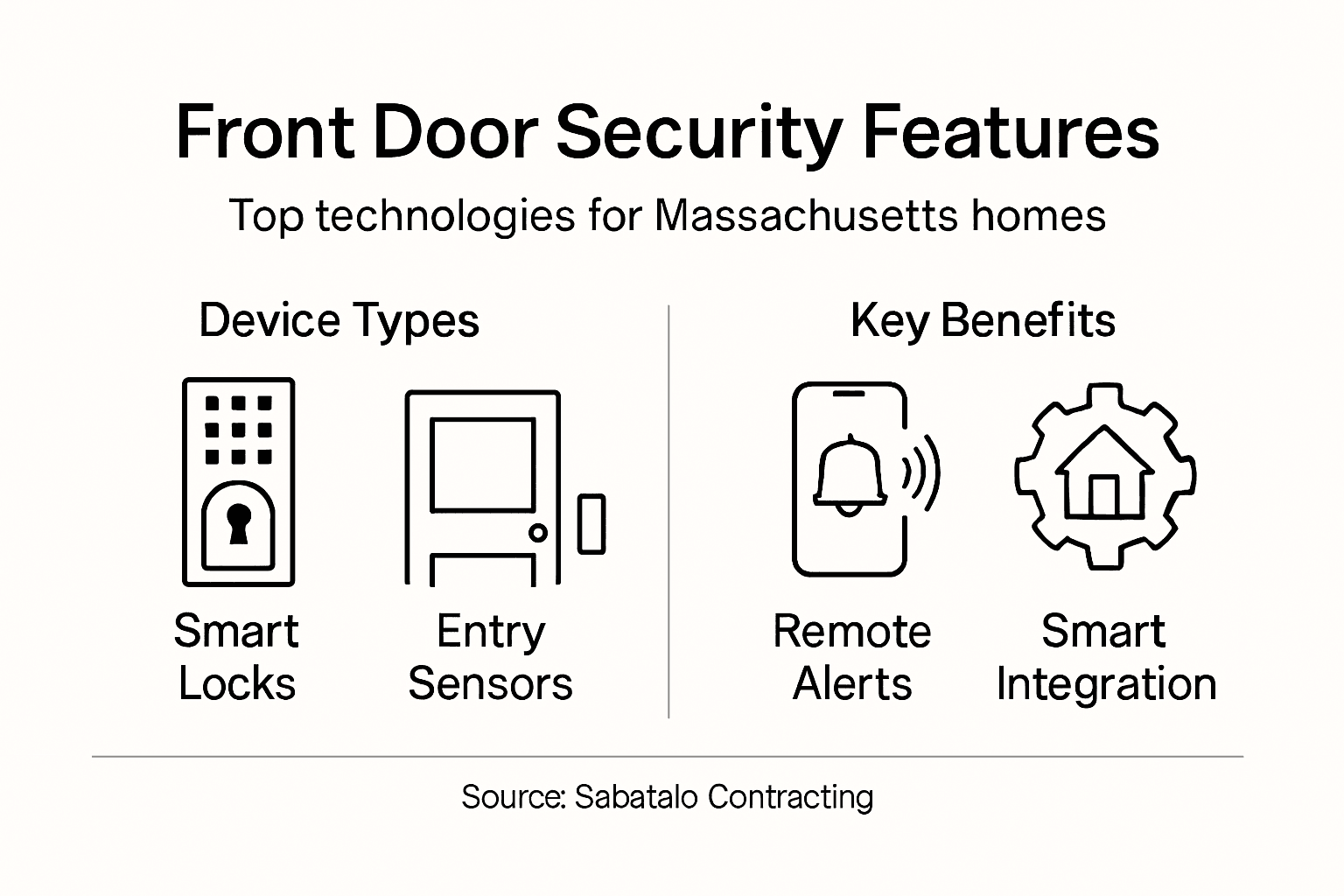
Pro tip: Select security devices that offer modular expansion capabilities, allowing you to incrementally upgrade your home protection system as technology advances and your security needs change.
Below is a summary of essential features found in modern front door security systems:
| Feature | Purpose | Added Security Value |
|---|---|---|
| Smart Home Integration | Connects with existing devices | Streamlined, centralized control |
| Remote Monitoring | Observe entryways from anywhere | Immediate threat response |
| Multi-factor Authentication | Uses codes and biometrics | Strong protection against hacking |
| Anti-tamper Mechanism | Prevents forced or covert entry | Reduces risk of physical bypass |
| Two-way Communication | Interact directly with visitors | Verifies identity before granting access |
Professional Installation Versus DIY Methods
Massachusetts homeowners face a critical decision when implementing front door security devices: choosing between professional installation and do-it-yourself methods. Home security system options have evolved significantly, providing multiple approaches to protecting residential properties.
Professional installation offers comprehensive benefits, including expert sensor placement, precise system configuration, and guaranteed functionality. Trained technicians understand complex architectural nuances, ensuring optimal coverage and eliminating potential blind spots that inexperienced homeowners might overlook. These professionals can integrate sophisticated security systems seamlessly with existing home infrastructure, providing a level of technical precision that most DIY enthusiasts cannot match. Advanced systems often require specialized knowledge of electrical wiring, network configuration, and security protocol implementation.
Do-it-yourself installation methods have gained popularity due to significant technological advancements in wireless security devices. Modern systems feature user-friendly interfaces, straightforward setup instructions, and modular components that simplify installation. Homeowners can save substantial money by selecting DIY options, which typically involve plug-and-play devices with smartphone app integration. However, technical proficiency and patience remain crucial for successful implementation. While DIY methods offer flexibility and cost savings, they also demand a higher level of personal commitment and technical understanding.
Pro tip: Assess your technical skills honestly before deciding between professional and DIY installation, and consider hybrid approaches that combine professional consultation with self-implementation.
Common Mistakes and How to Avoid Them
Homeowners in Massachusetts frequently encounter critical security vulnerabilities that can compromise their front door protection strategies. Common home security mistakes often stem from overlooking simple yet essential protective measures that can significantly reduce the risk of unauthorized entry.
One of the most prevalent errors is neglecting comprehensive security coverage beyond the primary front door. Many residents focus exclusively on their main entrance while leaving secondary access points like garage doors, side entrances, and basement entries unsecured. Sophisticated intruders frequently exploit these overlooked vulnerabilities, understanding that homeowners tend to invest less attention and resources in protecting peripheral entry points. Comprehensive security requires a holistic approach that treats every potential access point with equal scrutiny, implementing robust locking mechanisms, motion-activated lighting, and integrated alarm systems across all potential entry locations.
Technological vulnerabilities represent another significant risk area for front door security devices. Modern smart home systems, while convenient, can introduce unexpected cybersecurity risks if not properly configured. Homeowners must be vigilant about selecting devices with strong encryption protocols, regularly updating firmware, and configuring advanced security settings. Default manufacturer settings often provide minimal protection, making it crucial to customize security parameters, use complex passwords, and implement two-factor authentication whenever possible. Understanding and mitigating these digital vulnerabilities is just as important as addressing physical security challenges.
Pro tip: Conduct a comprehensive home security audit every six months, systematically testing and updating all entry point security devices to ensure ongoing protection and identify potential vulnerabilities.
Enhance Your Front Door Security with Expert Door Solutions
Protecting your Massachusetts home starts with strong, reliable doors combined with advanced security devices. The article highlights the importance of multi-layered front door security that includes smart locks, sensors, and surveillance to prevent unauthorized entry and provide peace of mind. At Sabatalo Contracting, we understand your goal to secure your home against intruders while maintaining aesthetic appeal and energy efficiency.
Upgrade your home’s first line of defense with our professional door installation and replacement services that perfectly complement modern security technologies. Our expertise in exterior doors ensures you get durable, high-quality products designed to support smart home integration and remote monitoring features. Whether you seek enhanced protection through reinforced doors or want to prepare your entryway for cutting-edge security devices, our team offers personalized service backed by over 15 years of local Massachusetts experience.
Secure your home the right way with industry-leading craftsmanship combined with state-of-the-art security innovation. Explore our Doors | Sabatalo Contracting options to find the ideal fit for your property.

Don’t wait until vulnerabilities become a problem. Visit Sabatalo Contracting today to request a quote or consultation. Take the first step in creating a safer, smarter front door system that protects your family and enhances your home’s value.
Frequently Asked Questions
What are front door security devices?
Front door security devices are advanced technological solutions designed to protect homes from unauthorized entry, creating multiple layers of defense at the primary access point.
How do smart locks enhance home security?
Smart locks provide keyless entry through digital codes, smartphone applications, and biometric authentication, allowing controlled access and monitoring from anywhere.
What are common types of front door security devices?
Common types include entryway sensors, motion detectors, surveillance cameras, and smart locks, each offering distinct advantages in securing entry points.
Should I choose professional installation or DIY for front door security devices?
Professional installation ensures expert coverage and precise configuration, while DIY methods can save money and provide flexibility but require a certain level of technical proficiency.
Recommended
- Exterior Doors in Massachusetts | Sabatalo Contracting
- 7 Essential Door Installation Tips for Massachusetts Homeowners | Sabatalo Contracting
- Exterior Doors in Massachusetts | Sabatalo Contracting
- Flood Proofing Your Home: Essential Steps for Massachusetts | Sabatalo Contracting
- DIY Front Door Alarm: Secure Your Home Easily – Safes and Security Direct
- Shutters and Home Security: UK Guide for Safer Homes 2025 | Shutter World
