Most American homes lose up to 10 percent of their value due to neglected exterior issues. If you are a Massachusetts homeowner preparing to sell, every cracked shingle and peeling paint spot can cost you thousands. Enhancing your property’s exterior pays off by drawing in buyers while increasing your home’s market value without breaking the bank. This practical guide shows you smart steps for affordable exterior improvements that truly make a visible difference.
Table of Contents
- Step 1: Assess Current Exterior Condition
- Step 2: Prioritize High-Impact Improvements
- Step 3: Select Durable Materials and Finishes
- Step 4: Hire Trusted Local Professionals
- Step 5: Verify Quality and Enhance Curb Appeal
Quick Summary
| Key Insight | Explanation |
|---|---|
| 1. Assess the Current Condition | Conduct a detailed inspection of your home’s exterior to identify issues and prioritize improvements. |
| 2. Prioritize High-Impact Upgrades | Focus on enhancements that offer significant returns such as new roofing or energy-efficient windows. |
| 3. Choose Durable Materials | Select materials that are long-lasting and suitable for the local climate, such as fiber cement or composite decking. |
| 4. Hire Qualified Professionals | Verify contractor credentials and compare bids to ensure quality work on your exterior improvements. |
| 5. Enhance Curb Appeal | Improve your home’s first impression through cohesive design and careful attention to detail during renovations. |
Step 1: Assess Current Exterior Condition
Before launching into any home improvement project, you need a clear understanding of your home’s existing exterior condition. A comprehensive property condition assessment helps you identify potential issues and prioritize upgrades that will boost your home’s market value.
Start by conducting a systematic walk-through of your home’s exterior. Look closely at critical elements like siding, roofing, windows, doors, and foundation. Check for signs of wear such as cracked paint, loose shingles, rotting wood, foundation cracks, or water damage. Pay special attention to areas exposed to harsh weather conditions. Take detailed notes and photographs to document the current state of each exterior component. A thorough real estate appraisal will help you understand which improvements will provide the most significant return on investment.
If you are unsure about identifying specific damage or want a professional evaluation, consider scheduling an expert inspection. A professional can provide an objective assessment of your home’s exterior condition and recommend targeted upgrades that will enhance your property’s value.
Pro tip: Create a spreadsheet or checklist to track exterior condition issues, which will help you systematically plan and budget for improvements.
Step 2: Prioritize High-Impact Improvements
Not all exterior upgrades are created equal. To maximize your home’s market value, you need a strategic approach to selecting improvements. Home improvement trends reveal that smart homeowners focus on projects that offer substantial returns and enhance overall property appeal.
Start by evaluating potential upgrades through a financial lens. Consider projects that provide the most significant return on investment such as fresh exterior paint, updated siding, landscaping improvements, and replacing worn windows or doors. Research shows that market-responsive upgrades should maintain a neutral aesthetic that appeals to potential buyers. Prioritize improvements that address structural integrity and curb appeal simultaneously. This means fixing foundation issues before cosmetic upgrades and choosing timeless design elements over trendy but short-lived styles.
Compare the potential cost of each improvement against its expected value increase. Some upgrades like a new roof or energy-efficient windows can provide immediate functional benefits while also boosting your home’s resale value. Aim for improvements that offer both immediate functionality and long-term financial returns.
Pro tip: Consult local real estate professionals to understand which specific exterior improvements provide the highest value in your specific Massachusetts housing market.
The table below summarizes how different types of exterior projects impact home value and curb appeal:
| Project Type | Market Value Impact | Functional Benefit | Curb Appeal Contribution |
|---|---|---|---|
| New Roofing | Significant | Improved protection | Noticeable upgrade |
| Energy-Efficient Windows | High | Lower energy costs | Modernized look |
| Fresh Exterior Paint | Moderate | Weatherproofing | Immediate visual boost |
| Landscaping Upgrade | Moderate | Erosion reduction | Enhanced aesthetics |
Step 3: Select Durable Materials and Finishes
Choosing the right materials and finishes can make or break your exterior home improvement project. Sustainable construction materials play a crucial role in creating long lasting upgrades that look great and protect your investment.
Focus on materials that balance durability, aesthetic appeal, and environmental responsibility. Consider options like fiber cement siding, composite decking, and high-quality exterior paints that resist weathering. Natural materials such as cedar wood or stone veneer can provide excellent protection while maintaining a timeless look. When selecting finishes, prioritize protective exterior finishes that offer UV resistance, moisture protection, and minimal environmental impact. Look for products with low volatile organic compound ratings that will stand up to Massachusetts weather conditions while supporting better indoor and outdoor air quality.
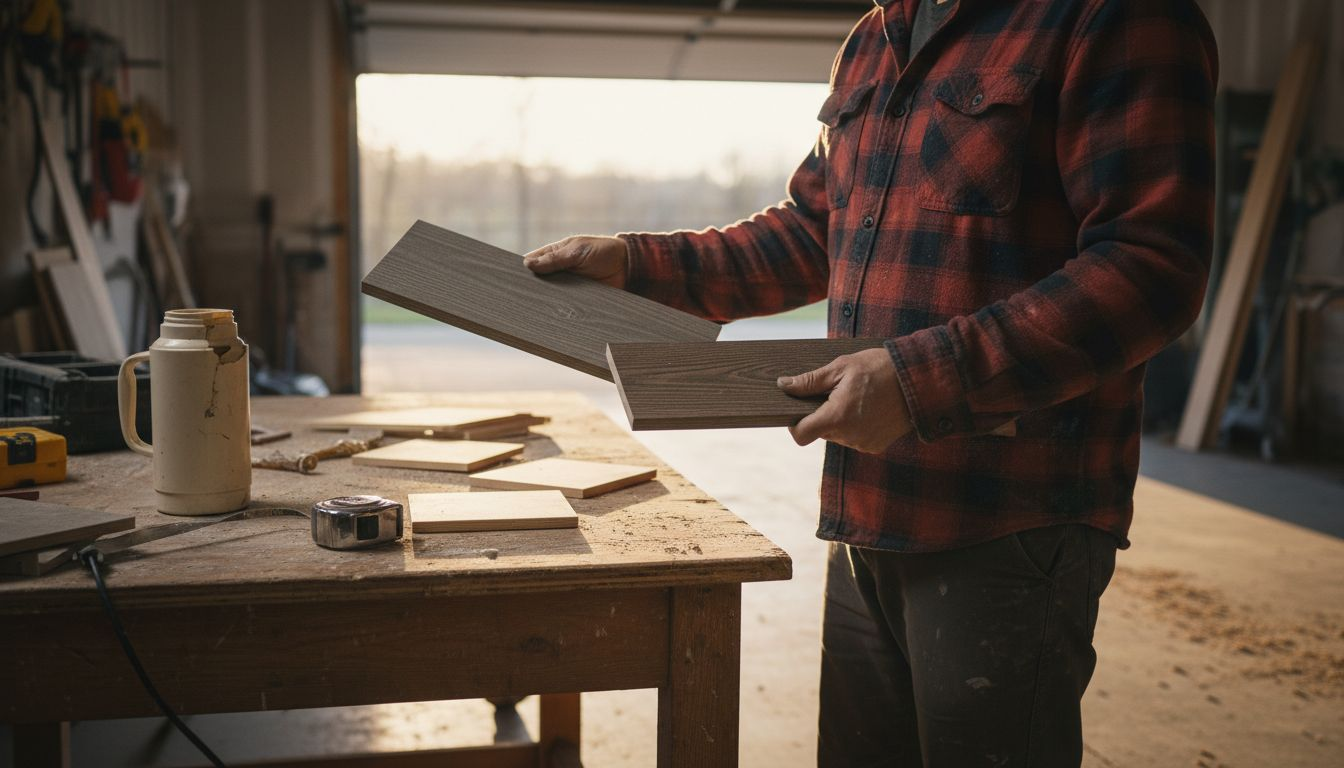
Remember that investing in premium materials upfront can save you significant money on maintenance and replacement costs over time. Research local building codes and climate considerations specific to the Massachusetts region to ensure your material selections will perform optimally in your specific environment.
Pro tip: Always request material samples and performance ratings before making final selections to compare durability and aesthetic qualities side by side.
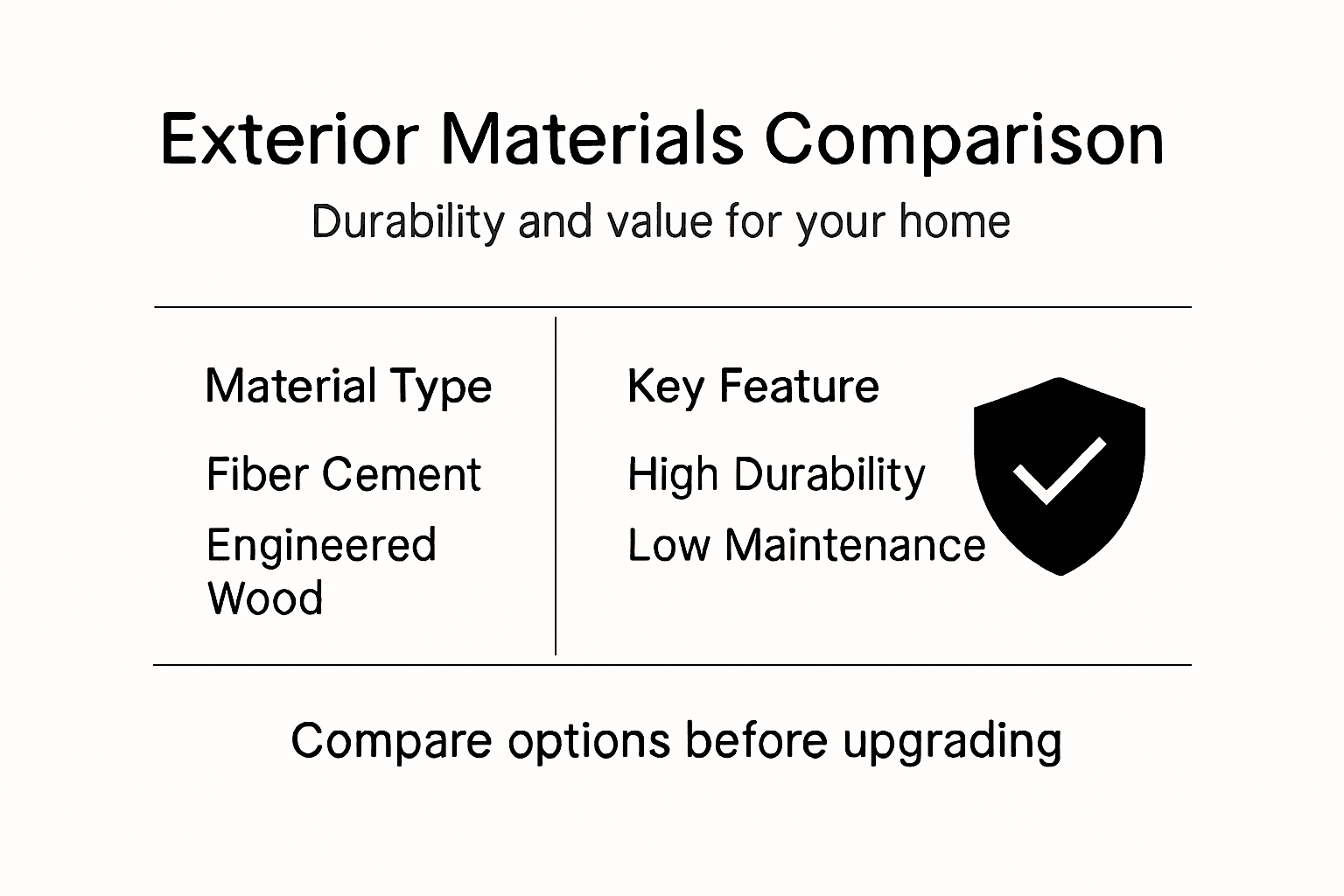
Here’s a comparison of popular exterior materials based on key performance factors:
| Material Type | Durability in Harsh Climates | Environmental Impact | Maintenance Needs |
|---|---|---|---|
| Fiber Cement Siding | High, resists rot and pests | Moderate, some recycling | Low, annual inspection |
| Composite Decking | Excellent, weather resistant | Low, often recycled | Minimal, occasional wash |
| Cedar Wood | Good if sealed properly | Low, renewable resource | Moderate, requires sealing |
| Stone Veneer | Superior, nearly weatherproof | Varies by source | Very low, rare upkeep |
Step 4: Hire Trusted Local Professionals
Selecting the right professionals can make or break your exterior home improvement project. Understanding how to verify contractor credentials is critical to ensuring quality work and protecting your investment.
Start by researching local contractors with strong reputations in Massachusetts. Request multiple detailed bids and compare them carefully. Verify each contractor’s licensing status through state regulatory boards and check their professional licensing requirements. Look for contractors with comprehensive insurance coverage, positive customer reviews, and a proven track record of completed projects similar to yours. Ask for references and take the time to contact them directly to understand their experience working with the contractor.
During initial consultations, ask specific questions about their experience with exterior upgrades, their approach to project management, and how they handle unexpected challenges. Pay attention to their communication style communication style and professionalism. A reputable contractor should be transparent about project timelines, potential costs, and be willing to provide a detailed written contract that outlines all aspects of the work.
Pro tip: Request to see a contractor’s portfolio of previous projects and schedule in-person visits to completed work sites to verify the quality of their craftsmanship.
Step 5: Verify Quality and Enhance Curb Appeal
Improving your home’s exterior goes beyond basic maintenance. Curb appeal strategies can increase your home’s market value by up to 7 percent while creating a stunning first impression for potential buyers.
Carefully inspect every aspect of your exterior improvements to ensure superior quality and visual harmony. Start with a comprehensive evaluation of color coordination, material consistency, and overall design balance. Focus on creating a cohesive look that highlights your home’s architectural style. Exterior design principles suggest aligning landscaping with your home’s aesthetic while maintaining clean lines and intentional visual pathways. Pay special attention to details like trim work, paint quality, landscape maintenance, and the condition of architectural features such as doors, windows, and walkways.
Consider professional photography or a trusted real estate agent’s perspective to get an objective assessment of your home’s exterior improvements. Their trained eye can help identify areas that might need additional refinement or highlight unique features that increase your property’s marketability.
Pro tip: Stand across the street and take multiple photographs of your home to analyze your curb appeal from a buyer’s perspective, helping you identify subtle improvements that make a significant difference.
Elevate Your Home’s Value with Expert Exterior Upgrades
Improving your home’s exterior is essential for protecting your investment and enhancing curb appeal. If you want to address key challenges like worn siding, aging roofing, or faded paint, Sabatalo Contracting & Home Improvement offers trusted, high-quality solutions tailored to Massachusetts homeowners. By selecting durable materials and prioritizing impactful improvements, you can increase your property’s market value while enjoying greater energy efficiency and lasting beauty.

Take control of your home’s transformation today with our expert Siding and Roofing services. Discover how our 15-18 years of local expertise ensure craftsmanship, transparency, and dependable results. Visit Sabatalo Contracting now to request a personalized consultation and start boosting your home’s exterior appeal the right way.
Frequently Asked Questions
What exterior upgrades can provide the highest return on investment?
To maximize your home’s value, focus on upgrades such as new roofing, energy-efficient windows, and fresh exterior paint. Prioritize projects known for offering substantial returns, aiming to increase your home’s market value by 15–20% within the first year after completion.
How can I assess my home’s current exterior condition effectively?
Conduct a detailed walk-through of your home’s exterior, checking for signs of wear like cracked paint, loose shingles, or foundation issues. Take notes and photographs to document your findings, which will help you identify specific areas that need improvement.
What should I consider when selecting materials for exterior upgrades?
Choose durable materials that strike a balance between longevity, aesthetic appeal, and environmental impact. For example, fiber cement siding can resist rot and pests while enhancing curb appeal, requiring minimal maintenance over time.
How do I find a reliable contractor for my exterior improvement project?
Research local contractors with strong reputations and request multiple bids for your project. Verify their licensing and insurance, and check their references to ensure they have experience with similar projects before making a decision.
What steps can I take to enhance my home’s curb appeal?
Focus on details like color coordination, material consistency, and landscaping that aligns with your home’s architectural style. Implementing simple changes such as maintaining trim work and landscaping can boost your home’s curb appeal by up to 7%.
Recommended
