Every homeowner in Massachusetts faces important decisions when planning a home addition, especially when balancing dreams with practical realities. Tackling your project with a clear plan helps you transform your space while avoiding costly surprises along the way. By focusing on a systematic needs assessment, realistic budgeting, and expert guidance, you can set a strong foundation for both increased property value and long-term comfort.
Table of Contents
- Step 1: Assess Your Needs And Define Goals
- Step 2: Evaluate Site Conditions And Set Budget
- Step 3: Consult Local Experts And Secure Permits
- Step 4: Design Your Addition With Functionality In Mind
- Step 5: Verify Project Details Before Construction
Quick Summary
| Key Point | Explanation |
|---|---|
| 1. Assess Needs and Set Goals | Clearly define what you want from your home addition to guide your project. |
| 2. Evaluate Site and Budget | Analyze your property’s characteristics and establish a budget to avoid surprises. |
| 3. Secure Permits Early | Engage local experts to ensure you understand all necessary permits and regulations. |
| 4. Focus on Functional Design | Design your addition for accessibility and multi-use to enhance livability. |
| 5. Verify All Project Details | Conduct a thorough review of plans and agreements before construction begins. |
Step 1: Assess Your Needs and Define Goals
Planning a home addition requires a strategic approach to understanding exactly what you want to achieve with your space. A thorough needs assessment will help you create a clear roadmap for your renovation project, ensuring that your investment meets both your functional requirements and long-term goals.
To begin your assessment, start by carefully evaluating community needs and resources. This process involves identifying the specific gaps between your current living space and your ideal home environment. Consider these key areas:
- Family dynamics: How do your current living spaces support or hinder your family’s daily activities?
- Functionality: What specific problems are you trying to solve with this addition?
- Long-term goals: How might your space needs change in the next 5-10 years?
- Budget constraints: What financial resources are available for this project?
A successful home addition starts with crystal-clear goals and a realistic understanding of your current and future needs.
Document your goals in detail, creating a comprehensive list that prioritizes your must-have features versus nice-to-have elements. This approach will help you communicate effectively with contractors and ensure that your needs assessment remains systematic and focused on achieving your specific home improvement objectives.
Pro tip: Create a visual mood board or digital folder with inspiration images to help clarify and communicate your vision more effectively.
Step 2: Evaluate Site Conditions and Set Budget
Carefully assessing your property’s physical characteristics and financial parameters is crucial for a successful home addition project. Understanding your site’s unique conditions will help you make informed decisions and prevent costly surprises during construction.
Begin by analyzing comprehensive construction site planning that considers multiple critical factors:
- Topography: Assess the land’s slope, drainage patterns, and potential grading requirements
- Soil conditions: Determine ground stability, potential foundation challenges, and required reinforcement
- Existing utility connections: Map out water, electrical, and sewage infrastructure
- Environmental restrictions: Check local zoning laws and potential environmental constraints
Understanding your site’s unique characteristics is the foundation of a successful home addition project.
Your budget should reflect detailed construction cost insights, recognizing that construction costs typically represent approximately 64.4% of the total project expense. Work with a professional surveyor or contractor to get precise measurements and an accurate budget estimate that accounts for potential site-specific challenges.

Pro tip: Allocate an additional 10-15% of your total budget for unexpected site preparation or construction contingencies.
Here’s how different aspects of site evaluation and budgeting interact for your home addition:
| Evaluation Aspect | Impact on Project Planning | Cost Implications |
|---|---|---|
| Land Topography | Determines grading, drainage | May increase groundwork and labor costs |
| Soil Conditions | Affects foundation type | Extra reinforcement can raise expenses |
| Utility Connections | Guides layout and feasibility | Extending lines may require added spending |
| Environmental Limits | Regulates design possibilities | Permits or mitigation fees may be necessary |
Step 3: Consult Local Experts and Secure Permits
Navigating the complex world of building permits and local regulations is a critical step in your home addition project. Engaging with local experts early will help you understand the specific requirements and avoid potential roadblocks that could delay or derail your renovation plans.
Start by understanding residential permit requirements through your local government offices. These professionals can guide you through the necessary documentation and help you understand the specific regulations that apply to your project. Key steps include:
- Research local building codes: Verify specific zoning and construction regulations
- Identify required documentation: Gather site plans, architectural drawings, and property surveys
- Understand fee structures: Calculate permit costs and potential additional expenses
- Schedule initial consultations: Meet with local building inspectors and code officials
Securing proper permits is not just a legal requirement, but a crucial safeguard for your home improvement investment.
Carefully review the building permit acquisition process, ensuring you have all necessary documentation and professional assessments. This might involve hiring licensed architects, structural engineers, or specialized contractors who can provide the detailed plans required by local authorities.
Pro tip: Request a pre-application consultation with your local building department to understand potential challenges and streamline the permit approval process.
Compare these professional roles you might consult during your home addition:
| Professional | Primary Responsibility | When to Contact |
|---|---|---|
| Architect | Design and project planning | At the concept stage |
| Structural Engineer | Ensure structural integrity | Before permitting |
| Contractor | Oversee construction process | Pre-construction |
| Building Inspector | Compliance with codes | During permitting/inspections |
Step 4: Design Your Addition with Functionality in Mind
Designing a home addition requires thoughtful planning that goes beyond aesthetic appeal. Your goal is to create a space that seamlessly integrates with your existing home while meeting your family’s current and future needs.
Universal design principles offer valuable insights into creating flexible, adaptable living spaces. Consider these essential design elements:
- Accessibility: Incorporate features like wider doorways and no-step entries
- Multipurpose functionality: Design spaces that can adapt to changing family needs
- Natural lighting: Maximize windows and natural light sources
- Traffic flow: Plan layouts that maintain smooth movement between existing and new spaces
- Storage solutions: Integrate intelligent storage options that maximize usable space
A well-designed addition should feel like a natural extension of your home, not an awkward afterthought.
Integrated design approaches emphasize creating spaces that balance beauty, function, and long-term livability. Work closely with an architect or designer who can help you translate your vision into a practical, sustainable design that enhances your home’s overall value and functionality.
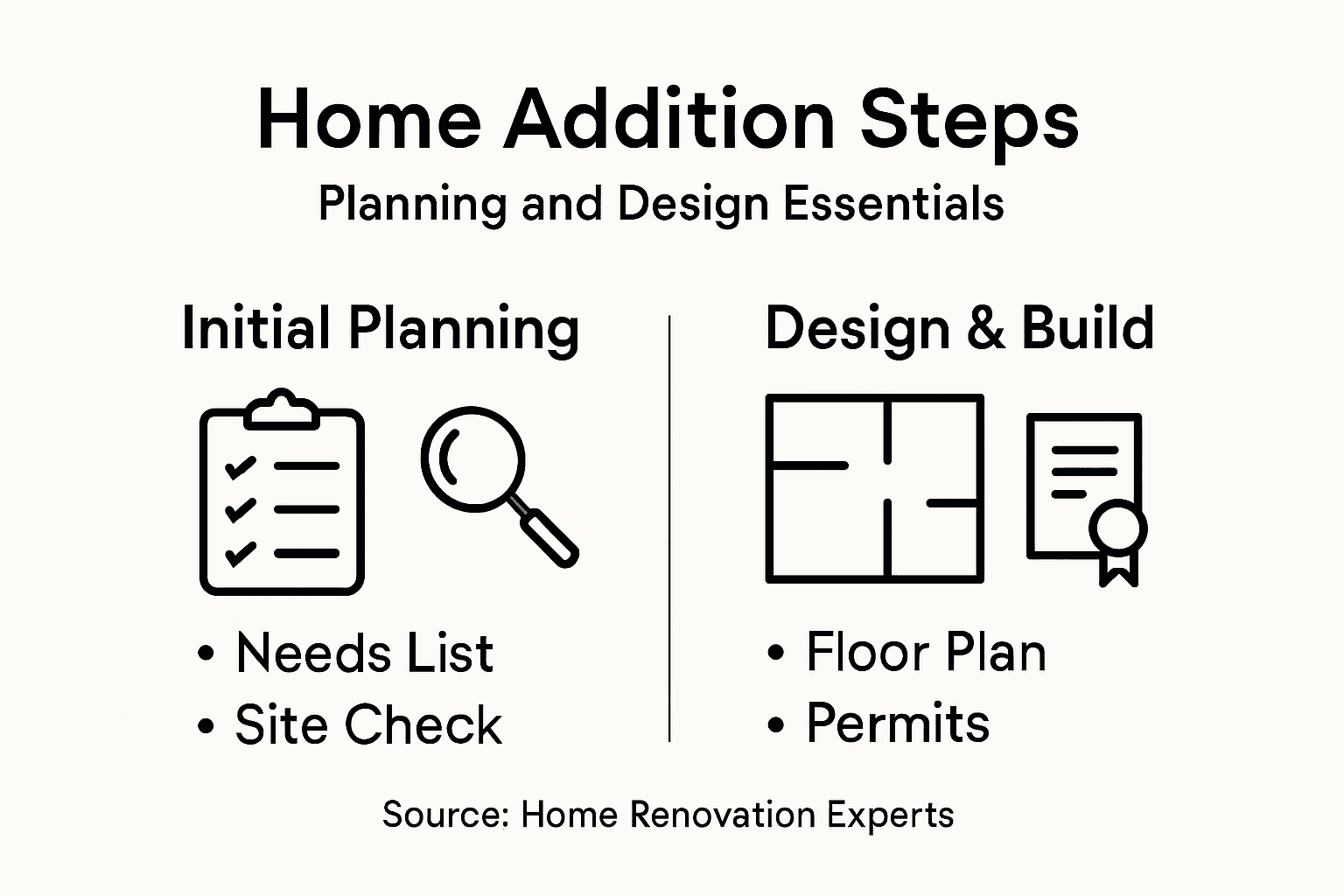
Pro tip: Create detailed floor plan mockups and use painter’s tape to mark potential layout configurations in your existing space to visualize the addition’s impact.
Step 5: Verify Project Details before Construction
Before breaking ground on your home addition, a comprehensive review of all project details is crucial to ensure smooth execution and avoid potential complications. This verification process acts as your final checkpoint, confirming that every aspect of the project aligns with your original plans and local regulations.
Building inspection protocols recommend a systematic approach to project verification. Key areas to carefully review include:
- Architectural plans: Double-check measurements, materials, and design specifications
- Permit documentation: Confirm all required approvals are in place
- Contractor agreements: Review contracts and ensure all details are explicitly stated
- Material specifications: Verify exact materials match original design intentions
- Timeline and milestones: Confirm projected start and completion dates
Meticulous verification is your best defense against costly mistakes and project delays.
Comprehensive permit and documentation review helps minimize risks of rework and ensures your project meets all local building codes. Schedule a final walkthrough with your contractor, reviewing every detail and discussing potential contingencies before construction begins.
Pro tip: Create a detailed project checklist with your contractor and personally verify each item, marking off requirements as they are confirmed.
Transform Your Home Addition Vision into Reality with Expert Exterior Solutions
Planning a home addition demands careful attention to design, site evaluation, and securing the right permits. You want your new space to blend seamlessly with your current home while enhancing value and function. At Sabatalo Contracting & Home Improvement, we recognize these challenges and offer trusted expertise to support your project every step of the way. Whether you are focused on roofing, doors, or ongoing maintenance, our skilled team ensures durable craftsmanship and clear communication to protect your investment.
Enhance your project with quality exterior improvements that will last. Our local Massachusetts professionals bring over 15 years of experience helping homeowners create beautiful, functional spaces. We understand the importance of integrating your addition with reliable roofing and energy-efficient doors for optimal comfort and longevity.
Ready to bring your home addition plans to life? Explore how our Roofing and Doors services complement your renovation goals, and trust Sabatalo Contracting to deliver outstanding results. Visit Sabatalo Contracting now for a personalized consultation and take the first confident step toward expanding your home.

Frequently Asked Questions
What are the first steps in planning a home addition?
Start by assessing your needs and defining your goals for the addition. Identify what gaps exist between your current living space and your ideal setup, considering family dynamics, functionality, long-term goals, and budget constraints. Create a detailed list of priorities to guide your project.
How do I evaluate site conditions for my home addition?
Evaluate your property’s topography, soil conditions, existing utility connections, and any environmental restrictions. Assess these factors systematically to uncover potential challenges, and consult with a professional to get accurate measurements and budget estimates based on your findings.
What permits do I need to obtain for a home addition?
Before starting, research the local building codes and identify the necessary permits for your project. Gather required documentation, which often includes site plans and architectural drawings, to ensure compliance with regulations and avoid delays during construction.
How can I ensure my home addition meets my family’s future needs?
Incorporate universal design principles to create flexible spaces that can adapt over time. Include features such as wider doorways and multipurpose functionality, aiming to design a layout that supports both current and future family dynamics.
What should I double-check before construction begins on my home addition?
Verify all project details, including architectural plans, permit documentation, and contractor agreements. Conduct a final walkthrough with your contractor to ensure everything is in line with your original plans and confirm timelines and material specifications to prevent costly mistakes.
How can I maximize the value of my home addition?
Design your addition to enhance both functionality and aesthetics, ensuring it feels like a natural extension of your home. Focus on integrating natural light, efficient storage solutions, and thoughtful layouts that appeal to future buyers while meeting your family’s needs.
Recommended
- How to Increase Home Value with Exterior Upgrades | Sabatalo Contracting
- How to Finance Home Renovations for Massachusetts Homes | Sabatalo Contracting
- How to Plan a Remodel for Exterior Home Upgrades | Sabatalo Contracting
- Blog | Sabatalo Contracting
- 7 Key Advantages of Home Renovation for Homeowners – J. A. Kelly Contracting Services
