
Severe winter storms cost American homeowners over $15 billion in property damage every year, with ice dams on roofs among the leading culprits. For anyone living in a cold climate, the threat of water leaks, collapsing gutters, and costly repairs is always looming. Understanding how roof ice melt systems work gives you the edge to protect your investment, stay ahead of winter’s worst, and avoid the headaches that come with frozen damage.
Table of Contents
- What Are Roof Ice Melt Systems?
- Types of Roof Ice Melt Solutions Explained
- How Roof Ice Melt Systems Work
- Installation Considerations for Massachusetts Homes
- Costs, Maintenance, and Common Pitfalls
Key Takeaways
| Point | Details |
|---|---|
| Roof Ice Melt Systems Prevent Damage | These systems help stop ice dams from forming, protecting roofs from significant winter damage. |
| Multiple Technologies Available | Options include electric heating cables, radiant heat panels, and thermal mapping systems that address various roof designs and climate conditions. |
| Professional Installation is Crucial | In Massachusetts, adhering to local building codes and climate considerations requires expert installation for efficacy and compliance. |
| Cost-Benefit Analysis Important | Homeowners should compare installation costs against potential energy savings and damage prevention to ensure a wise investment. |
What Are Roof Ice Melt Systems?
Roof ice melt systems are specialized solutions designed to prevent and manage ice dams that can cause significant damage to residential roofs during winter months. These systems work by creating strategic heat zones that stop ice from accumulating along roof edges and prevent potential water infiltration into your home’s structure.
Ice dams occur when snow on a roof melts and then refreezes at the eaves, creating a barrier that traps additional meltwater. This process can lead to serious problems, as ice build-up on roof eaves impedes drainage and potentially causes water to back up under shingles. The trapped water can leak into attic spaces, walls, and ceilings, resulting in expensive structural damage, mold growth, and compromised insulation.
Typically, roof ice melt systems incorporate several key technologies to combat this issue:
- Heating Cables: Electric wires installed along roof edges that generate consistent warmth
- Self-Regulating Heat Tape: Adjustable heating elements that activate at specific temperatures
- Integrated Drainage Solutions: Specialized gutters and downspouts designed to prevent ice accumulation
Massachusetts homeowners are particularly vulnerable to ice dam formation due to the region’s harsh winter conditions. Local guidelines emphasize that ice dams form when snow melts and runs down the roof to the eaves, creating a ridge of ice that can trap additional meltwater and cause significant structural damage.
Pro Tip: Early Prevention Strategy: Install roof ice melt systems before the first snowfall and conduct annual inspections to ensure optimal performance and protect your home’s structural integrity.
Types of Roof Ice Melt Solutions Explained
Roof ice melt solutions come in various configurations designed to address different architectural needs and winter conditions. Homeowners can choose from several sophisticated technologies that provide targeted protection against ice dam formation and potential water damage.
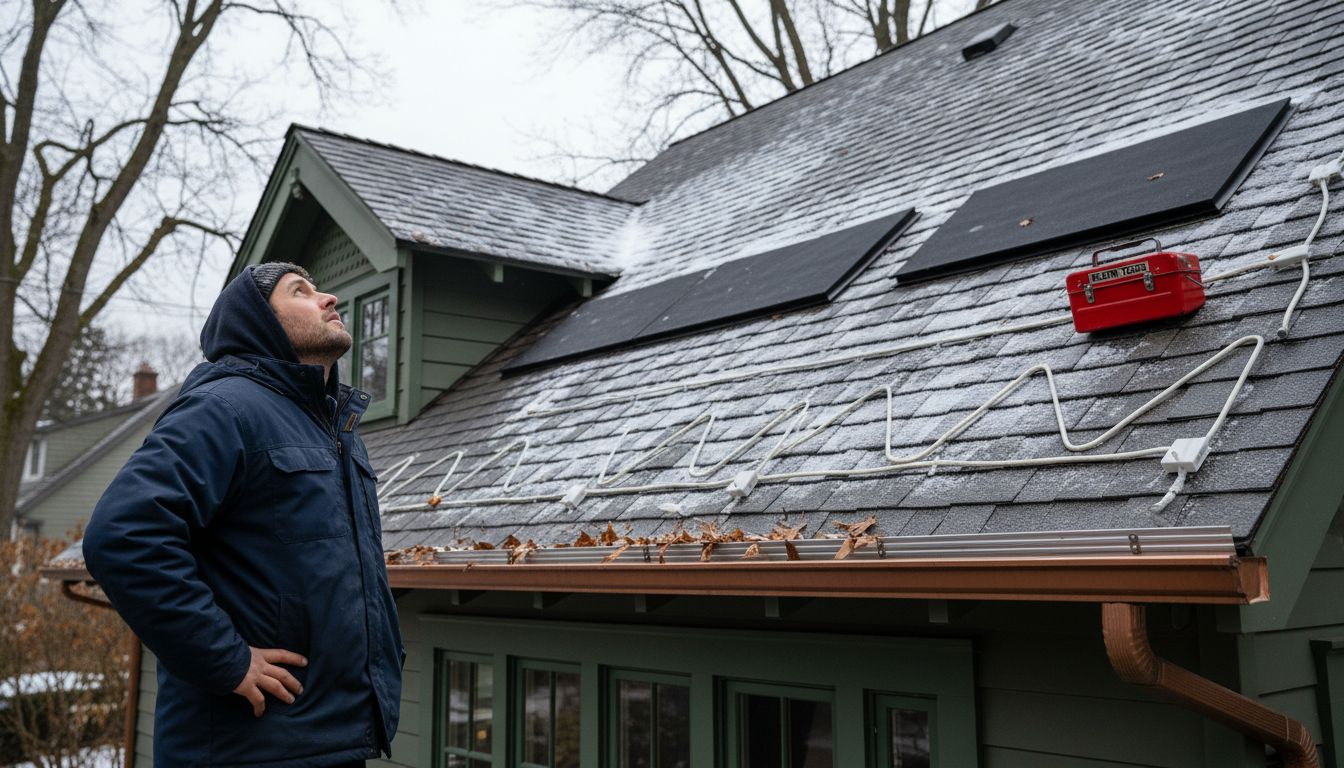
Specialized ice melt systems range from low-voltage heating panels to electric cable configurations, each offering unique advantages for specific roof types and regional climate challenges. The most common solutions include electric heating cables, self-regulating heat tape, and integrated polymer panel systems that can be discreetly installed beneath roofing materials.
These solutions can be categorized into three primary types:
- Electric Heating Cables: Flexible wires installed along roof edges and gutters
- Radiant Heat Panels: Thin, low-profile heating elements installed underneath roofing materials
- Thermal Mapping Systems: Advanced configurations that create strategic heat zones across the entire roof surface
Professional ice melt systems offer specialized configurations for different snow load conditions, such as the PRO4 system for extreme winter environments and more affordable options for regions with moderate snowfall. These systems typically provide comprehensive protection by generating consistent warmth that prevents ice accumulation and ensures proper water drainage.
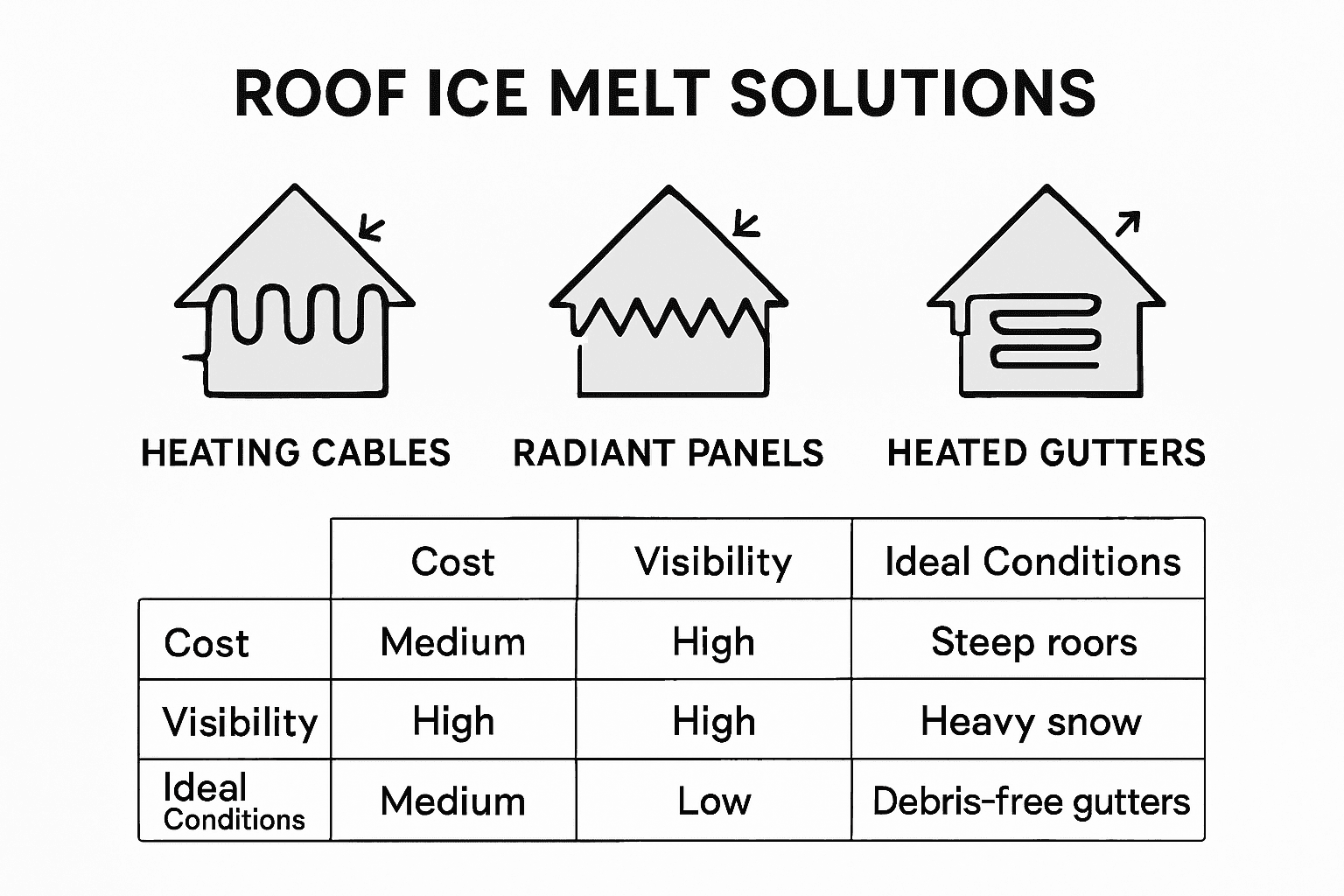
Here is a comparison of the main types of roof ice melt solutions and their ideal applications:
| Solution Type | Best For | Installation Visibility |
|---|---|---|
| Electric Heating Cables | Standard asphalt or metal roofs | Noticeable along roof edges |
| Radiant Heat Panels | New constructions, luxury homes | Hidden beneath roof materials |
| Thermal Mapping Systems | Complex roofs, severe climates | Integrated, minimal exposure |
Pro Tip: Customized Assessment: Consult with a professional contractor to evaluate your specific roof design, local climate conditions, and potential ice dam risks before selecting an ice melt solution.
How Roof Ice Melt Systems Work
Roof ice melt systems operate through sophisticated thermal technologies designed to prevent ice accumulation and protect residential roofing structures from potential winter damage. These intelligent systems generate controlled heat that disrupts the formation of ice dams by maintaining consistent temperatures across critical roof areas.
Radiant heating technologies deliver warmth directly through surfaces using electric cables or specialized tubing, creating strategic thermal zones that prevent snow from freezing and blocking critical drainage points. The fundamental principle involves generating just enough heat to keep roof surfaces slightly above freezing, allowing snow and ice to melt and drain effectively without creating additional moisture problems.
The core mechanisms of roof ice melt systems typically involve:
- Temperature Sensors: Automated devices that detect ambient temperature and surface conditions
- Electric Heating Elements: Precise wire configurations that generate consistent warmth
- Thermal Mapping: Advanced technology that creates targeted heating zones across roof surfaces
These systems work through a combination of intelligent temperature monitoring and heat generation. When temperatures drop and snow accumulates, the integrated sensors activate heating elements, creating a thin layer of warmth that prevents ice from forming along roof edges, valleys, and gutter systems. This proactive approach ensures continuous water drainage and eliminates the risk of destructive ice dam formation.
Pro Tip: Thermal Calibration: Professionally install and calibrate your roof ice melt system to ensure optimal performance, focusing on creating precise temperature gradients that prevent ice accumulation without excessive energy consumption.
Installation Considerations for Massachusetts Homes
Installing roof ice melt systems in Massachusetts requires careful planning and consideration of the state’s unique winter climate and stringent building regulations. Homeowners must navigate a complex landscape of technical requirements, local building codes, and specific environmental challenges that demand precision and expertise.
Massachusetts Residential Code mandates specific ice barrier requirements for single- and two-family homes, making professional installation crucial for compliance and effective protection. These regulations are designed to prevent water backup and potential structural damage caused by ice dam formation, which can be particularly severe in the region’s harsh winter conditions.
Key installation considerations for Massachusetts homeowners include:
- Roof Pitch and Design: Analyzing the specific architectural characteristics of your home
- Insulation Assessment: Evaluating existing attic and roof insulation to minimize heat loss
- Material Compatibility: Selecting systems that work seamlessly with different roofing materials
- Local Climate Zones: Accounting for specific microclimate variations across Massachusetts
Historic home installations require especially careful approach, as demonstrated in a detailed case study from Concord, where specialized systems were integrated without compromising the architectural integrity of slate shingle roofs. Professional contractors must balance technical requirements with preservation of the home’s original design.
Pro Tip: Professional Consultation: Schedule a comprehensive roof assessment with a local Massachusetts contractor who understands regional building codes and can provide customized ice melt system recommendations tailored to your specific home’s architecture and local climate conditions.
Costs, Maintenance, and Common Pitfalls
Investing in a roof ice melt system requires careful financial planning and understanding of the long-term value proposition. Homeowners must consider not just the initial installation costs, but also potential energy savings and potential damage prevention that these systems provide.
Electric heating cable systems range from $1.50 to $3.00 per linear foot, with more comprehensive hydronic roof heating options starting around $10,000. These costs can vary significantly based on the complexity of your roof’s design, the specific technologies chosen, and the total area requiring protection.
Common installation and maintenance challenges include:
- Electrical Compatibility: Ensuring proper electrical infrastructure supports the system
- Thermal Calibration: Maintaining precise temperature control
- Ongoing Inspection: Regular checks for cable integrity and performance
- Energy Efficiency: Monitoring and managing system power consumption
Some advanced ice melt systems can reduce heat trace cable usage by up to 65%, offering significant energy cost savings with potential rebate opportunities. Homeowners might see a return on investment in as little as two years, depending on local energy rates and the severity of winter conditions.
Below is a summary of key cost factors and typical maintenance needs for roof ice melt systems:
| Factor | Typical Range or Action | Impact on System Longevity |
|---|---|---|
| Installation Cost | $1.50–$3.00/ft (cables), $10,000+ (hydronic) | Higher cost improves durability |
| Annual Maintenance | Professional inspection, sensor calibration | Prevents costly failures |
| Energy Efficiency | Monitor usage, optimize settings | Lowers long-term operating cost |
Pro Tip: Cost-Effective Planning: Request multiple quotes from certified contractors, compare energy efficiency ratings, and explore potential utility rebates to maximize your investment in a roof ice melt system.
Protect Your Massachusetts Home with Expert Roof Ice Melt Solutions
Winter ice dams can cause hidden damage that affects your home’s structure and comfort. The article highlights how ice melt systems prevent harmful ice accumulation and costly repairs by maintaining critical roof temperature zones. If you want to stop ice dams before they threaten your roof, professional installation and maintenance are key to lasting protection.
At Sabatalo Contracting & Home Improvement, we combine over 15 years of local Massachusetts experience with the latest roof protection technologies. Our expert team understands roofing challenges from thermal calibration to building code compliance so you get a custom, durable solution tailored for your home. We specialize in exterior upgrades that enhance protection, energy efficiency, and curb appeal with craftsmanship and integrity.

Don’t wait for winter damage to start costing you. Take control with our trusted roof ice melt system installations and maintenance plans. Visit us now at Sabatalo Contracting & Home Improvement and request a free consultation to safeguard your home with proven, expert solutions.
Frequently Asked Questions
What are roof ice melt systems and how do they work?
Roof ice melt systems are specialized solutions designed to prevent ice dams on roofs during winter. They work by generating heat through electric cables or heating panels, keeping critical areas of the roof above freezing to allow snow and ice to melt and drain effectively.
What types of roof ice melt solutions are available?
There are several types of roof ice melt solutions, including electric heating cables, radiant heat panels, and thermal mapping systems. Each solution has unique benefits and is suited for different architectural styles and environmental conditions.
How much does it cost to install a roof ice melt system?
Installation costs for roof ice melt systems typically range from $1.50 to $3.00 per linear foot for electric heating cables, with more comprehensive hydronic systems starting at around $10,000, depending on the roof design and chosen technology.
What maintenance do roof ice melt systems require?
Regular maintenance for roof ice melt systems involves professional inspections, sensor calibrations, and monitoring of electrical components to ensure optimal performance. This preventive upkeep helps avoid costly failures and maximizes energy efficiency.
