
Energy bills for the average American home can climb by more than 30 percent during Massachusetts winters. Upgrading to energy-efficient impact windows does more than improve insulation—it protects your investment and enhances curb appeal in every season. These advanced windows are engineered to handle the demands of New England weather while keeping your property stylish and comfortable. Learn how the right impact windows can combine strength, savings, and a beautiful American home for years to come.
Table of Contents
- What Makes An Impact Window Energy Efficient
- Types Of Energy Efficient Impact Windows
- Essential Features For Massachusetts Homes
- Compliance With Massachusetts Energy Codes
- Cost, Rebates, And Common Mistakes
Key Takeaways
| Point | Details |
|---|---|
| Energy Efficiency Features | Impact windows utilize advanced technologies like Low-E coatings and multi-layered glass to enhance energy efficiency and indoor comfort. |
| Frame Material Importance | Choosing the right frame material, such as vinyl or fiberglass, can significantly affect the thermal performance and durability of impact windows. |
| Compliance with Energy Codes | Adherence to Massachusetts energy codes is essential for optimal energy efficiency and may vary based on local regulations. |
| Financial Incentives | Homeowners can benefit from various rebate programs and tax credits to offset the costs of energy-efficient window upgrades. |
What Makes an Impact Window Energy Efficient
Impact windows are sophisticated engineering solutions designed to provide superior protection and energy efficiency for Massachusetts homes. These advanced windows go far beyond traditional glass installations, featuring complex thermal engineering that dramatically reduce energy transfer and enhance home comfort.
At their core, energy efficient impact windows incorporate several key technological elements. The primary components include specialized glass construction with multiple performance layers: laminated glass panels featuring Low-E coatings, inert gas fills like argon between glass panes, and reinforced frames crafted from highly insulative materials such as vinyl or fiberglass. These integrated design features work synergistically to minimize heat conduction, block harmful ultraviolet radiation, and create an effective thermal barrier between interior and exterior environments.
The thermal performance of impact windows stems from their multilayered construction. Laminated glass includes a special interlayer that not only prevents glass shattering during storms but also blocks infrared and ultraviolet rays. Double or triple glazing techniques create additional insulation chambers that trap air and reduce temperature exchange. Vinyl and fiberglass frames further contribute to energy efficiency by preventing thermal bridging – the unwanted heat transfer that occurs through window frame materials.
Pro tip: When selecting impact windows, request a professional energy performance rating comparison to understand precise thermal efficiency metrics for different window models.
Types of Energy Efficient Impact Windows
Homeowners in Massachusetts have several options when selecting energy efficient impact windows, with each type offering unique performance characteristics. Double-pane and triple-pane windows represent the primary configurations designed to maximize thermal insulation and protect against extreme weather conditions. These window types utilize sophisticated glass technologies that significantly reduce energy transfer and enhance home comfort.
The most common types of energy efficient impact windows include configurations with specialized glazing technologies. Double-pane windows feature two glass layers with an insulating gas fill like argon or krypton between them, creating a thermal barrier that minimizes heat exchange. Triple-pane windows offer even greater insulation, incorporating three glass layers with two separate gas-filled chambers. Both designs incorporate Low-E coatings that reflect infrared radiation, preventing heat gain during summer and heat loss during winter.
Frame materials play a crucial role in the overall energy efficiency of impact windows. Window technologies vary by frame composition, with vinyl, fiberglass, and composite materials providing superior thermal performance compared to traditional aluminum frames. Vinyl frames offer excellent insulation properties and resistance to temperature fluctuations, while fiberglass frames combine durability with exceptional energy efficiency. Composite frames blend multiple materials to optimize thermal performance and structural integrity, making them an increasingly popular choice for Massachusetts homeowners seeking comprehensive window solutions.
Here’s how popular impact window frame materials compare for Massachusetts homes:
| Frame Material | Insulation Performance | Durability in Climate | Maintenance Needs |
|---|---|---|---|
| Vinyl | Excellent | Highly weather resistant | Minimal cleaning |
| Fiberglass | Superior | Withstands extreme temperatures | Occasional upkeep |
| Composite | High | Stable in all conditions | Low maintenance |
| Aluminum | Moderate | Prone to thermal bridging | May corrode over time |
Pro tip: Request a professional energy performance rating comparison to understand the precise thermal efficiency metrics for different impact window configurations before making your final selection.
Essential Features for Massachusetts Homes
Massachusetts homeowners face unique climate challenges that demand specialized impact window features designed to withstand harsh seasonal conditions. Energy efficient windows for Massachusetts must address extreme temperature variations, from frigid winters to humid summers, while providing robust protection against coastal storms and inland weather fluctuations.
Key essential features for impact windows in Massachusetts homes include superior insulation capabilities, robust wind resistance, and advanced thermal management. Homeowners should prioritize windows with multiple glass layers, Low-E coatings, and gas-filled chambers that create effective thermal barriers. These design elements help regulate indoor temperatures, reduce energy consumption, and minimize heat transfer during both winter heating and summer cooling seasons. Specific performance characteristics like solar heat gain coefficient (SHGC) and air infiltration ratings become critical when selecting windows tailored to New England’s demanding environmental conditions.
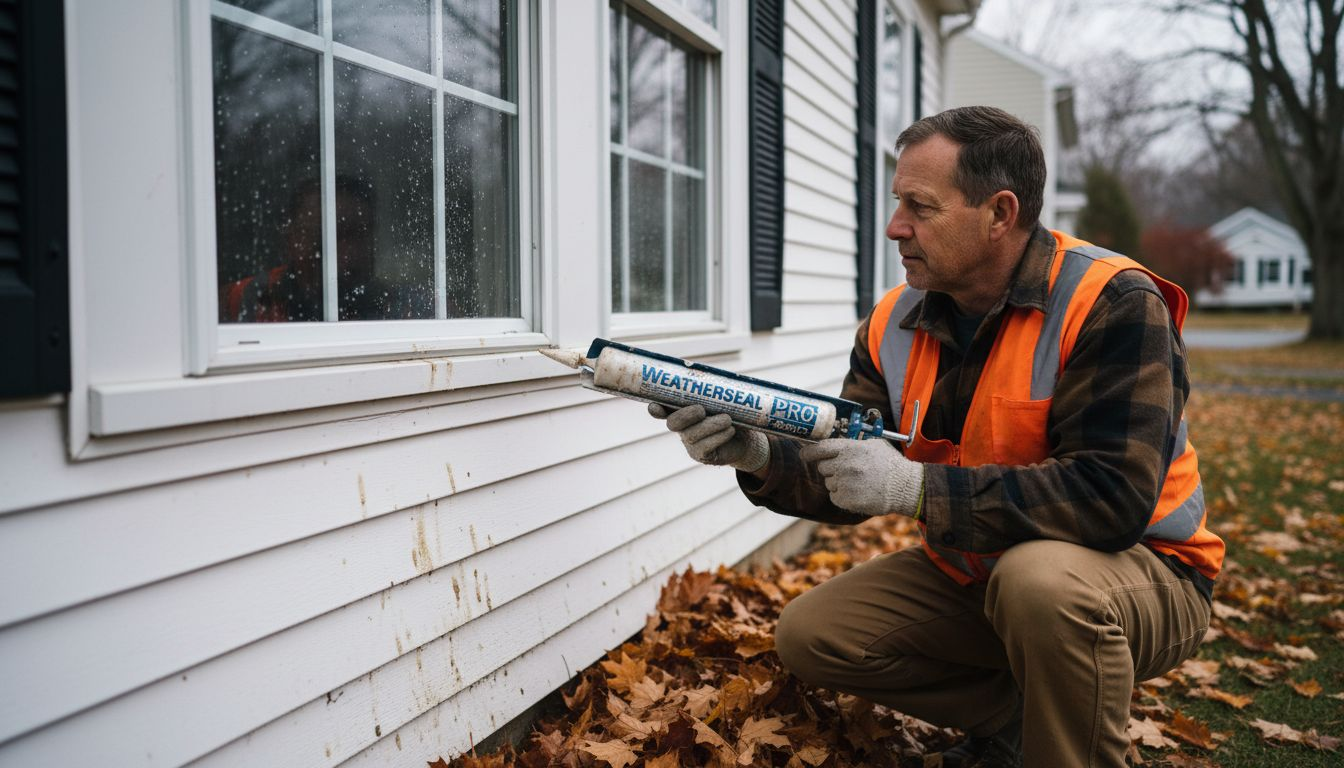
Structural integrity represents another crucial consideration for Massachusetts impact windows. The region’s weather patterns demand windows capable of withstanding wind speeds up to 150 miles per hour, heavy snowfall, and potential severe coastal storm events. Reinforced frames made from vinyl or fiberglass, laminated glass with multiple interlayers, and precision-engineered mounting systems provide the necessary durability and protection. Additionally, windows should feature enhanced weatherstripping, robust locking mechanisms, and impact-resistant glass that can withstand flying debris during extreme weather events.
Pro tip: Request professional thermal performance ratings and wind resistance certifications specific to Massachusetts building codes when selecting impact windows for maximum protection and energy efficiency.
Compliance With Massachusetts Energy Codes
Massachusetts has implemented comprehensive energy codes that significantly impact window selection and installation for residential properties. Massachusetts building energy codes establish rigorous standards designed to improve energy efficiency, reduce environmental impact, and ensure sustainable home construction across the state.
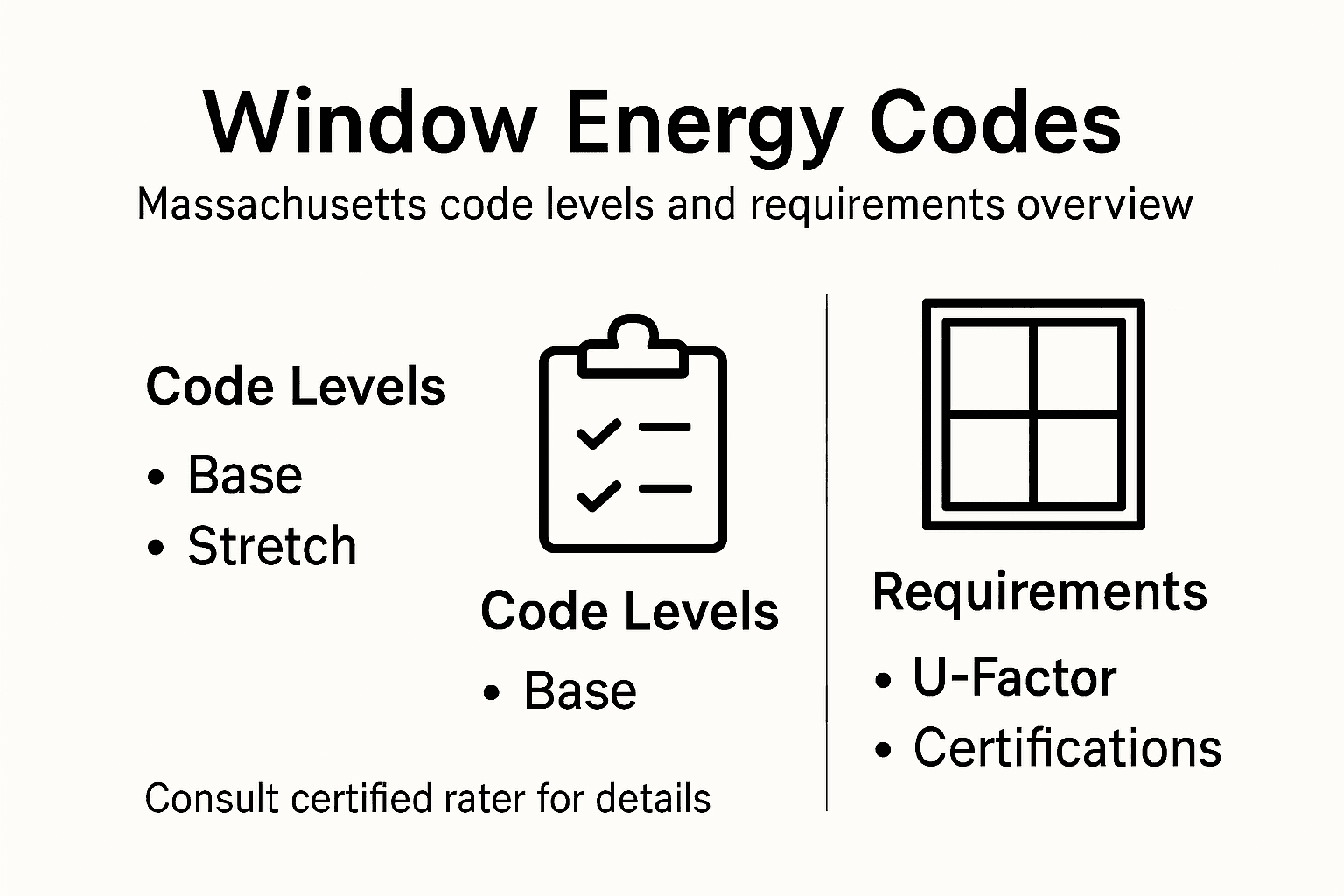
The state’s energy codes are structured in three distinct levels: Base Code, Stretch Code, and Specialized Code, each with progressively more stringent requirements. The Base Code follows the 2021 International Energy Conservation Code (IECC) with specific state amendments, setting minimum performance standards for window U-factor ratings and thermal performance. Municipalities can choose to adopt either the Base Code or opt for more demanding Stretch and Specialized Codes, which impose additional requirements for thermal insulation, air infiltration, and overall energy performance. Homeowners must ensure their impact windows meet or exceed these prescribed standards, which vary depending on specific climate zones and local municipal regulations.
Explore key Massachusetts energy code levels and their primary window requirements:
| Code Level | Minimum U-Factor | Added Requirements |
|---|---|---|
| Base Code | 0.30 or lower | IECC guidelines with amendments |
| Stretch Code | 0.27 or lower | Stricter air infiltration limits |
| Specialized | 0.25 or lower | Enhanced insulation, stricter modeling |
Compliance with Massachusetts energy codes requires careful consideration of multiple technical specifications. Window manufacturers and installers must demonstrate that their products meet specific performance metrics, including prescribed U-factor ratings, solar heat gain coefficients, and air infiltration limits. Professional energy raters often conduct detailed assessments to verify that windows contribute to the home’s overall energy efficiency goals. These evaluations may include comprehensive energy modeling, on-site inspections, and verification of installation techniques to ensure full compliance with state and local building regulations.
Pro tip: Consult with a certified energy rater who specializes in Massachusetts building codes to obtain precise guidance on impact window specifications for your specific municipality.
Cost, Rebates, and Common Mistakes
Homeowners in Massachusetts can significantly offset the initial investment in energy-efficient impact windows through strategic financial planning and available incentive programs. Energy-efficient window upgrades offer substantial long-term savings, with potential energy cost reductions ranging from 25% to 30% and multiple financial assistance options to ease the upfront expense.
The financial landscape for impact window investments includes several compelling incentives. Massachusetts offers robust rebate programs through Mass Save, providing homeowners up to $75 per window replacement for ENERGY STAR certified products. Additionally, federal tax credits under the Inflation Reduction Act allow homeowners to claim up to 30% of upgrade costs, with an annual cap of $600. Financing options like the Mass Save HEAT Loan program provide 0% interest loans up to $25,000, making energy-efficient window replacements more accessible for budget-conscious homeowners.
Avoiding common mistakes is crucial when navigating window replacement and rebate opportunities. Frequent errors include selecting non-certified products, overlooking local rebate eligibility requirements, and neglecting professional installation. Homeowners should carefully verify window energy ratings, work with certified contractors, and ensure proper sizing and installation to maximize energy savings and qualify for available financial incentives. Comprehensive research and consultation with energy efficiency experts can help prevent costly missteps and ensure optimal window performance.
Pro tip: Collect and organize all documentation related to window purchases, energy ratings, and installation to streamline the rebate and tax credit application process.
Enhance Your Home with Energy Efficient Impact Windows Today
If you are seeking reliable protection against harsh Massachusetts weather while lowering your energy bills, energy efficient impact windows are the key solution. This article highlights how modern window technologies like multilayer glazing, Low-E coatings, and insulated frames deliver superior thermal performance and wind resistance. At Sabatalo Contracting & Home Improvement, we understand the unique demands Massachusetts homeowners face. Our Windows services specialize in installing high-quality impact windows tailored to meet and exceed local energy codes and durability standards.

Don’t let subpar windows compromise your comfort or safety. Explore our wide range of energy efficient options, including expert installation and precise fitting of Single Windows that maximize insulation and storm protection. Act now to take advantage of Massachusetts rebates and federal tax credits by choosing trusted professionals with over 15 years of local expertise. Visit Sabatalo Contracting and request your personalized quote today to transform your home’s energy efficiency and safeguard your property for years to come.
Frequently Asked Questions
What are energy efficient impact windows?
Energy efficient impact windows are specially designed window systems that provide superior protection against extreme weather while enhancing energy efficiency. They feature multiple glass layers, Low-E coatings, and insulated frames to minimize heat transfer and block harmful UV radiation.
How do impact windows improve energy efficiency?
Impact windows improve energy efficiency through their multilayered construction, which includes laminated glass, inert gas fills, and thermal barriers. This design minimizes temperature exchange, regulates indoor climate, and reduces energy consumption for heating and cooling.
What are the different types of impact windows available for energy efficiency?
The main types of energy efficient impact windows are double-pane and triple-pane windows. Double-pane windows consist of two glass layers with an insulating gas fill, while triple-pane windows have three layers and two insulated chambers, providing enhanced thermal insulation.
Are there financial incentives for installing energy efficient impact windows?
Yes, homeowners can benefit from various financial incentives such as rebate programs for ENERGY STAR certified windows and federal tax credits that cover a percentage of upgrade costs. Additionally, certain loan programs offer low or zero-interest financing options for window replacements.
Recommended
- New Energy Efficient Windows: Lower Bills, Enhanced Comfort | Sabatalo Contracting
- Benefits of Energy Audits for Massachusetts Homes | Sabatalo Contracting
- When to Replace Windows: Guide for Massachusetts Homes 2025
- 7 Essential Door Installation Tips for Massachusetts Homeowners | Sabatalo Contracting
