
Most American homes lose up to 30 percent of their heating and cooling energy through outdated windows. In Massachusetts, where every winter chill and summer heat wave impacts your utility bills, investing in energy-efficient windows can create lasting comfort while lowering monthly expenses. This guide explains which window features matter most, how certifications like those from the National Fenestration Rating Council ensure true performance, and smart ways Massachusetts homeowners can secure reliable installation plus valuable rebates.
Table of Contents
- What Makes Windows Energy Efficient
- Key Window Types and Performance Ratings
- Crucial Features: Materials, Coatings, Glass
- Massachusetts Energy Codes and Rebates
- Cost, Payback, and Common Pitfalls
Key Takeaways
| Point | Details |
|---|---|
| Energy Efficiency Components | Windows with multiple panes, Low-E coatings, and gas fills significantly reduce heat transfer and improve insulation. |
| Rating Importance | Understanding U-factor and Solar Heat Gain Coefficient (SHGC) ratings helps homeowners make informed choices regarding window performance. |
| Material Selection | Choosing the right frame material, such as vinyl or fiberglass, can enhance thermal resistance and minimize maintenance needs. |
| Financial Considerations | Homeowners should evaluate the payback period of window replacements, as energy savings can take 7-20 years to recover initial costs. |
What Makes Windows Energy Efficient
Evaluating the energy efficiency of windows requires understanding multiple sophisticated design elements that work together to minimize heat transfer and optimize home comfort. The National Fenestration Rating Council (NFRC) provides comprehensive certification standards that help homeowners identify truly high-performance windows through precise technical ratings.
Energy-efficient windows incorporate several advanced technological features designed to reduce thermal exchange and improve insulation. These key components typically include:
- Multiple Glass Panes: Double or triple-pane windows create additional insulating layers
- Low-Emissivity (Low-E) Coatings: Special metallic layers that reflect infrared heat
- Insulating Gas Fills: Argon or krypton gas between window panes that conduct less heat than standard air
- Advanced Frame Materials: Vinyl, fiberglass, or composite frames with superior thermal resistance
These sophisticated design elements work synergistically to control heat transfer through a window. Energy-efficient windows strategically block ultraviolet rays while allowing natural light and managing solar heat gain. The U-factor and Solar Heat Gain Coefficient (SHGC) ratings provide precise measurements of a window’s thermal performance, helping Massachusetts homeowners make informed decisions about their home’s energy efficiency.
Pro tip: When shopping for energy-efficient windows, always request the NFRC certification label to compare precise performance ratings and ensure you’re getting a scientifically validated product.
Key Window Types and Performance Ratings
Understanding window performance requires a comprehensive look at different types and their scientific ratings. The National Fenestration Rating Council (NFRC) develops standardized certification metrics that help homeowners make informed decisions about their window investments, focusing on critical performance characteristics that directly impact energy efficiency.
Window types are primarily categorized by their construction and materials, each offering unique thermal performance benefits:
- Double-Hung Windows: Traditional style with two vertically sliding sashes
- Casement Windows: Hinged on one side, opening outward with excellent seal integrity
- Sliding Windows: Horizontal movement, ideal for wide openings
- Fixed Windows: Stationary design with superior insulation properties
- Bay and Bow Windows: Projecting window styles that add architectural interest
Modern energy-efficient window systems can reduce building energy consumption by 10% to 50% depending on specific climate conditions and installation quality. The NFRC provides comprehensive ratings that help consumers evaluate window performance, including:
Compare key window performance metrics and their impact on home energy use:
| Metric | What It Measures | Homeowner Benefit |
|---|---|---|
| U-Factor | Heat loss rate | Better insulation |
| SHGC | Solar heat transmission | Manages sun gain |
| Visible Transmittance | Amount of light allowed | Added daylight |
| Air Leakage | Air movement resistance | Prevents drafts |
| Condensation Resistance | Moisture protection | Less fogging |
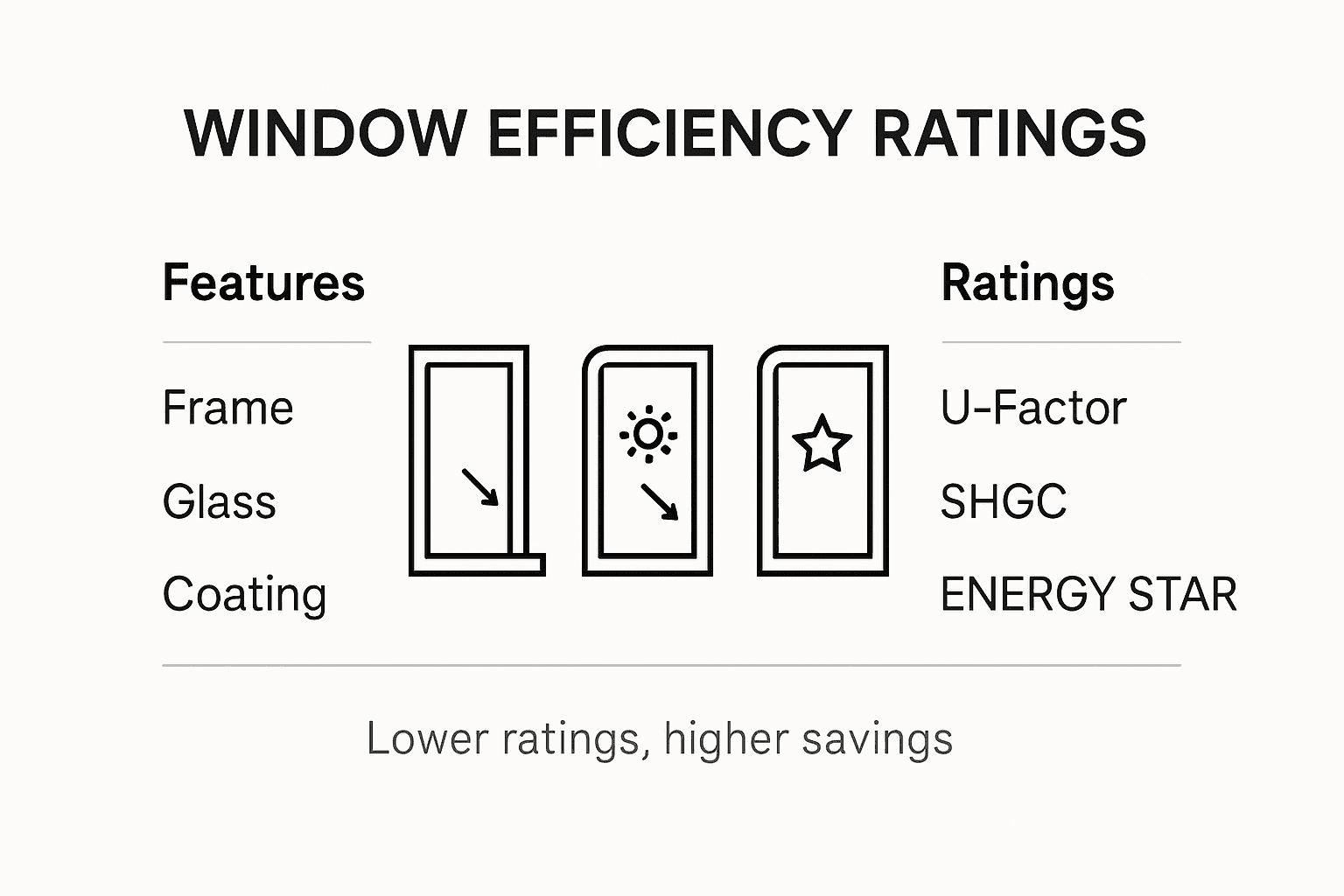
- U-Factor: Measures heat transfer rate
- Solar Heat Gain Coefficient (SHGC): Indicates how much solar radiation passes through
- Visible Transmittance: Measures amount of visible light transmitted
- Air Leakage: Quantifies air movement through window assembly
- Condensation Resistance: Evaluates window’s ability to resist moisture buildup
Pro tip: When selecting windows, prioritize ENERGY STAR certification and compare NFRC ratings specific to Massachusetts climate zones to maximize energy savings and home comfort.
Crucial Features: Materials, Coatings, Glass
Window performance hinges on three critical components: frame materials, glass technology, and specialized coatings. Energy-efficient windows utilize sophisticated materials that work together to create superior thermal barriers, dramatically reducing heat transfer and improving home comfort.
Frame materials play a crucial role in overall window performance, with each option offering unique advantages:
Here’s how leading window frame materials compare by key performance factors:
| Material | Thermal Insulation | Maintenance Needs | Durability |
|---|---|---|---|
| Vinyl | High | Very Low | Moderate |
| Fiberglass | Very High | Low | Very High |
| Wood | Moderate | High | Moderate |
| Aluminum | Low | Moderate | High |
| Composite | High | Low | High |
- Vinyl: Affordable, low-maintenance, excellent insulation properties
- Fiberglass: Extremely durable, minimal expansion and contraction
- Wood: Classic aesthetic, good insulating capabilities
- Aluminum: Lightweight, strong, ideal for specific architectural applications
- Composite: Combines multiple material benefits for optimal performance
Researchers continue pushing boundaries in window technology with innovative solutions like silicone-based gel coatings that enhance insulation. Glass technologies now incorporate advanced features such as:
- Double and Triple Glazing: Multiple glass layers with inert gas fills
- Low-Emissivity (Low-E) Coatings: Metallic layers that reflect infrared heat
- Inert Gas Fills: Argon or krypton between glass panes to reduce heat transfer
- Spectrally Selective Coatings: Allow visible light while blocking heat
Pro tip: When selecting windows, prioritize materials that balance thermal performance, durability, and local climate requirements for maximum energy efficiency.
Massachusetts Energy Codes and Rebates
Massachusetts implements progressive energy efficiency standards designed to reduce carbon emissions and support sustainable home improvements. The state’s comprehensive approach combines regulatory requirements with financial incentives, creating a robust framework for homeowners looking to upgrade their energy infrastructure.
The state’s energy regulations are structured across multiple levels of compliance and support:
- Stretch Energy Code: Advanced municipal standards for new construction
- Mass Save Program: Comprehensive rebate and incentive initiative
- Municipal Adoption Mechanisms: Local flexibility in energy efficiency requirements
- Residential Specialized Code: Stringent thermal performance standards
Municipal authorities can adopt specialized energy efficiency codes that go beyond standard state regulations, allowing for more aggressive energy reduction strategies. These codes specifically address window installations, requiring higher insulation performance and stricter thermal transmission standards for residential and commercial buildings.
Financial incentives through programs like Mass Save offer significant support for homeowners, including:
- Direct rebates for energy-efficient window replacements
- Potential tax credits for qualifying improvements
- Low-interest financing for energy upgrade projects
- Free energy audits to identify improvement opportunities
Pro tip: Contact your local municipal building department and Mass Save representatives to verify current rebate amounts and specific eligibility requirements for window replacement incentives.
Cost, Payback, and Common Pitfalls
Energy-efficient window replacements represent a significant investment that requires careful financial consideration. Homeowners in Massachusetts must balance upfront costs with potential long-term energy savings, understanding that window replacement is a complex financial decision involving multiple factors beyond simple price comparisons.
Typical cost ranges for energy-efficient windows vary widely depending on several critical factors:
- Per Window Pricing: $300 to $1,000 installed
- Whole Home Replacement: Potential total project costs of $5,000 to $15,000
- Energy Savings Potential: Up to 13% reduction in annual energy bills
- Payback Period: Typically 7-20 years depending on specific conditions
Window replacement costs involve multiple complex considerations that extend beyond simple price comparisons. Homeowners should evaluate:
- Material quality and durability
- Local climate performance requirements
- Installation expertise
- Potential energy savings
- Long-term maintenance expenses
Common pitfalls in window replacement include:
- Underestimating total project costs
- Choosing windows inappropriate for local climate
- Overlooking installation quality
- Failing to account for potential maintenance expenses
- Overestimating immediate energy savings
Pro tip: Request detailed cost-benefit analyses from multiple contractors, comparing projected energy savings against installation expenses to make the most informed financial decision.
Discover Energy Efficient Window Solutions Tailored for Massachusetts Homes
Reducing your energy bills and enhancing home comfort starts with the right windows designed to meet Massachusetts energy codes and withstand the local climate. If you are concerned about high heating and cooling costs or uncomfortable drafts caused by outdated windows, Sabatalo Contracting offers expert services specializing in energy-efficient window installations. Their projects focus on windows with advanced glazing, low-E coatings, and durable frame materials that maximize insulation and minimize heat loss, helping you enjoy year-round comfort.

Explore quality options at Windows | Sabatalo Contracting that fit your home’s unique needs. Take advantage of their deep local expertise and transparent process to upgrade your windows with confidence now. Visit https://sabatalocontracting.com to request a personalized consultation and see how new energy-efficient windows can transform your home comfort while lowering your energy expenses. Don’t wait to invest in improvements that pay off for years to come.
Frequently Asked Questions
What are the benefits of energy-efficient windows?
Energy-efficient windows help lower energy bills, enhance home comfort by reducing temperature fluctuations, and minimize outside noise. They are designed to reduce heat transfer, keeping your home warmer in winter and cooler in summer.
How do energy-efficient windows work to improve insulation?
Energy-efficient windows typically feature multiple glass panes, low-emissivity (Low-E) coatings, insulating gas fills like argon or krypton, and advanced frame materials. These elements work together to limit heat transfer and improve overall insulation performance.
What factors should I consider when selecting energy-efficient windows?
Consider frame materials, glass technology, energy performance ratings (like U-Factor and Solar Heat Gain Coefficient), and installation quality. Look for windows with ENERGY STAR certification to ensure they meet high energy efficiency standards.
How much can I expect to save on energy bills with new energy-efficient windows?
While savings can vary based on several factors, homeowners typically see a reduction of up to 13% in annual energy bills after replacing old windows with energy-efficient ones. The payback period for window replacement usually ranges from 7 to 20 years, depending on specific conditions.
Recommended
- Benefits of Energy Audits for Massachusetts Homes | Sabatalo Contracting
- When to Replace Windows: Guide for Massachusetts Homes 2025
- 7 Essential Door Installation Tips for Massachusetts Homeowners | Sabatalo Contracting
- Window Condensation Causes: Everything You Need to Know | Sabatalo Contracting
- Energy-Efficient Shutters: Smart Solutions for UK Homes 2025 | Shutter World
