
More than 60 million american homes deal with window condensation every year, yet many people believe it only affects older buildings or extreme climates. This moisture problem actually develops in both new and old homes and can hint at deeper issues like poor ventilation or high humidity. Knowing the truth about window condensation helps homeowners protect their investment while avoiding common mistakes that put health and property at risk.
Table of Contents
- Defining Window Condensation And Common Misconceptions
- Major Causes Of Window Condensation In Homes
- Types Of Window Condensation And Their Differences
- Risks And Issues Linked To Window Moisture
- Effective Prevention And Maintenance Strategies
Key Takeaways
| Point | Details |
|---|---|
| Understanding Condensation | Window condensation is a natural process caused by temperature differences and humidity, occurring in all homes regardless of age. |
| Primary Contributors | Indoor activities such as cooking, showering, and breathing are major sources of moisture that lead to window condensation. |
| Risks of Window Moisture | Persistent condensation can result in mold growth, structural deterioration, and declining indoor air quality, necessitating prompt action. |
| Prevention Strategies | Effective moisture management includes using extractor fans, maintaining ventilation, and keeping indoor humidity below 40% during winter. |
Defining Window Condensation and Common Misconceptions
Window condensation is a complex phenomenon that occurs when water vapor transforms into liquid droplets on cooler surfaces, particularly windows. Condensation happens when invisible water molecules in the air meet cold surfaces, creating tiny liquid beads that can potentially lead to significant home maintenance challenges.
Contrary to popular belief, condensation is not exclusive to older homes or specific weather conditions. Indoor activities significantly contribute to moisture levels, with everyday actions like cooking, showering, and even breathing generating substantial water vapor. These moisture sources can accumulate rapidly, especially in modern, well-sealed homes where air circulation is limited.
Key characteristics of window condensation include:
- Appearance of water droplets on glass surfaces
- Higher likelihood during temperature transitions
- Potential for mold growth if left untreated
- Occurrence in both new and old residential structures
Understanding window condensation requires recognizing that it’s a natural physical process driven by temperature differentials and humidity levels. Homeowners should view condensation not as a structural defect, but as a environmental interaction that requires strategic management and proactive home maintenance approaches.
Major Causes of Window Condensation in Homes
Indoor activities are the primary culprits behind window condensation, generating significant moisture that accumulates on cold surfaces. Everyday household tasks like cooking, showering, and drying clothes release substantial water vapor into the air, creating an environment ripe for condensation formation.
High indoor humidity levels can trap moisture in tight, energy-efficient homes, leading to condensation on windows and other cold surfaces. The most significant moisture contributors include:
- Long, hot showers
- Cooking without proper ventilation
- Drying clothes indoors
- Breathing and perspiration
- Indoor plant transpiration
The temperature differential between warm indoor air and cold window surfaces plays a critical role in condensation development. When moist, warm air comes into contact with cooler window surfaces, water vapor rapidly condenses into liquid droplets. This process is particularly pronounced during seasonal transitions, when indoor heating meets cold exterior window temperatures.
Homeowners can mitigate window condensation by improving home ventilation, using dehumidifiers, and maintaining consistent indoor temperatures. When to Replace Windows: Guide for Massachusetts Homes 2025 can provide additional insights into managing window-related moisture challenges and potentially upgrading to more moisture-resistant window solutions.
Types of Window Condensation and Their Differences
Window condensation manifests in several distinct forms, each indicating different environmental conditions and potential underlying moisture issues. Window surfaces can display varying types of moisture accumulation, ranging from subtle water droplets to more pronounced frost formations, depending on specific humidity and temperature factors.
The primary types of window condensation include:
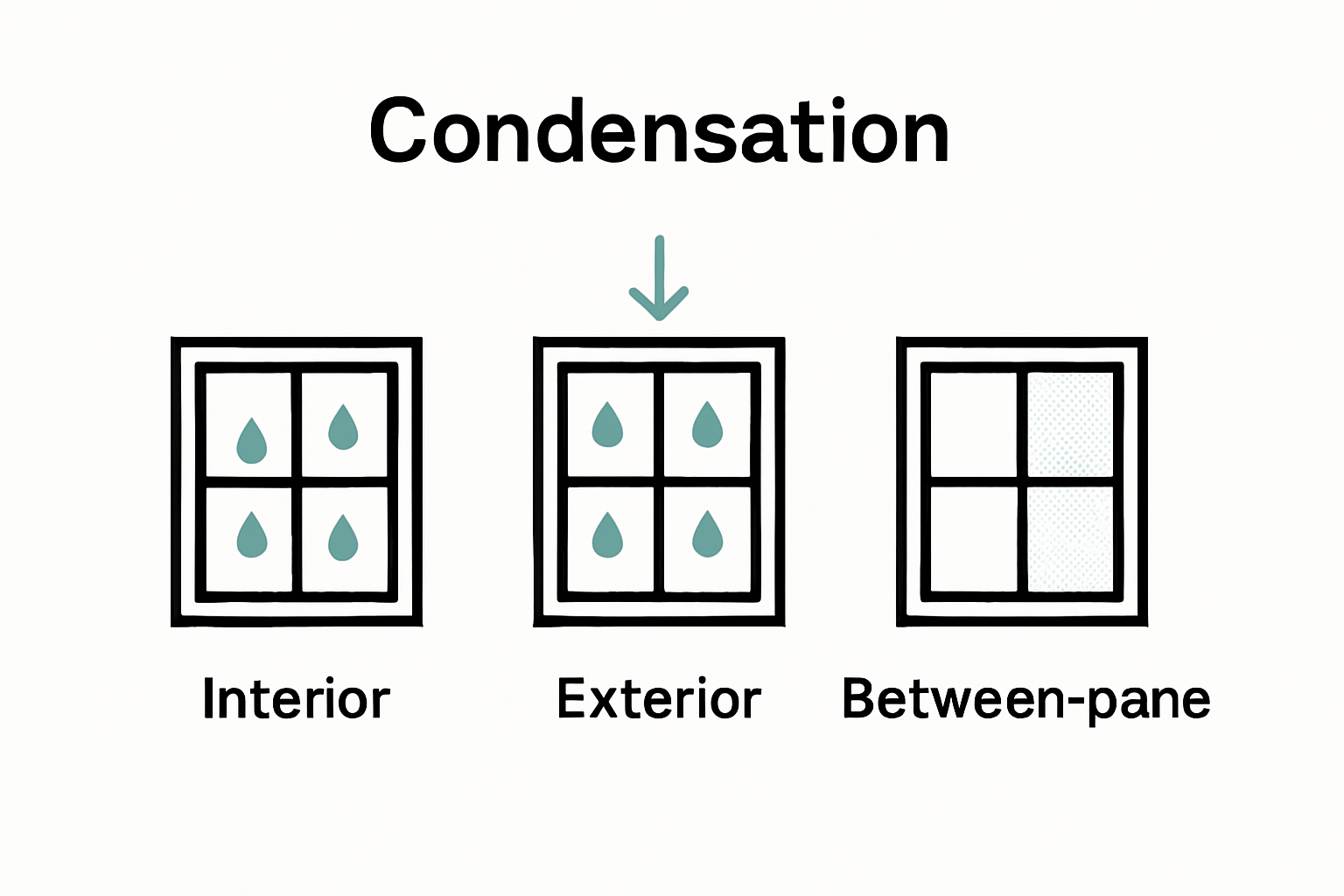
- Interior Surface Condensation: Water droplets forming on the inside of window glass
- Exterior Surface Condensation: Moisture appearing on the outside window surface
- Between-Pane Condensation: Moisture trapped between double or triple-pane window layers
- Frost Formation: Frozen water vapor accumulating during extremely cold temperatures
Each condensation type provides unique insights into home humidity levels and potential ventilation challenges. Interior surface condensation typically suggests high indoor moisture content, while exterior condensation often indicates natural temperature and humidity fluctuations. When to Replace Windows: Guide for Massachusetts Homes 2025 can help homeowners understand how window quality impacts moisture management.
Understanding these condensation variations allows homeowners to implement targeted strategies. Monitoring humidity levels, improving ventilation, and addressing potential insulation issues can significantly reduce unwanted moisture accumulation and protect both windows and indoor environmental quality.
Risks and Issues Linked to Window Moisture
Window moisture represents a significant threat to home integrity and occupant health, extending far beyond simple aesthetic concerns. Persistent condensation can lead to severe structural damage and potential health risks, creating a complex series of challenges for homeowners that demand immediate attention and strategic intervention.
The primary risks associated with window moisture include:
- Mold Growth: Rapid development of harmful fungal colonies
- Structural Deterioration: Gradual weakening of window frames and surrounding materials
- Wood Rot: Accelerated decay of wooden window components
- Indoor Air Quality Reduction: Increased allergens and respiratory irritants
- Potential Property Value Decline: Long-term damage affecting home marketability
Excessive moisture can result in construction defects and potential legal complications, underscoring the critical nature of proactive moisture management. Homeowners must recognize that window condensation is not merely a cosmetic issue but a significant structural and health concern that requires comprehensive strategies for prevention and mitigation.
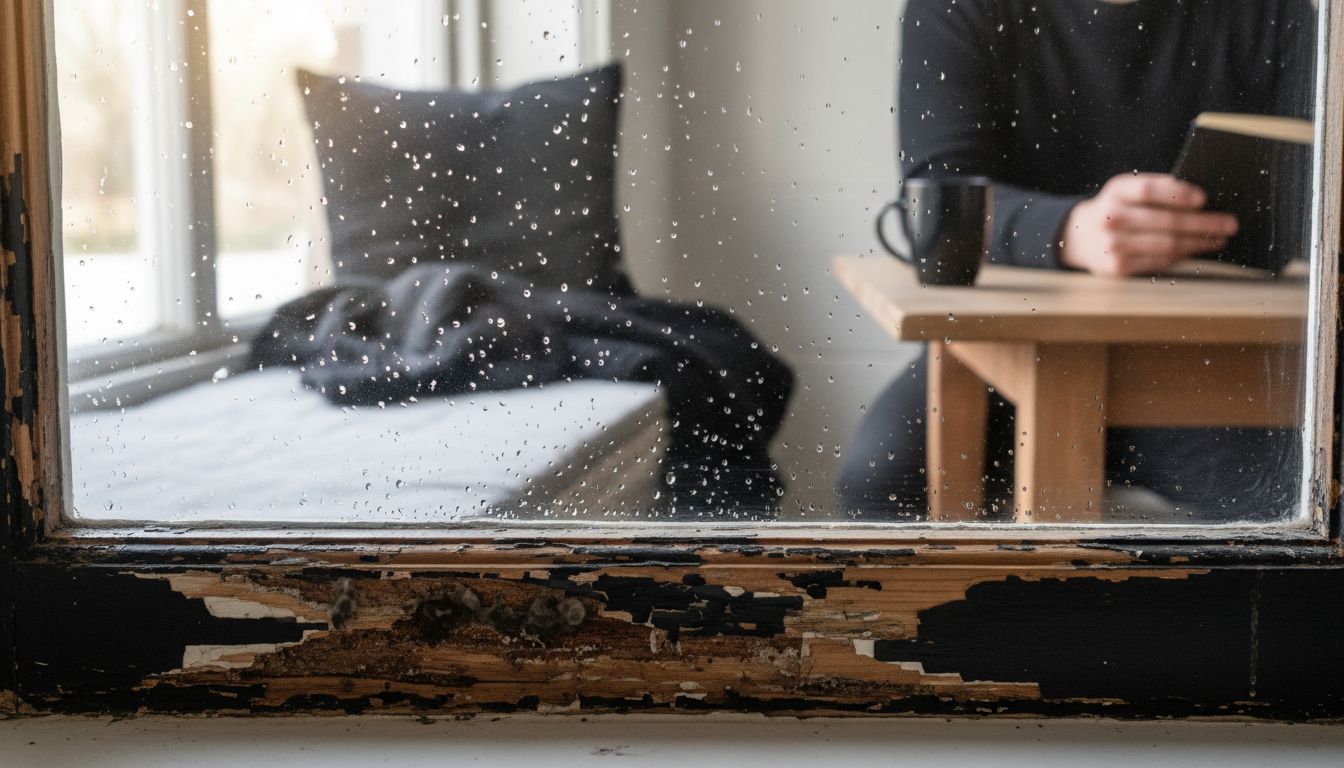
Understanding Wood Rot Around Windows: Causes and Effects highlights the importance of addressing moisture issues promptly. By implementing targeted ventilation techniques, maintaining appropriate humidity levels, and investing in quality window solutions, homeowners can effectively protect their property from the potentially devastating consequences of unchecked window moisture.
Effective Prevention and Maintenance Strategies
Window condensation management requires a comprehensive, proactive approach that addresses multiple environmental factors within the home. Implementing effective ventilation strategies is crucial in preventing moisture accumulation, creating a multi-layered defense against potential window moisture issues.
Key prevention strategies include:
- Install and use extractor fans in high-moisture areas
- Open windows periodically to promote air circulation
- Use bathroom and kitchen exhaust fans during and after activities
- Place dehumidifiers in areas prone to high humidity
- Maintain consistent indoor temperatures
Maintaining indoor humidity levels below 40% during winter months is essential for condensation control. Homeowners can achieve this by strategically using dehumidifiers, improving window insulation, and keeping interior glass surfaces warmer through targeted heating techniques.
When to Replace Windows: Guide for Massachusetts Homes 2025 offers additional insights into long-term moisture management. By combining technological solutions, consistent maintenance, and proactive monitoring, homeowners can effectively minimize window condensation risks and protect their property’s structural integrity and indoor environmental quality.
Protect Your Home From Window Condensation with Expert Solutions
Window condensation can create lasting damage to your home while also affecting your indoor air quality. If you are noticing moisture buildup or water droplets on your windows you might be facing issues like mold growth or wood rot that require immediate attention. Sabatalo Contracting understands the risks associated with persistent window moisture and offers reliable solutions tailored to combat these challenges. Whether you need improved ventilation options or want to upgrade to high-quality, energy-efficient windows our team brings over 15 years of local expertise to help you protect and enhance your home.

Discover professional window services that address condensation causes at their source by visiting our Windows | Sabatalo Contracting page. Ready to safeguard your property Against moisture damage and improve comfort do not wait. Contact us today at Sabatalo Contracting for a consultation and take the first step towards a healthier home environment.
Frequently Asked Questions
What causes window condensation?
Window condensation is primarily caused by high indoor humidity levels meeting cold window surfaces. Common indoor activities like cooking, showering, and even breathing contribute significant moisture to the air, which can condense on windows during temperature transitions.
How can I prevent window condensation?
Preventing window condensation involves improving home ventilation, using dehumidifiers, and maintaining consistent indoor temperatures. Installing extractor fans, opening windows periodically, and using exhaust fans during high-moisture activities can significantly reduce moisture accumulation.
What are the different types of window condensation?
The main types of window condensation include interior surface condensation (water droplets on the inside), exterior surface condensation (moisture on the outside), between-pane condensation (moisture trapped in double or triple-pane windows), and frost formation in extremely cold temperatures.
Is window condensation harmful?
Yes, window condensation can lead to several issues, including mold growth, structural deterioration, and reduced indoor air quality. It is essential to address these moisture challenges promptly to avoid potential health risks and property damage.
Recommended
- How to Clean Siding on House: Easy Tips for a Fresh Look | Sabatalo Contracting
- Understanding Wood Rot Around Windows: Causes and Effects | Sabatalo Contracting
- When to Replace Windows: Guide for Massachusetts Homes 2025
- How to Clean Siding on House: Easy Tips for a Fresh Look | Sabatalo Contracting
- How I Prevent Condensation In My Tent – Tent Explorer
