Over fifty percent of American homeowners experience hail damage at some point, leaving many scrambling to protect their investment. Quick detection and action are crucial because even minor damage can lead to costly repairs if ignored. This guide walks you through every vital step—from spotting warning signs to documenting evidence and handling repairs—so you can keep your home safe and your insurance claims strong.
Table of Contents
- Step 1: Inspect Your Home for Hail Damage
- Step 2: Document Evidence and Notify Your Insurance
- Step 3: Prepare Materials and Ensure Safety
- Step 4: Repair or Replace Damaged Exterior Elements
- Step 5: Verify Repairs and Prevent Future Damage
Quick Summary
| Key Insight | Explanation |
|---|---|
| 1. Inspect for Hail Damage Early | Perform a thorough visual inspection to identify damage, which can prevent costly repairs later. |
| 2. Document Everything for Insurance | Take detailed photos and notes of damaged areas; these documents are essential for filing claims. |
| 3. Use Professional Help for Repairs | Hire qualified contractors for significant repairs to ensure safety and quality of work. |
| 4. Implement Preventive Measures | Consider impact-resistant materials and landscaping to minimize potential future damage from hail. |
| 5. Schedule Regular Inspections | Check your home biannually to catch any new issues before they escalate into expensive repairs. |
Step 1: Inspect Your Home for Hail Damage
Detecting hail damage early can prevent costly repairs and protect your home’s structural integrity. Your comprehensive inspection will help identify potential issues before they escalate into significant problems.
Begin by performing a ground-level visual assessment of your property’s exterior. Look carefully at your roof, siding, windows, and outdoor surfaces for telltale signs of hail impact. Professional roofing contractors recommend checking for dents, cracks, or areas with unusual texture changes. Pay special attention to metal surfaces like gutters, downspouts, and air conditioning units where hail damage shows most prominently.
Start with your roof since it bears the brunt of hail impact. Check for missing or damaged shingles, dark spots indicating granule loss, and areas with unusual indentations. While some damage might be visible from the ground, the American Red Cross advises caution about entering potentially compromised areas. If you cannot safely conduct a thorough roof inspection, consider hiring a professional who can assess the full extent of damage.
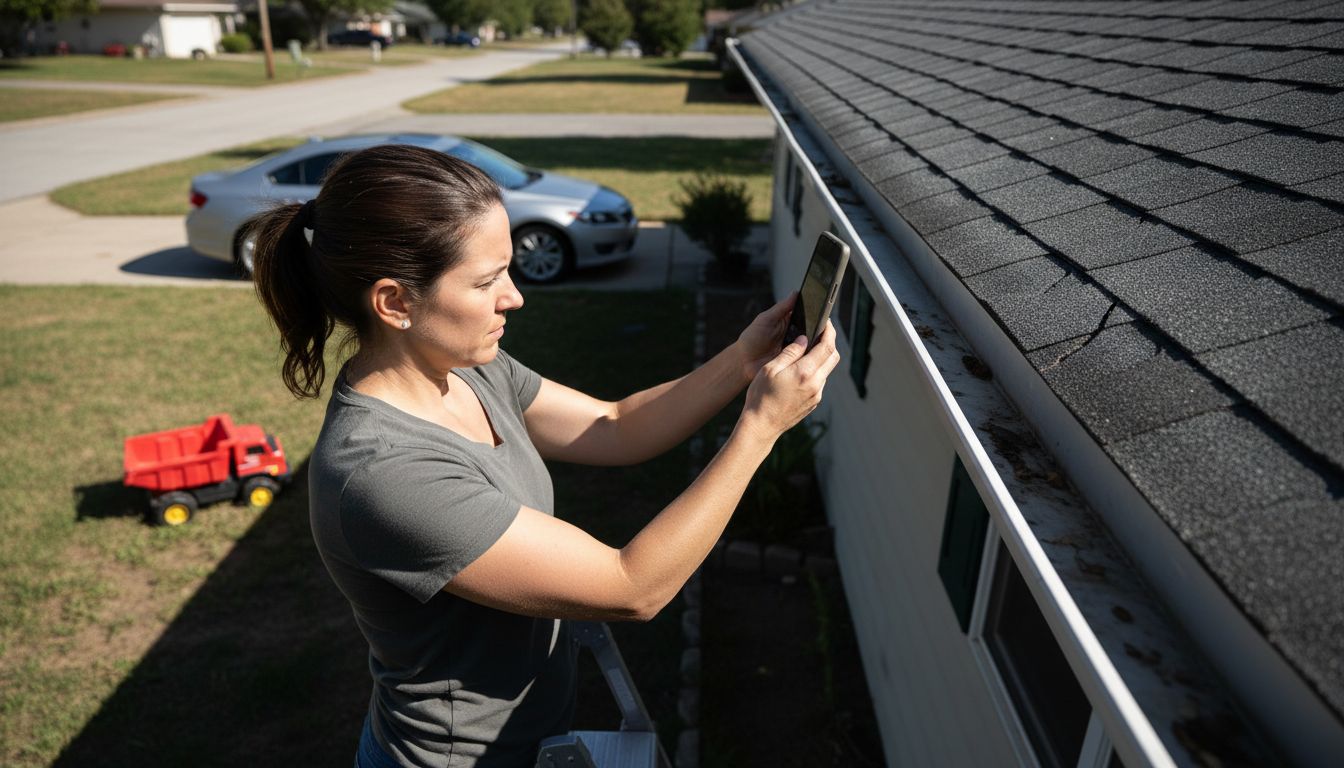
Pro tip: Take clear, well-lit photographs of any damage you discover. These images will serve as crucial documentation for insurance claims and help roofing professionals understand the extent of repairs needed.
Here’s a quick reference to help you recognize the most common signs of hail damage on different exterior areas:
| Exterior Area | Typical Hail Damage Signs | Long-Term Risk if Ignored |
|---|---|---|
| Roof | Missing shingles, dark spots | Water leaks, structural decay |
| Siding | Dents, cracks, texture changes | Insulation loss, higher bills |
| Windows | Cracks, shattered glass | Water intrusion, security risks |
| Metal Surfaces | Dents on gutters, downspouts | Rust, drainage issues |
Step 2: Document Evidence and Notify Your Insurance
After inspecting your home for hail damage, the next critical step is thoroughly documenting the destruction and initiating your insurance claim. This process will help ensure you receive proper compensation for necessary repairs and protect your home’s value.
The Texas Department of Insurance recommends taking comprehensive photographs and videos of all damaged areas both inside and outside your property. Capture wide-angle shots that show the overall context of the damage, and then take detailed close-up images that highlight specific hail impact points. Make sure to photograph each affected area systematically, including your roof, siding, windows, outdoor equipment, and any interior spaces showing signs of water intrusion or structural compromise.
The National Flood Insurance Program suggests recording serial numbers from damaged electronics and appliances, and saving all repair receipts. Contact your insurance provider immediately to start the claims process. During communication, be precise and provide all documentation youve collected. Avoid discarding any damaged items until the insurance adjuster has completed their assessment, as these will serve as crucial evidence for your claim.
Pro tip: Create a digital backup of all damage documentation by storing photographs and videos in multiple secure locations, such as cloud storage and an external hard drive. This ensures you have a reliable record even if original files are lost.
Step 3: Prepare Materials and Ensure Safety
Before beginning any hail damage repair process, you must prioritize personal safety and gather the right equipment. This crucial step involves protecting yourself and ensuring you have the necessary tools to assess and document damage effectively.
Safety experts from the Texas Association of School Boards Risk Management Fund emphasize the critical importance of understanding potential hazards during home inspections. If you lack professional training or specialized safety equipment, consider hiring a qualified contractor who can safely navigate potential risks like electrical hazards, structural instability, and fall dangers. Essential safety gear includes sturdy non slip shoes, protective eyewear, work gloves, and a stable ladder with proper support.
When preparing your materials, assemble a comprehensive inspection kit that includes a high quality digital camera or smartphone with good resolution, measuring tape, notebook, flashlight, and a ladder rated for your specific height requirements. Wear clothing that allows free movement and protects against potential scrapes or cuts. If your roof has steep angles or shows significant damage, it is best to wait for professional assistance rather than risking personal injury.
Pro tip: Create a simple safety checklist before starting your inspection, including checking weather conditions, ensuring someone knows your location, and having a first aid kit nearby in case of unexpected incidents.
Step 4: Repair or Replace Damaged Exterior Elements
Repairing hail damage requires a strategic approach to restore your home’s exterior and prevent further deterioration. Your goal is to address each damaged area systematically and professionally to maintain your property’s structural integrity and appearance.
The Texas Department of Insurance recommends taking immediate steps to prevent additional damage by covering broken windows and removing standing water. For temporary repairs, save all receipts since most insurance policies will cover these emergency interventions. When assessing exterior elements like siding, roofing, and windows, carefully evaluate whether repair or full replacement is more cost effective.
The Colorado Roofing Association emphasizes the importance of hiring a qualified and reputable contractor for significant repairs. Research potential contractors by checking online reviews, requesting references, and obtaining at least two professional estimates. Pay special attention to contractors who specialize in hail damage repair and can provide detailed assessments of your specific damage.
Pro tip: Document every repair step with photographs and keep detailed records of all work performed, materials used, and associated costs. This documentation will be crucial for insurance claims and potential future home valuation.
To better understand your repair choices, here is a comparison of strategies for dealing with hail-damaged exteriors:
| Approach | When to Use | Pros | Cons |
|---|---|---|---|
| Repair | Minor, localized damage | Lower cost, faster completion | May miss hidden damage |
| Full Replacement | Major or widespread issues | Long-term protection, warranty | Higher upfront cost, more time |
| Temporary Cover | Emergency containment only | Prevents further damage immediately | Not a lasting solution |
Step 5: Verify Repairs and Prevent Future Damage
After completing hail damage repairs, your final step is to thoroughly verify the work and implement strategies to protect your home from potential future damage. This proactive approach will help maintain your property’s structural integrity and minimize repair costs in the long term.
The Texas Association of School Boards Risk Management Fund recommends conducting systematic roof inspections at least twice annually, ideally during spring and fall seasons. During these inspections, carefully examine all repaired areas for signs of incomplete work, potential water intrusion, or developing issues. Check that sealants are properly applied, shingles are securely fastened, and no areas show signs of continued deterioration or incomplete repair.
Consider investing in preventive measures such as impact-resistant roofing materials, protective window films, and strategic landscaping that can minimize potential damage during future hailstorms. Schedule a professional assessment with your contractor to discuss long-term protection strategies specific to your home’s unique characteristics and local weather patterns. This comprehensive approach will help you stay ahead of potential damage and maintain your property’s value.
Pro tip: Create a detailed maintenance calendar with scheduled inspections and set reminders to document your home’s condition periodically, which will help you track changes and catch potential issues before they become expensive problems.
Expert Solutions for Hail Damage Repair and Home Protection
Dealing with hail damage can be overwhelming when you spot dents on your siding or missing shingles on your roof. It is critical to act quickly to avoid long-term risks like water leaks and structural decay. Whether you need thorough roof repairs or siding restoration, Sabatalo Contracting & Home Improvement brings over 15 years of Massachusetts expertise to help you restore and protect your home with trusted craftsmanship and durable materials.

Start your home’s recovery today with our specialized Roofing | Sabatalo Contracting and Siding | Sabatalo Contracting services. Our team works closely with homeowners to ensure every damage aspect is addressed properly while providing personalized, transparent service you can rely on. Visit https://sabatalocontracting.com now to request a consultation and protect your home from future hail storms with confidence.
Frequently Asked Questions
How can I inspect my home for hail damage?
Begin by performing a visual assessment of your property’s exterior, focusing on the roof, siding, windows, and metal surfaces. Look for signs such as dents, cracks, or unusual texture changes, and take clear photographs of any damage for documentation.
What should I document after finding hail damage?
Document all damage by taking comprehensive photographs and videos both inside and outside your home. Capture wide-angle shots for context and close-up images of specific damage points, ensuring you have thorough records for your insurance claim.
How do I initiate an insurance claim for hail damage?
Contact your insurance provider immediately after documenting the hail damage. Provide them with the collected photos and videos, along with detailed descriptions of the affected areas, to ensure a smooth claims process.
Should I hire a contractor for hail damage repairs?
Yes, hiring a qualified contractor is advisable, especially for significant repairs. Research potential contractors, check reviews, and obtain multiple estimates to ensure you choose a reputable professional.
What temporary measures can I take after hail damage occurs?
Implement temporary repairs to prevent further damage, such as covering broken windows and removing standing water. Keep all receipts for these temporary repairs, as they may be reimbursable through your insurance policy.
How can I protect my home from future hail damage?
Invest in preventive measures such as impact-resistant roofing materials and protective window films. Additionally, conduct systematic inspections at least twice a year to catch potential issues early and minimize future repair costs.
Recommended
- How to Clean Siding on House: Easy Tips for a Fresh Look | Sabatalo Contracting
- How to Clean Siding on House: Easy Tips for a Fresh Look | Sabatalo Contracting
- 7 Steps to a Seasonal Home Maintenance Checklist for MA Owners | Sabatalo Contracting
- Signs You Need New Siding: Complete Guide for MA Homes | Sabatalo Contracting
