Most American homes in Massachusetts face clogged gutters after seasonal storms and autumn leaf fall. When even a few branches hang over your roofline, debris builds up quickly and can threaten your home’s foundation. Blocked gutters are responsible for thousands of water damage claims every year in the United States. Knowing exactly when to clean your gutters based on local trees and weather patterns helps you protect your property and avoid expensive repairs.
Table of Contents
- Step 1: Assess Surrounding Trees And Seasonal Debris
- Step 2: Monitor Weather Patterns And Rain Forecasts
- Step 3: Inspect Gutters For Visible Clogs And Overflow
- Step 4: Schedule Regular Cleanings Based On Findings
- Step 5: Verify Gutter Function And Preventative Measures
Quick Summary
| Key Takeaway | Explanation |
|---|---|
| 1. Assess Tree Impact on Gutters | Evaluate trees near your home for debris potential, particularly during seasonal changes. This helps in strategizing maintenance. |
| 2. Monitor Weather for Maintenance | Keep an eye on weather forecasts to schedule cleanings before heavy rain, preventing water damage around your home. |
| 3. Inspect Gutters Regularly | Check gutters for clogs and damage, especially after storms, to avoid costly repairs and ensure proper water flow. |
| 4. Create Customized Cleaning Schedule | Use your findings to determine a gutter cleaning frequency based on local vegetation and climate conditions. |
| 5. Verify Gutter Functionality | Conduct functionality tests by simulating rainfall to ensure proper water drainage and prevent foundation issues. |
Step 1: Assess Surrounding Trees and Seasonal Debris
Trees around your home can significantly impact your gutter maintenance schedule. Understanding the types and proximity of trees on your property helps you predict debris accumulation and plan strategic cleaning intervals. Mature trees produce significant seasonal debris like leaves, twigs, and seeds that can quickly clog your gutters.
Start by walking around your property and carefully inspecting the trees near your home. Pay special attention to deciduous trees like maple, oak, and elm that shed leaves during autumn. Identify trees that overhang or are close to your roofline these are your primary debris sources. Look for dead branches, signs of tree disease, or weak limbs that might break during storms and drop additional debris into your gutters. Seasonal storms can cause substantial tree debris accumulation which increases the frequency of required gutter maintenance.
Document your findings by creating a simple tree inventory. Note the tree species, distance from your home, and typical debris patterns. This information will help you create a customized gutter cleaning schedule tailored to your specific landscape conditions.
Here’s a summary of common tree types found near homes and their impact on gutter maintenance:
| Tree Species | Debris Produced | Peak Shedding Season | Gutter Maintenance Impact |
|---|---|---|---|
| Maple | Leaves, seeds | Fall | Requires frequent cleaning |
| Oak | Leaves, acorns | Fall | High debris accumulation |
| Pine | Needles, cones | Year-round | Needs extra attention |
| Elm | Leaves, seeds | Fall | Can quickly clog gutters |
| Spruce | Needles | Year-round | Minimal, but persistent |
Pro Tip: Consider trimming branches within 10 feet of your roofline to minimize debris and reduce the likelihood of gutter clogs during seasonal changes.
Step 2: Monitor Weather Patterns and Rain Forecasts
Keeping an eye on weather forecasts is a critical strategy for planning your gutter maintenance. High-resolution rainfall data can help predict potential issues with debris and water flow around your home. Understanding upcoming precipitation patterns allows you to proactively schedule gutter cleaning and prepare your home for potential heavy rain events.
Start by checking local weather forecasts regularly using reliable smartphone apps or websites that provide detailed rainfall predictions. Pay special attention to seasonal transitions like late autumn and early spring when precipitation tends to be more unpredictable. Look for extended forecast periods that show concentrated rain events or storm systems moving through your region. Water management relies on timely gutter maintenance based on current and anticipated precipitation patterns, so understanding these forecasts can help you protect your home from potential water damage.
Consider creating a simple tracking system where you log rainfall amounts and compare them with your gutter cleaning schedule. This will help you develop a more precise maintenance routine tailored to your specific local climate conditions.
Pro Tip: Use weather apps that provide hourly precipitation probability and radar maps to get the most accurate and up-to-date information for planning your gutter maintenance.
Step 3: Inspect Gutters for Visible Clogs and Overflow
Inspecting your gutters thoroughly helps prevent potential water damage and costly home repairs. Home inspectors evaluate gutters for critical signs of blockage that could compromise your home’s structural integrity and protection.
Begin your inspection by carefully examining the entire gutter system during dry weather. Look for visible signs of debris accumulation like leaves, twigs, and organic matter that might obstruct water flow. Pay close attention to downspout connections and corners where clogs typically develop. Clogged gutters can cause significant damage to landscaping and foundations, so identifying potential blockages early is crucial. Watch for discoloration, rust spots, or sagging sections that might indicate long-term buildup or structural weakness.

Simulate rainfall conditions by running a garden hose along your gutters to observe water movement. Check for overflow points, stagnant water, or unusual drainage patterns that might suggest hidden obstructions. Note any areas where water pools or streams incorrectly, as these could signal deeper gutter maintenance requirements.
Pro Tip: Conduct your gutter inspection wearing light colored clothing to easily spot dirt streaks and water stain patterns that indicate potential blockage points.
Step 4: Schedule Regular Cleanings Based on Findings
Routine home maintenance requires strategic gutter cleaning schedules that adapt to your specific environmental conditions. Your previous inspection findings will guide the frequency and timing of your gutter maintenance plan, ensuring optimal home protection throughout the year.
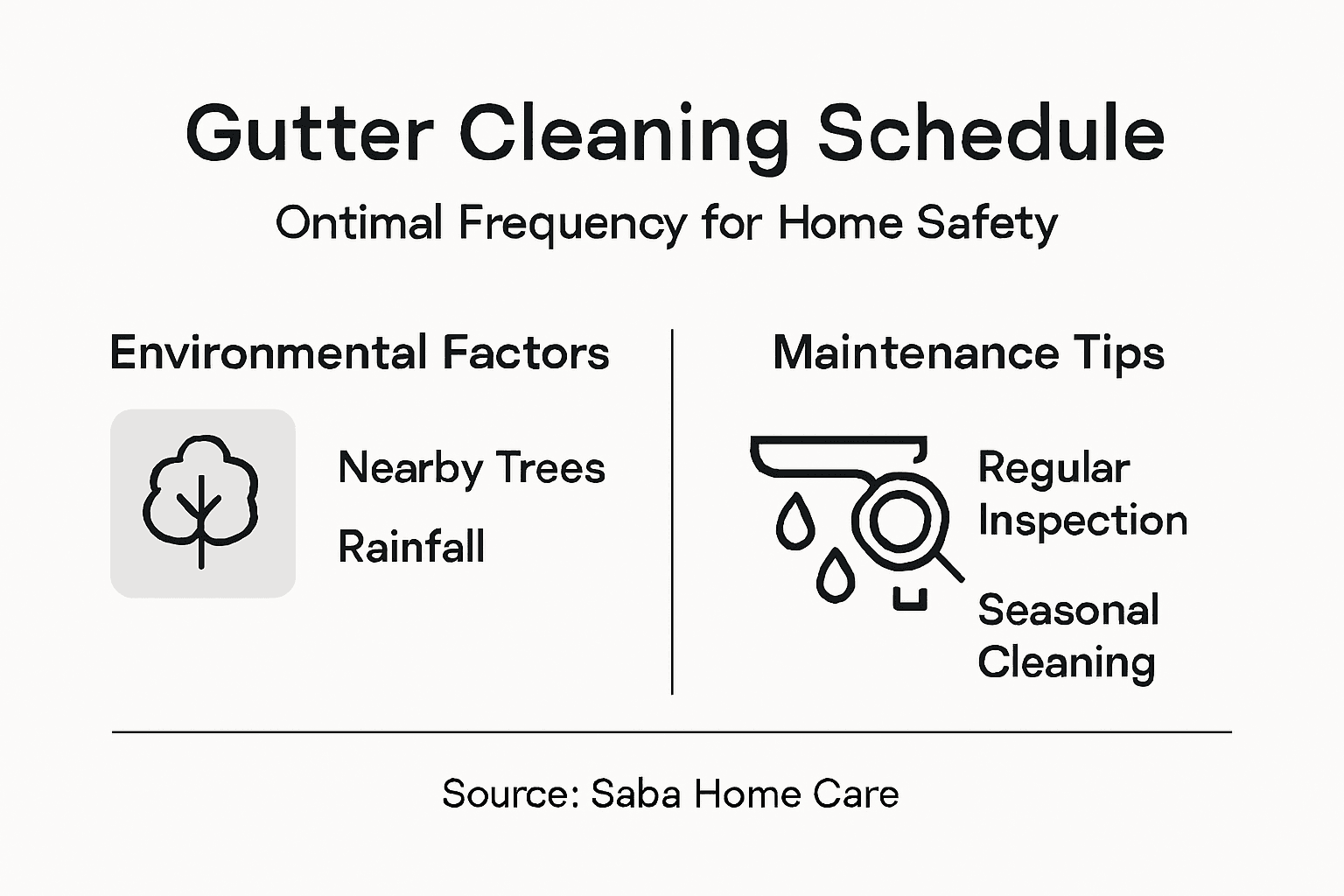
Translate your inspection observations into a tailored cleaning strategy. If you noticed heavy debris accumulation, plan more frequent cleanings, typically twice annually for homes surrounded by deciduous trees. Gutter cleaning frequency depends on local climate and vegetation so consider scheduling comprehensive cleanings in late spring and early autumn. Homes in areas with pine trees or dense foliage might require three to four cleanings annually to prevent potential water damage and maintain proper drainage.
The table below compares gutter cleaning frequency based on local vegetation and climate conditions:
| Surroundings | Typical Maintenance Frequency | Key Consideration |
|---|---|---|
| Dense deciduous trees | 2 times/year | Heavy leaf fall in autumn |
| Pine trees nearby | 3-4 times/year | Constant needle shedding |
| Sparse vegetation | 1 time/year | Low debris, easier upkeep |
| Storm-prone regions | 3 times/year | Increased storm debris risk |
Create a physical or digital maintenance calendar that tracks your gutter cleaning schedule, inspection dates, and any specific observations from previous cleanings. Document details like the amount of debris removed, signs of wear, and potential problem areas to help you predict future maintenance needs and adjust your strategy accordingly.
Pro Tip: Set digital reminders on your smartphone calendar with specific gutter maintenance tasks to ensure you never miss a critical cleaning window.
Step 5: Verify Gutter Function and Preventative Measures
Proper gutter maintenance involves systematic verification of water flow and potential blockage points. Understanding how your gutter system performs under different conditions is crucial to preventing water damage and protecting your home’s foundation.
Conduct a comprehensive functionality test by simulating rainfall conditions using a garden hose. Direct water through your gutters and carefully observe water movement, looking for smooth flow without backup or overflow. Effective gutter systems should divert water at least 4 to 6 feet from the foundation to prevent soil saturation. Check for consistent water distribution through downspouts, ensuring no pooling or unexpected water redirection occurs near your home’s structural perimeter.
Consider installing gutter guards as a preventative measure to reduce debris accumulation. These protective additions can significantly minimize maintenance requirements by blocking leaves and twigs while allowing water to pass through. Examine the current slope of your gutters, making certain they maintain a slight angle that facilitates efficient water drainage away from your home.
Pro Tip: Mark your gutter slope using a carpenter’s level to ensure proper water flow and identify any areas requiring adjustment during your verification process.
Protect Your Home with Expert Gutter Care and Exterior Solutions
Clogged gutters can lead to serious home damage including foundation issues and water infiltration. This article highlights the importance of timely gutter cleaning based on tree debris, weather patterns, and gutter inspections. If you want to ensure your gutters function flawlessly year-round while preserving your home’s value and curb appeal, proactive maintenance is essential. Sabatalo Contracting & Home Improvement understands these challenges and offers tailored Home Maintenance services that keep your exterior systems in top shape.

Don’t wait until a rainy day reveals costly problems. Benefit from over 15 years of local expertise when you choose Sabatalo Contracting. Whether you need gutter cleaning, siding repairs, or full exterior upgrades, we provide craftsmanship and reliability you can trust. Visit our main site at Sabatalo Contracting or explore our specialized Siding services to enhance your home’s protection and energy efficiency. Schedule your consultation today and safeguard your investment with professional care.
Frequently Asked Questions
How often should I clean my gutters for optimal home protection?
Cleaning your gutters twice a year is typically sufficient for homes surrounded by deciduous trees. Schedule cleanings in late spring and early autumn to manage peak debris periods effectively.
What signs indicate that my gutters are clogged?
Look for visible debris accumulation such as leaves and twigs in your gutters, as well as water overflowing from the sides during rainfall. If you notice pooling water or irregular drainage patterns, it’s time to clean your gutters.
How can I determine if my gutters need more frequent cleaning?
If you have trees that shed leaves or needles frequently, you might need to increase your cleaning frequency to three or four times a year. Monitor the amount of debris that collects after storms or heavy wind periods to adjust your maintenance schedule accordingly.
What steps should I take while inspecting my gutters for clogs?
Begin by inspecting your gutters during dry weather, looking for signs of blockage such as stagnant water or discoloration. Simulate rainfall conditions using a garden hose to check for proper water flow and identify any areas that may require immediate maintenance.
How can weather forecasts help with my gutter cleaning schedule?
Check local weather forecasts regularly to anticipate rain events that could increase gutter maintenance needs. By preparing for heavy rainfall, you can schedule cleanings before storms to prevent overflow and potential water damage.
Recommended
- Gutter Installation Contractors in Massachusetts | Sabatalo Contracting
- How to Clean Siding on House: Easy Tips for a Fresh Look | Sabatalo Contracting
- 7 Steps to a Seasonal Home Maintenance Checklist for MA Owners | Sabatalo Contracting
- 7 Essential Steps for Your Winterize Your Home Checklist | Sabatalo Contracting
- Essential Cleaning for New Homeowners in McKinney (2025 Guide)
