Excess moisture and stuffy air in your attic can quietly threaten your Massachusetts home’s comfort and health. When ventilation falls short, problems like mold, roof damage, and high energy bills sneak in. By exploring ways to improve your attic’s ventilation system, you’ll discover how a balanced airflow not only prevents costly structural issues but also supports a healthier indoor environment. Learn practical steps to reinforce your attic’s defenses and protect your investment.
Table of Contents
- Step 1: Assess Current Ventilation and Identify Issues
- Step 2: Choose Ventilation Methods for Optimal Airflow
- Step 3: Install or Upgrade Attic Vents Safely
- Step 4: Seal Air Leaks and Insulate Properly
- Step 5: Test Ventilation Effectiveness and Monitor Results
Quick Summary
| Key Insight | Explanation |
|---|---|
| 1. Inspect for ventilation issues | Look for signs like mold or discolored wood to identify poor airflow. |
| 2. Balance intake and exhaust vents | Ensure your attic has an equal ratio of intake and exhaust vents for optimal performance. |
| 3. Choose suitable ventilation methods | Use a combination of soffit, ridge, and powered vents based on your home’s design. |
| 4. Seal air leaks effectively | Focus on sealing gaps around knee walls and insulation to improve energy efficiency. |
| 5. Test results regularly | Monitor humidity and temperature in your attic to ensure your ventilation is working effectively. |
Step 1: Assess Current Ventilation and Identify Issues
Uncovering the hidden problems in your attic’s ventilation system is the first critical step toward protecting your Massachusetts home from potential moisture damage and energy efficiency challenges. By carefully examining your current ventilation setup, you’ll gain crucial insights into potential weaknesses that could compromise your home’s structural integrity.
To begin your assessment, start by thoroughly inspecting your attic space. You’ll want to look for several key indicators of ventilation problems, using visual inspection techniques from EPA indoor air quality guidelines. Pay close attention to the following signs:
- Dark or discolored wood surfaces indicating moisture buildup
- Visible mold or mildew patches near roof decking or insulation
- Frost or condensation on roof sheathing during winter months
- Rust or corrosion on metal fasteners and HVAC components
- Warped or rotting roof materials
Your inspection should include measuring the current ventilation system’s effectiveness. This means checking the balance between intake and exhaust vents, which is crucial for proper airflow. According to Penn State’s research on attic ventilation, most homes require a specific ratio of intake to exhaust vents to maintain optimal air circulation.
Proper attic ventilation is about creating a continuous, balanced airflow that prevents moisture accumulation and temperature extremes.
If you discover multiple signs of poor ventilation, it’s time to consider a professional assessment. While some homeowners might feel confident conducting an initial review, a trained expert can provide a comprehensive evaluation of your specific attic conditions and recommend targeted solutions.
Pro tip: Use a digital moisture meter during your inspection to get precise readings of humidity levels in your attic space, which can help you identify potential problems before they become serious.
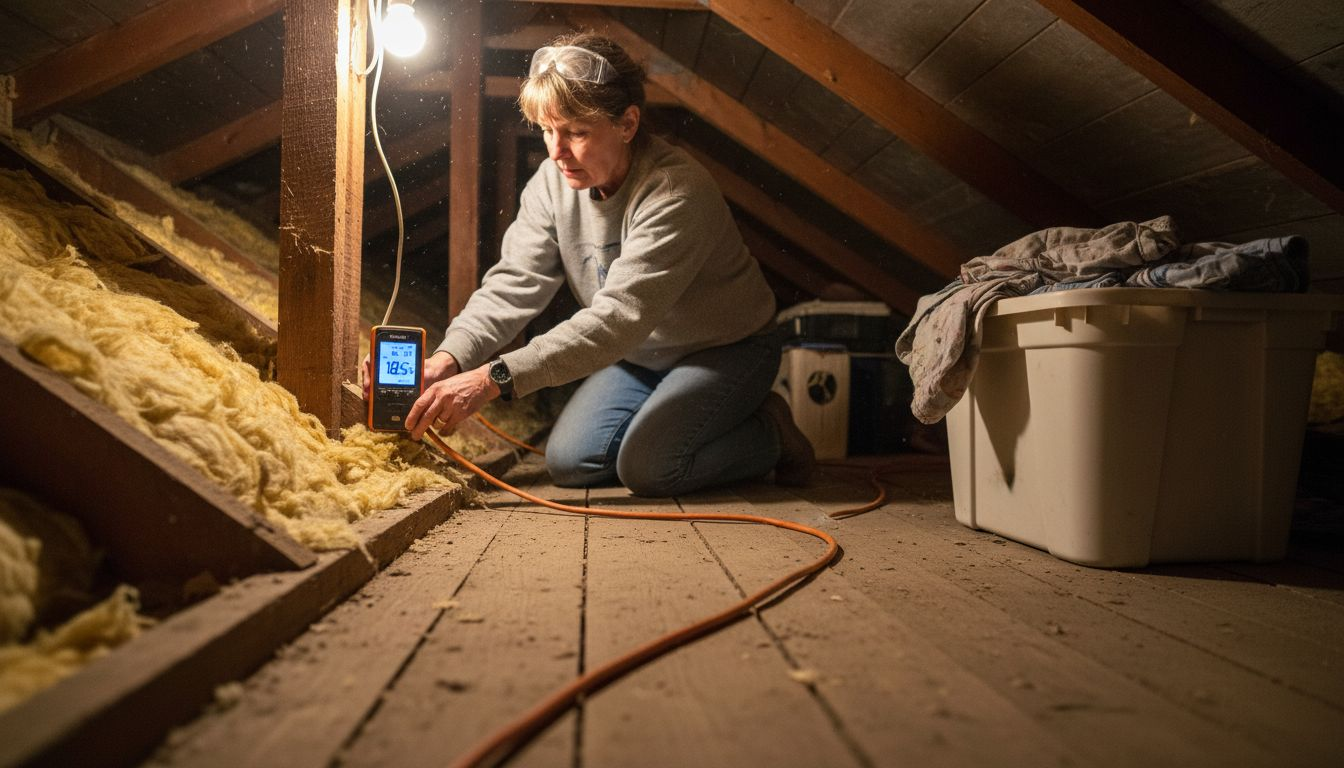
The table below summarizes key attic inspection tools and the unique benefit of each:
| Tool | Purpose | Why It’s Useful |
|---|---|---|
| Digital Moisture Meter | Measures humidity in materials | Detects hidden moisture early |
| Flashlight/Work Light | Improves visibility | Finds hidden damage/spots |
| Infrared Thermometer | Detects temperature variations | Pinpoints insulation issues |
| Hygrometer | Monitors attic air humidity | Easy seasonal tracking |
Step 2: Choose Ventilation Methods for Optimal Airflow
Selecting the right ventilation methods for your attic is crucial to maintaining a healthy, energy-efficient home environment. Your goal is to create a balanced airflow system that effectively removes moisture, regulates temperature, and prevents potential structural damage.
Understanding the different ventilation options is key to making an informed decision. Penn State’s research on attic ventilation highlights several primary ventilation methods:
- Soffit vents: Located under the roof’s eaves, these provide crucial intake ventilation
- Ridge vents: Installed along the roof’s peak, allowing hot air to escape
- Gable vents: Placed on the sides of the attic, facilitating cross ventilation
- Powered exhaust vents: Electrical fans that actively remove hot air and moisture
When choosing your ventilation strategy, consider your home’s specific architectural characteristics. Natural ventilation principles from MIT emphasize the importance of wind direction and building orientation in creating effective airflow.
The key to successful attic ventilation is achieving a balanced ratio between intake and exhaust vents.
For Massachusetts homes, a combination of passive and active ventilation methods often provides the most comprehensive solution. This might involve installing soffit and ridge vents for natural airflow, supplemented by powered exhaust vents during peak summer months when heat accumulation is most significant.
Here is a comparison of common attic ventilation methods and their advantages:
| Ventilation Method | How It Works | Best Use Case | Unique Advantage |
|---|---|---|---|
| Soffit Vents | Allow air into attic from eaves | All climates, new/existing homes | Promotes steady intake airflow |
| Ridge Vents | Release hot air at roof peak | Long rooflines, balanced systems | Unobtrusive appearance |
| Gable Vents | Enable cross-ventilation at walls | Homes with gable roofs | Easy retrofit option |
| Powered Exhaust Vents | Electrically remove heat/moisture | Large or heat-prone attics | Effective in extreme weather |
Pro tip: Calculate your attic’s required ventilation area by using the 1:300 rule: one square foot of ventilation for every 300 square feet of attic space to ensure optimal air circulation.
Step 3: Install or Upgrade Attic Vents Safely
Upgrading your attic ventilation is a critical home maintenance task that requires careful planning and precise execution. Your goal is to create a safe, effective airflow system that protects your home from moisture damage and temperature extremes while ensuring proper installation techniques.
Energy research on attic ventilation emphasizes the importance of strategic vent placement and proper sizing. When installing or upgrading your attic vents, consider these essential steps:
- Measure your attic space accurately before selecting vents
- Ensure balanced ventilation with equal intake and exhaust areas
- Check local building codes for specific ventilation requirements
- Use appropriate safety equipment during installation
- Inspect existing roof structure for potential complications
The installation process involves careful consideration of vent types and placement. Different homes require different ventilation strategies, so understanding your specific architectural needs is crucial. Proper vent positioning can significantly impact your home’s overall energy efficiency and structural integrity.
Effective attic ventilation requires a strategic balance between intake and exhaust vents to prevent moisture buildup and temperature extremes.
For Massachusetts homes, pay special attention to seasonal variations. Winter moisture and summer heat can create unique challenges that require thoughtful ventilation solutions. Consider a combination of soffit, ridge, and gable vents to create comprehensive airflow throughout your attic space.
Pro tip: Use continuous soffit baffles during installation to maintain clear airflow paths and prevent insulation from blocking crucial ventilation channels.
Step 4: Seal Air Leaks and Insulate Properly
Protecting your attic from air infiltration and maintaining proper thermal barriers are critical steps in creating an energy-efficient home environment. Your goal is to create a comprehensive seal that prevents heat loss, reduces moisture intrusion, and improves overall home comfort.
Building science experts recommend focusing on several key areas when sealing and insulating your attic space:
- Identify potential air leak locations around knee walls, electrical outlets, and ceiling penetrations
- Use appropriate sealing materials like caulk, foam, or weatherstripping
- Inspect and repair existing insulation for gaps or compression
- Maintain a continuous air barrier throughout the attic space
- Choose insulation with appropriate R-value for your climate zone
The Department of Energy emphasizes that proper insulation works by resisting heat transfer through conduction, convection, and radiation. This means carefully addressing every potential pathway for air and heat movement in your attic space.
Effective air sealing is the foundation of a high-performance, energy-efficient home environment.
Specifically for Massachusetts homes, pay close attention to seasonal temperature variations. The area’s humid summers and cold winters demand a robust insulation strategy that can handle dramatic temperature changes while preventing moisture buildup.
Pro tip: Wear protective gear like gloves, a dust mask, and safety glasses when working in attic spaces, and always use a reliable work light to ensure thorough and safe insulation installation.
Step 5: Test Ventilation Effectiveness and Monitor Results
Validating your attic ventilation system is the final crucial step in ensuring long-term home protection and energy efficiency. Your objective is to confirm that the ventilation improvements you’ve implemented are performing exactly as intended.
Penn State building researchers recommend comprehensive testing methods to evaluate your ventilation system’s performance:
- Measure actual ventilation area relative to total attic square footage
- Check for consistent temperature distribution throughout the attic space
- Monitor humidity levels using digital hygrometers
- Inspect for condensation or moisture signs
- Verify airflow patterns around intake and exhaust vents
Specific testing techniques can help you assess your ventilation system’s effectiveness. Look for indicators like temperature differentials between indoor and attic spaces, checking that your vents are maintaining appropriate thermal balance during different seasons.
Effective ventilation monitoring transforms your attic from a potential problem area into a well-regulated, protective space.
For Massachusetts homes, pay special attention to seasonal variations. Winter condensation and summer heat can reveal subtle ventilation performance issues that might not be immediately apparent.
Pro tip: Conduct your initial assessment during temperature transition periods like early spring or late autumn when environmental conditions most clearly reveal potential ventilation weaknesses.
Protect Your Massachusetts Home with Expert Attic Ventilation Solutions
Poor attic ventilation can lead to hidden moisture damage, energy loss, and costly repairs. If you have noticed dark wood, mold growth, or uneven attic temperatures it means your home needs a better ventilation system. Key goals include achieving balanced airflow through proper intake and exhaust vents and sealing air leaks to prevent heat loss and moisture buildup. At Sabatalo Contracting, we understand how crucial attic ventilation is for long-term home protection and energy efficiency.

Discover our professional Roofing services designed to improve attic ventilation with correctly installed ridge and soffit vents customized for your Massachusetts home. With over 15 years of local expertise, we deliver durable solutions that reduce moisture risks and keep your home comfortable year-round. Don’t wait until small ventilation issues cause expensive damage. Contact us today through Sabatalo Contracting & Home Improvement for a consultation and safeguard your property with trusted craftsmanship.
Frequently Asked Questions
How can I assess the current ventilation in my attic?
To assess your attic ventilation, start with a visual inspection, looking for signs of moisture like dark wood, mold, or frost. Measure the balance between intake and exhaust vents, aiming for a proper ratio of approximately 1 square foot of ventilation for every 300 square feet of attic space.
What are the best ventilation methods for improving attic airflow?
The best ventilation methods include soffit vents for intake, ridge vents for exhaust, and gable vents for cross ventilation. Choose a combination that fits your home’s architecture to create a balanced airflow system.
How do I properly install or upgrade attic vents?
To install or upgrade attic vents, ensure you measure your attic space first and select the right type of vents to maintain balanced ventilation. Follow local building codes during installation and consider using continuous soffit baffles to prevent insulation blockage.
What steps should I take to seal air leaks in my attic?
To seal air leaks, identify potential air infiltration points around electrical outlets, knee walls, and ceiling penetrations. Use caulk or foam to seal gaps, and ensure you maintain a continuous air barrier throughout the attic.
How can I test the effectiveness of my attic ventilation system?
You can test the effectiveness of your attic ventilation by measuring temperature distribution, monitoring humidity levels, and checking for signs of condensation or moisture. Perform your assessment during seasonal transitions to observe any ventilation weaknesses clearly.
What should I do if I find issues with my attic ventilation?
If you find issues with your attic ventilation, consider consulting a professional for a comprehensive evaluation. They can recommend targeted solutions based on your specific conditions to ensure optimal airflow and moisture management.
Recommended
- Benefits of Energy Audits for Massachusetts Homes | Sabatalo Contracting
- Window Condensation Causes: Everything You Need to Know | Sabatalo Contracting
- New Energy Efficient Windows: Lower Bills, Enhanced Comfort | Sabatalo Contracting
- 7 Essential Steps for Your Winterize Your Home Checklist | Sabatalo Contracting
- Shutters and Insulation: A 2025 Guide for Stylish, Energy-Efficient Homes | Shutter World
- Why Upgrade HVAC Systems: Bigger Savings, Cleaner Air
- 7 Smart Tips for Choosing Energy Efficient Window Treatments
