TL;DR:
- Secure front doors combine reinforced materials and multi-point locking systems to resist forced entry effectively. The full security system includes the door frame, hinges, strike plates, and hardware, all essential for optimal protection. Choosing the right materials, hardware, and proper installation ensures long-term safety and durability for residential entryways.
Secure front doors for homes are engineered entry systems that combine reinforced materials, multi-point locking mechanisms, and hardened frames to resist forced entry. A door slab alone does not make an entry point secure. The full system includes the frame, hinges, strike plates, lock cylinders, and any adjacent glass. Standards like BHMA grading and European resistance classes RC2 and RC3 define what “secure” actually means in measurable terms. Getting this right is the single most effective step you can take to protect your home.
Which materials make the safest exterior security doors?
The material of your door slab determines its baseline resistance to forced entry, its thermal performance, and its long-term durability. Steel, fiberglass, and timber composite are the three main options for residential security front doors, and each has a distinct profile.
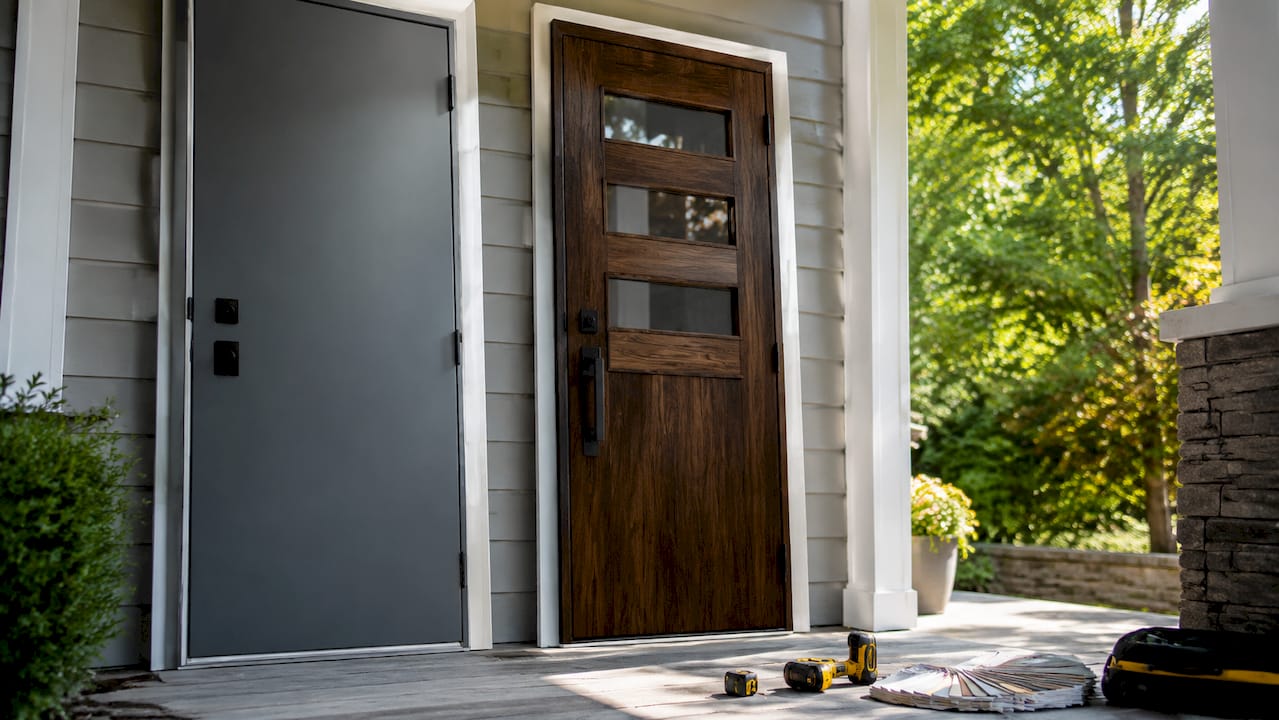
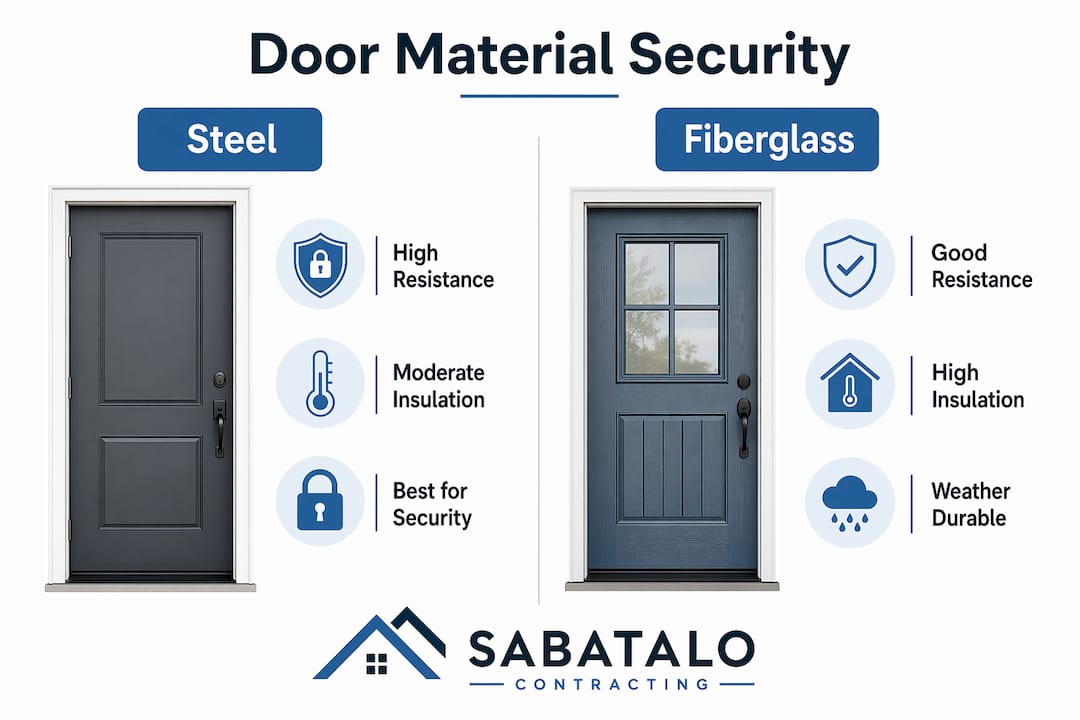
Steel doors are extremely resistant to forced entry and highly durable, but they can conduct cold in freezing climates, which risks interior condensation without a proper thermal break. Fiberglass doors provide comparable security with better energy efficiency, making them the stronger choice for harsh New England winters. Timber composite doors offer a traditional look with steel reinforcement inside, though they require more maintenance than steel or fiberglass over time.
Security classes formalize these differences. RC2 and RC3 resistance classes are the recognized benchmarks for residential needs, while RC4 through RC6 apply to commercial or high-value properties. RC2 means a door withstands a sustained attack with basic tools for at least three minutes. RC3 extends that resistance to power tools. For most Massachusetts homeowners, RC2 is the minimum worth specifying.
| Material | Forced Entry Resistance | Thermal Performance | Best Use Case |
|---|---|---|---|
| Steel | Excellent | Moderate (needs thermal break) | Urban homes, high-security priority |
| Fiberglass | Very Good | Excellent | Cold climates, energy-conscious buyers |
| Timber Composite | Good | Good | Traditional aesthetics with reinforcement |
Pro Tip: When shopping for fiberglass doors in Massachusetts, confirm the manufacturer specifies a polyurethane foam core. That core is what delivers the insulation advantage over steel, not the fiberglass skin itself.
What security features and hardware resist forced entry?
Hardware is where most homeowners underinvest. A high-quality door slab paired with a weak lock cylinder or a single-point deadbolt is still a vulnerable entry point. High-security front door systems require at least four core elements working together: multi-point locking, reinforced tamper-resistant hinges, drill-resistant cylinders, and heavy-duty strike plates anchored to wall studs.
Here is what each element does and why it matters:
- Multi-point locking systems secure the door at three or more points along the frame simultaneously. Multi-point locks provide far better resistance to kick-in attacks than a single deadbolt, which only secures one spot.
- Reinforced strike plates are the metal plates that receive the bolt when the door closes. Standard strike plates use short screws that anchor only into the door frame, not the wall stud. Replacing them with heavy-duty plates and 3-inch screws into studs dramatically increases kick-in resistance.
- BHMA Grade 1 certified locks are the highest rating for residential lock hardware, covering resistance to picking, bumping, and drilling. BHMA Grade 1 certification is the standard you should require on any deadbolt or entry lock you purchase.
- Drill-resistant and bump-resistant cylinders use hardened steel inserts and anti-bump pins to defeat the two most common low-skill attack methods. These are not a luxury upgrade. They are a baseline requirement for any front entry security door.
- Tamper-proof hinges with non-removable pins prevent an attacker from simply lifting the door off its hinges from the exterior. Interior hinge pins with set screws accomplish the same goal on outswing doors.
- Anti-pry strips and door armor reinforce the door edge and frame junction, the area most vulnerable to crowbar attacks. Products like Door Armor MAX by Armor Concepts wrap the entire door edge in steel.
- Security screen or storm doors add a second barrier before an intruder even reaches your primary door. Steel or aluminum security screen doors with certified locks and reinforced frames increase overall entry resistance. Some professional-grade models come with lifetime limited warranties and can reimburse insurance deductibles up to $1,000 if a burglary occurs through a failed component.
Pro Tip: Do not buy a lock based on brand name alone. Proper installation quality and the presence of multi-point locking matter more than the logo on the cylinder. A premium lock installed incorrectly is still a weak point.
How do you secure glass panels and sidelights?
Glass adjacent to a front door is the most exploited vulnerability in residential entry security. An intruder can break a sidelight panel, reach through, and turn your deadbolt in seconds. Standard glass sidelights give attackers direct access to locking mechanisms without touching the door itself.
These are the most effective ways to address that risk:
- Upgrade to laminated safety glass. Laminated glass holds together when broken, preventing clean access. It is the single most effective glass upgrade for front entrance security doors.
- Apply security window film. 3M Safety Series and similar products bond to existing glass and slow penetration significantly. Film does not stop a determined attacker indefinitely, but it adds critical seconds.
- Install interior security grilles or bars. A fixed or hinged grille on the interior side of a sidelight blocks arm access even if the glass breaks. Hinged versions allow emergency egress.
- Reposition your lock away from glass. If you are replacing a door, specify a lock location that is not reachable through any adjacent glass panel. A minimum of 40 inches between glass and the lock is a practical rule.
- Choose decorative glass with embedded wire or laminate. Many manufacturers now offer sidelight glass that meets ANSI Z97.1 safety standards while still looking attractive.
The goal is not to eliminate glass entirely. Glass adds light and curb appeal. The goal is to make that glass a non-exploitable element of your overall front door security system.
Why does door frame quality determine security outcomes?
The door frame is the most critical failure point in forced entry, not the door slab. Door frames allow break-ins when strike plates are not anchored into wall studs with 3-inch screws. A door rated RC3 installed in a weak pine frame with short screws will fail faster than a basic steel door in a properly reinforced frame.
Reinforced steel or aluminum frames designed as single rigid units are the correct solution for security front doors residential installations. These frames distribute kick force across the entire wall structure rather than concentrating it at the strike plate. Standard wood frames split at the strike plate under a single hard kick, regardless of lock quality.
The most common installation mistakes include using the original frame when replacing a door, relying on the door manufacturer’s included hardware without upgrading strike plate screws, and failing to check that the frame is plumb and square before installation. A door that does not sit perfectly in its frame creates gaps that weaken both security and weatherproofing.
Pro Tip: When reviewing door installation tips with a contractor, ask specifically whether the strike plate screws will reach the wall stud. If the answer is vague, that is a red flag.
How do you choose and maintain the best front door for long-term security?
Choosing the right security entry door for your home requires balancing rated performance, climate suitability, aesthetics, and long-term maintenance demands. Modern high-security doors now combine RC-rated protection with customizable finishes and glass options, so you no longer have to choose between safety and curb appeal.
Use this checklist when evaluating options:
- Confirm the resistance class. Specify RC2 as a minimum for residential use. Ask the manufacturer or supplier for documentation.
- Check warranty terms. Look for lifetime limited warranties on the frame and finish. Some storm door manufacturers cover deductible reimbursement up to $1,000 for burglary events.
- Integrate smart locks and video doorbells. Devices like the Schlage Encode Plus and Ring Video Doorbell Pro 2 add a visible deterrent layer and remote monitoring. Smart locks do not replace mechanical security. They supplement it.
- Inspect annually. Check hinges for looseness, test the lock cylinder for smooth operation, and lubricate all moving parts with a dry graphite lubricant. Avoid oil-based lubricants, which attract dust and gum up cylinders over time.
- Prioritize entry points correctly. Reinforce the front door first, then back doors, then patio doors. This sequence gives you the highest security return per dollar spent.
- Consider energy efficient options. A fiberglass door with a polyurethane core and weatherstripping delivers both security and lower heating bills, a meaningful combination for Massachusetts winters.
The door you choose today should still be performing at full capacity in 20 years. That requires both the right product and the right maintenance habits from day one.
Key takeaways
The most secure front doors for homes combine RC-rated materials, multi-point locking, reinforced frames, and properly anchored strike plates into one integrated system.
| Point | Details |
|---|---|
| Material determines baseline security | Steel and fiberglass at RC2 or RC3 rating are the minimum for residential forced-entry resistance. |
| Frame reinforcement is non-negotiable | Strike plates anchored with 3-inch screws into wall studs prevent kick-in failures regardless of door quality. |
| Hardware certification matters | Specify BHMA Grade 1 locks and drill-resistant cylinders to defeat picking, bumping, and drilling attacks. |
| Glass is the most exploited weakness | Upgrade sidelights to laminated safety glass and position locks away from any reachable glass panel. |
| Maintenance sustains performance | Annual hinge and lock inspections, combined with smart lock integration, keep your system effective long-term. |
What i’ve learned after seeing hundreds of door installations
Most homeowners spend 80% of their budget on the door slab and almost nothing on the frame. That is backwards. I have seen RC2-rated steel doors fail in seconds because the installer used the original pine frame and the factory-supplied strike plate screws. The door held. The frame split. The result was the same as having no security door at all.
The other mistake I see constantly is treating smart locks as a security upgrade rather than a convenience feature. A Schlage Encode or August Smart Lock is a great tool for remote access and monitoring. It does not make a weak cylinder stronger. Hardware security and smart technology solve different problems.
What genuinely impresses me about the current market is how far fiberglass door design has come. Ten years ago, a fiberglass door that looked like real wood was a stretch. Today, manufacturers like Therma-Tru produce fiberglass doors that are visually indistinguishable from solid wood at ten feet, carry RC2 resistance, and outperform steel on thermal efficiency. Massachusetts homeowners get security, curb appeal, and lower energy bills from a single product.
My honest advice: start with the frame, specify RC2 or better, require BHMA Grade 1 hardware, and treat the glass as a system component rather than an afterthought. Do those four things and your front entry will be more secure than 90% of homes on your street.
Upgrade your front door security with Sabatalo contracting

Sabatalo contracting has spent over 15 years installing exterior doors across Massachusetts with a focus on security, durability, and craftsmanship. Every installation includes proper frame reinforcement, certified hardware, and weatherproofing built for New England conditions. Whether you need a full door replacement or targeted security upgrades, Sabatalo contracting delivers solutions that balance protection with the curb appeal your home deserves. Contact Sabatalo contracting today for a personalized consultation and find out which security door system fits your home, your neighborhood, and your budget.
FAQ
What is the most secure front door material for homes?
Steel and fiberglass doors rated at RC2 or RC3 resistance class provide the strongest forced-entry protection for residential use. Fiberglass adds better thermal performance, making it the preferred choice for cold climates like Massachusetts.
How do multi-point locks improve front door security?
Multi-point locking systems secure the door at three or more points along the frame simultaneously, distributing force across the entire frame rather than a single bolt location. This makes kick-in attacks significantly harder to execute.
What BHMA lock grade should i specify for my front door?
BHMA Grade 1 is the highest residential rating and the correct specification for any front entry security door. Grade 1 locks are tested for resistance to picking, bumping, and drilling beyond the thresholds of Grades 2 and 3.
Can a sidelight glass panel compromise my door security?
Yes. Standard sidelight glass allows an intruder to break the panel and reach the lock directly. Upgrading to laminated safety glass or installing interior security grilles eliminates that vulnerability without removing the glass entirely.
Does professional installation really affect door security?
Professional installation is critical. A high-rated door installed in a weak frame with short strike plate screws will fail under a basic kick-in attack. Proper installation, including anchoring strike plates into wall studs with 3-inch screws, is what converts a quality door into a genuinely secure entry point.
Recommended
- Front Door Security Devices That Protect Massachusetts Homes | Sabatalo Contracting
- Energy Efficient Front Doors: Maximizing Home Comfort | Sabatalo Contracting
- Modern front door ideas: curb appeal & energy savings | Sabatalo Contracting
- 7 Essential Door Installation Tips for Massachusetts Homeowners | Sabatalo Contracting
