TL;DR:
- Licensed storm repair contractors in Massachusetts must hold both HIC registration and CSL licenses to ensure full project coverage and compliance. Proper documentation, timely damage reporting, and using certified specialists significantly improve insurance claim success and reduce costs. Prioritizing licensed, experienced, and locally known contractors helps homeowners achieve efficient storm restoration and protect their property investment.
Storm repair contractors are licensed professionals who restore homes damaged by hurricanes, nor’easters, and severe thunderstorms using proven methods that comply with Massachusetts regulations and insurance requirements. After a major storm hits your property, the difference between a smooth recovery and a costly dispute often comes down to one decision: who you hire. Massachusetts has specific licensing rules, tight insurance timelines, and mold prevention windows that most homeowners don’t know about until it’s too late. This guide covers everything you need to make the right call fast.
What licenses must massachusetts storm repair contractors hold?
Massachusetts law defines two distinct credentials that contractors for storm damage must carry, and confusing them is one of the most expensive mistakes a homeowner can make.
The first is the Home Improvement Contractor (HIC) registration, issued by the Office of Consumer Affairs and Business Regulation (OCABR) under M.G.L. c.142A. HIC registration applies to remodeling and repair work on owner-occupied 1–4 unit residences, typically for projects over $1,000. It does not require a written exam. Any contractor replacing your storm-damaged siding, gutters, or windows should carry this registration at minimum.
The second credential is the Construction Supervisor License (CSL), administered by the Board of Building Regulations and Standards (BBRS). The CSL is required to supervise any work that needs a building permit, including reconstruction, structural alteration, and demolition. Unlike the HIC, the CSL demands a written exam, documented field experience, and continuing education. If your storm damage involves structural repairs to your roof framing or load-bearing walls, your contractor must hold a CSL.
Massachusetts contractors holding both HIC and CSL licenses are common in storm repair because most large projects overlap both scopes. A contractor who only carries one credential may legally be unable to complete your full project, which creates delays and gaps in your insurance claim.
Here is what to verify before signing any contract:
- HIC registration number: Confirm on the OCABR license lookup portal
- CSL license number: Confirm on the BBRS license verification page
- General liability insurance: Request a certificate of insurance naming you as an additional insured
- Workers’ compensation coverage: Required for any contractor with employees in Massachusetts
- Local office presence: A local address reduces the risk of storm chaser fraud
Pro Tip: Ask your contractor to hand you printed copies of both licenses on the first visit. Any hesitation is a red flag worth acting on immediately.
You can also review the Massachusetts roofing regulations guide for a deeper breakdown of how these credentials apply to specific project types.
How should you document and report storm damage to your insurer?
Speed and thoroughness in documentation are the two factors that most directly determine whether your insurance claim succeeds or stalls.
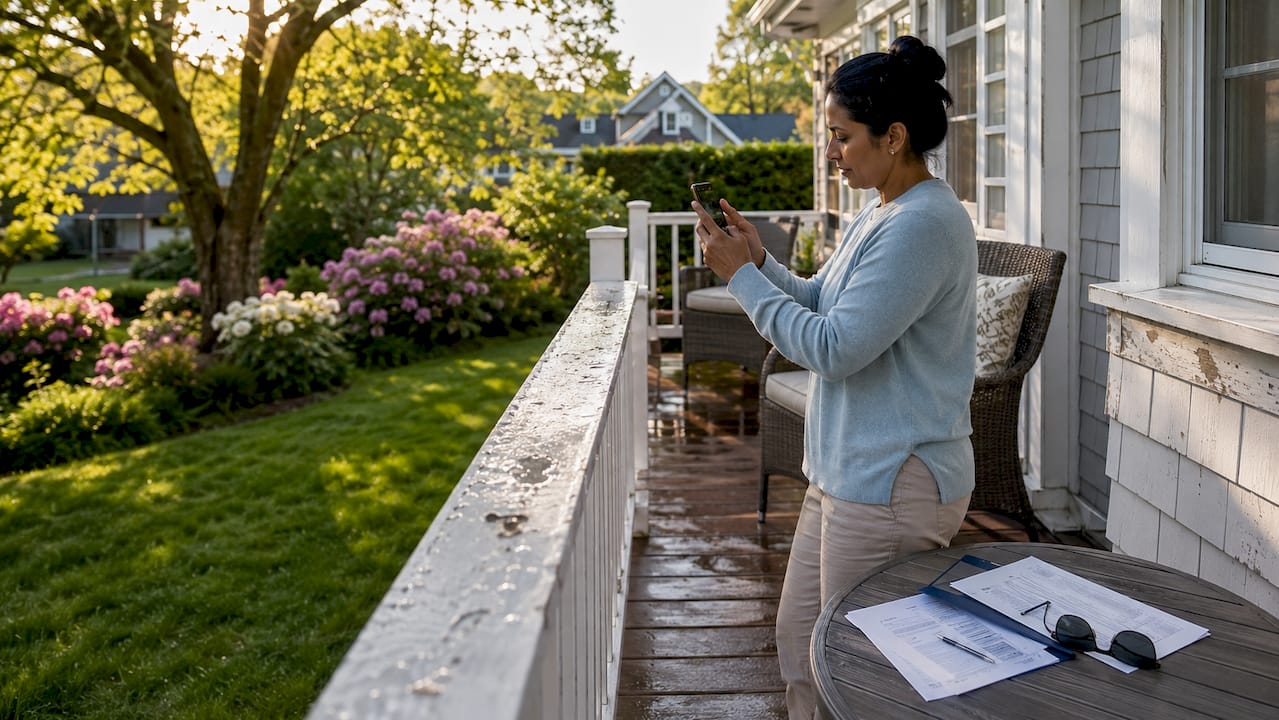
Massachusetts insurers generally expect storm damage notice within 30–60 days of discovering the damage. The statute of limitations for filing a lawsuit related to a claim is generally six years, but waiting months to notify your insurer gives them grounds to question the cause and extent of damage. File your notice as soon as the storm passes and it is safe to inspect your property.
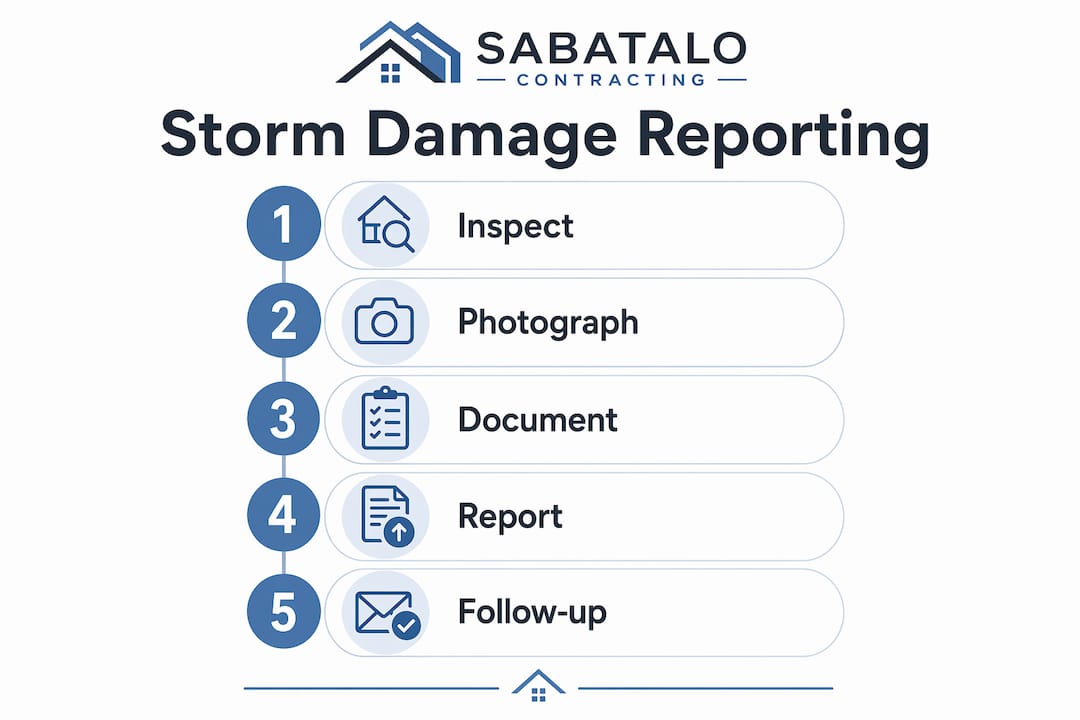
Follow these steps in order after any significant storm:
- Photograph everything before any cleanup. Capture your roof, siding, gutters, windows, and any interior water intrusion from multiple angles. Video walkthroughs work well for capturing the full scope.
- Document whole-exterior damage, including roof, siding, and gutters. Comprehensive documentation often prevents supplemental claims and insurance conflicts later.
- Extract and dry water-damaged materials within 24–48 hours. This window is critical for mold prevention, which is covered in detail in the next section.
- Get an independent damage estimate from a licensed local storm repair expert before your insurer’s adjuster visits. This gives you a baseline to compare against the adjuster’s scope.
- Submit written notice to your insurer with your photo documentation attached. Keep copies of every communication.
- Avoid signing any contractor’s work authorization before your insurer has acknowledged your claim in writing.
“Storm chaser” contractors often appear door-to-door within 24 hours of a major storm. They typically lack Massachusetts HIC or CSL credentials, pressure homeowners to sign contracts immediately, and disappear after collecting deposits. Always verify licenses before any agreement.
The storm damage insurance process in Massachusetts rewards homeowners who document early and document everything. Gaps in your photo record give adjusters room to reduce your payout.
Water damage mitigation vs. mold remediation: what is the difference?
Water mitigation and mold remediation are distinct services with different scopes, different contractors, and separate insurance claims processes. Treating them as the same thing costs homeowners time and money.
Water mitigation focuses on drying. The goal is to remove standing water, extract moisture from building materials, and use industrial dehumidifiers and air movers to bring moisture levels back to normal. Water-damaged areas dried within 24–48 hours will generally not develop mold. That window is your most important deadline after any storm that brings water into your home.
Mold remediation is what happens when mitigation is delayed or incomplete. It involves containment barriers, HEPA air filtration, physical removal of contaminated materials, and clearance testing by an independent industrial hygienist. Mitigation and remediation are categorized separately by insurers, which means they often generate two distinct claims with two different contractor scopes.
| Factor | Water Mitigation | Mold Remediation |
|---|---|---|
| Primary goal | Dry and stabilize materials | Remove mold-contaminated materials |
| Timing | Must begin within 24–48 hours | Required when mold growth is confirmed |
| Key equipment | Dehumidifiers, air movers | HEPA filtration, containment barriers |
| Clearance testing | Moisture meter readings | Independent industrial hygienist |
| Insurance claim | Separate mitigation claim | Separate remediation claim |
| IICRC standard | ANSI/IICRC S500 | ANSI/IICRC S520 |
The updated ANSI/IICRC S500:2026 standard requires precise documentation of moisture levels throughout the drying process to meet insurance and regulatory expectations. Ask any mitigation contractor whether they document moisture readings at each inspection visit. If they don’t, their work may not satisfy your insurer’s requirements.
Pro Tip: Before hiring a water damage contractor, ask directly: “Do you document moisture levels at every visit and provide a written drying log?” A contractor who cannot answer yes is not following IICRC standards.
What should you look for when choosing storm repair contractors?
The right post-storm repair services provider is not just the fastest one to show up. Credentials, documented experience, and local knowledge all matter more than speed alone.
Homeowners who overlook verifying licenses and certifications consistently face costly delays and poor outcomes. Use this checklist when vetting any local storm repair expert:
- Verify both HIC and CSL credentials using OCABR and BBRS online portals before the first meeting
- Confirm IICRC certifications for Water Damage Restoration (WRT) and Applied Microbial Remediation (AMRT) if water entered your home
- Request a whole-exterior inspection report with large-scope photographic evidence to confirm the contractor assessed all damage, not just the most visible areas
- Ask for references from storm damage restoration projects completed in Massachusetts within the past two years
- Check Google, Houzz, or the Better Business Bureau for verified customer reviews with specific project details
- Confirm the contractor carries both general liability and workers’ compensation insurance with current certificates
- Ask whether the contractor uses Xactimate for estimating, since this is the industry-standard software most Massachusetts insurers recognize
You can also review the exterior contractor selection guide for a full breakdown of what to ask before signing any agreement.
Speed in emergency response genuinely reduces overall restoration cost by preventing mold and further structural damage. A contractor who can mobilize within hours and document properly from day one is worth more than one who simply quotes the lowest price.
How do you coordinate contractors and insurers after storm damage?
Successful storm damage restoration depends on clear communication between you, your contractor, and your insurance company. Leaving any of those three parties out of the loop creates gaps that delay your project and reduce your payout.
Follow this sequence to keep your project on track:
- Get a written scope of work and contract before any repairs begin. Massachusetts law requires written contracts for home improvement projects over $1,000. The contract must specify materials, timeline, payment schedule, and the contractor’s HIC registration number.
- Request moisture logs and drying documentation from your mitigation contractor at every stage. Moisture logs and drying records are critical project management artifacts. Without them, you cannot prove that drying met the standard your insurer requires.
- Share your contractor’s written estimate with your adjuster before work begins on permanent repairs. Confirm the adjuster’s scope matches your contractor’s assessment.
- Hire an independent mold inspector or industrial hygienist if water entered your home and mitigation was delayed beyond 48 hours. Their clearance report protects you if the insurer disputes remediation costs.
- File a supplemental claim if your contractor identifies additional damage during repairs that was not included in the original adjuster’s scope. Document the newly discovered damage with photos and a revised written estimate before submitting.
Contractors who use Xactimate produce line-item estimates that match the format Massachusetts insurers use internally. This reduces back-and-forth and speeds up claim approval. Ask your contractor directly whether they use this tool.
Key takeaways
Hiring licensed, documented storm repair contractors with both HIC and CSL credentials is the single most effective way Massachusetts homeowners can protect their property value and insurance claims after storm damage.
| Point | Details |
|---|---|
| Verify HIC and CSL credentials | Check both licenses on OCABR and BBRS portals before signing any contract. |
| Act within 24–48 hours on water damage | Drying within this window prevents mold and keeps mitigation costs lower. |
| Document the whole exterior | Photograph roof, siding, and gutters thoroughly to prevent insurer scope disputes. |
| Notify your insurer within 30–60 days | Late notice gives insurers grounds to reduce or deny your storm damage claim. |
| Separate mitigation from remediation | These are distinct services with separate scopes, contractors, and insurance claims. |
What i’ve learned after years of massachusetts storm repairs
The most common mistake I see Massachusetts homeowners make is hiring the first contractor who knocks on their door after a storm. Storm chasers know that urgency clouds judgment. They count on it.
The second most common mistake is treating water damage as a cleanup job rather than a timed technical process. I’ve seen homeowners run fans for a week and assume the problem is solved, only to discover mold behind their walls three months later. The 24–48 hour drying window is not a guideline. It is the line between a mitigation claim and a full remediation project that costs three to five times more.
What actually works is slowing down just enough to verify credentials, get a written contract, and document everything before work starts. That discipline pays off when your adjuster reviews the claim. Insurers respond to paper trails. Contractors who provide moisture logs, drying records, and whole-exterior photo documentation make your claim easier to approve and harder to dispute.
My strongest advice: prioritize contractors who hold both HIC and CSL licenses, carry IICRC certifications, and can show you completed projects in your area. Responsiveness matters, but credentials matter more. A contractor who shows up fast without the right licenses can leave you legally exposed and financially worse off than before the storm.
How Sabatalo contracting helps massachusetts homeowners after storms

Sabatalo contracting holds both HIC registration and CSL credentials and has served Massachusetts homeowners for over 15 years across roofing, siding, gutters, windows, and full exterior restorations. After a storm, you need a contractor who knows Massachusetts licensing law, works directly with your insurer, and documents every step of the project. Sabatalo contracting does all three. Whether you need emergency roof repairs or a complete exterior home upgrade that turns storm damage into a long-term improvement, the team is ready to assess your property and build a repair plan that fits your timeline and budget. Contact Sabatalo contracting today for a consultation and written estimate.
FAQ
What licenses should a massachusetts storm repair contractor have?
Massachusetts storm repair contractors should hold both an HIC registration from OCABR and a CSL from BBRS. Structural repairs requiring a building permit legally require the CSL.
How soon must i report storm damage to my insurance company?
Massachusetts insurers generally expect notice within 30–60 days of discovering damage. Filing promptly protects your claim from denial based on delayed reporting.
What is the difference between water mitigation and mold remediation?
Water mitigation focuses on drying materials within 24–48 hours to prevent mold growth. Mold remediation involves physical removal of contaminated materials and clearance testing, and it generates a separate insurance claim.
How do i verify a contractor’s license in massachusetts?
Check HIC registrations on the OCABR online portal and CSL credentials on the BBRS license verification page. Both searches are free and take under five minutes.
What is xactimate and why does it matter for my storm claim?
Xactimate is the industry-standard estimating software most Massachusetts insurers use internally. Contractors who produce Xactimate estimates reduce back-and-forth with adjusters and speed up claim approvals.
Recommended
- Storm Roofers for Massachusetts Homes: 2026 Guide | Sabatalo Contracting
- Storm Roofing Company: Protecting Massachusetts Homes | Sabatalo Contracting
- Roof Damage Repair Near Me – Protecting Your Massachusetts Home | Sabatalo Contracting
- Roof Repair Experts: Protecting Massachusetts Homes | Sabatalo Contracting
