Peeling paint, drafty windows, and faded exteriors are familiar frustrations for many Massachusetts homeowners. These issues do more than just affect your home’s look—they can drive up energy bills, invite moisture damage, and rob your house of comfort. When you choose to invest in modern siding and window replacement, you are not only upgrading curb appeal but also improving energy efficiency and durability. With the right materials and skilled installation, your home can better withstand New England weather while offering long-term savings and peace of mind.
Table of Contents
- What Siding And Window Replacement Means
- Types Of Siding And Window Materials
- Key Factors Shaping Replacement Costs
- Regional Considerations For Massachusetts Homes
- Maximizing Value And Long-Term Savings
Key Takeaways
| Point | Details |
|---|---|
| Siding and Window Replacement Benefits | Upgrading enhances energy efficiency, protects against weather, and improves home value. |
| Material Selection Matters | Choosing the right materials affects durability, maintenance, and long-term costs. |
| Installation Quality is Crucial | Proper installation ensures longevity and maximizes the benefits of replacement projects. |
| Investing for Future Savings | Upgrades not only improve aesthetics but also contribute to significant energy savings over time. |
What Siding And Window Replacement Means
Siding and window replacement refers to removing your home’s exterior wall covering and/or old window units and installing new ones. These upgrades address both aesthetics and home performance, protecting your investment while improving comfort. Massachusetts homeowners undertake these projects for energy savings, weather protection, and curb appeal.
Siding replacement means removing damaged, worn, or outdated exterior cladding and installing new material. Old siding deteriorates over 20-40 years depending on type and climate conditions. New siding shields your home from harsh New England winters, moisture damage, and UV degradation.
Window replacement involves removing old frames, glass, and hardware, then installing modern units in their place. Modern window systems reduce heat loss and air leakage, keeping your home warmer in winter and cooler in summer. This is about more than just aesthetics—it’s structural performance.
Why these upgrades matter:
- Energy efficiency gains that lower heating and cooling costs
- Enhanced protection against Massachusetts weather (snow, rain, salt air near coast)
- Improved home value and curb appeal
- Reduced condensation and moisture-related damage
- Better interior comfort year-round
Modern replacements aren’t just cosmetic—they’re investments in your home’s durability and your family’s comfort.
These projects address wear and tear that compromises your home’s envelope. Gaps around old windows allow conditioned air to escape. Deteriorating siding exposes wood framing to water damage and rot. Massachusetts’ humid summers and freezing winters accelerate this damage.
ENERGY STAR certified windows can lower energy bills by up to 13% nationally by improving insulation and reducing heat transfer. Replacement siding with proper installation and underlayment prevents moisture intrusion that leads to costly structural repairs down the road.
When homeowners in Massachusetts invest in these replacements, they’re typically addressing multiple problems simultaneously. Old siding might have moisture damage. Original single-pane windows waste energy. A comprehensive replacement project tackles both issues, delivering long-term value.
Understanding what these replacements actually do—beyond appearance—helps you make informed decisions about scope, materials, and budget. Your contractor should explain how specific materials and installation methods protect your home and reduce operating costs.
Pro tip: Before committing to full replacement, ask your contractor to identify specific problems your current siding and windows have—moisture entry, air leakage, condensation—so you understand exactly what the new systems will solve.
Types Of Siding And Window Materials
Material choice determines your replacement project’s durability, maintenance demands, appearance, and cost. Massachusetts homeowners have multiple options, each suited to different priorities and budgets. The right choice depends on your home’s architecture, climate exposure, and long-term maintenance tolerance.
Siding Materials
Siding materials range from natural wood to artificial options), each with distinct maintenance requirements and lifespans. Popular choices in Massachusetts include:
- Vinyl siding – Most affordable, low maintenance, resists moisture, limited color choices fade over time
- Fiber cement – Mimics wood appearance, extremely durable (25-40 years), heavier installation requirements
- Wood siding – Classic aesthetics, requires regular painting and staining, vulnerable to rot and pests
- Composite – Blends wood fibers with plastic, moderate maintenance, good durability
- Metal siding – Durable and lightweight, can dent, less common for residential homes
Vinil dominates Massachusetts homes because it withstands New England winters and salt air near coastal areas without rotting. Fiber cement costs more upfront but requires minimal maintenance over decades.

Here’s how common siding materials compare for Massachusetts homes:
| Siding Material | Typical Lifespan | Maintenance Level | Weather Resistance |
|---|---|---|---|
| Vinyl | 20-30 years | Minimal | Excellent (moisture/UV) |
| Fiber Cement | 25-40 years | Low | Superior (harsh climates) |
| Wood | 15-25 years | High | Moderate (needs sealing) |
| Composite | 20-30 years | Moderate | Good (pest resistant) |
| Metal | 30+ years | Low | Good (dents possible) |
Vinyl is budget-friendly; fiber cement is investment-grade durability.
Window Materials
Common window styles accommodate ventilation, light, and climate needs with different frame materials. Frame options include:
- Vinyl frames – Affordable, excellent insulation, no maintenance, less prestigious appearance
- Fiberglass frames – Strong, energy efficient, stable in temperature extremes, premium pricing
- Wood frames – Beautiful, excellent insulation, requires painting and weather-stripping maintenance
- Aluminum frames – Lightweight and strong, poor insulation unless thermally broken, industrial look
- Composite frames – Combines wood interior with vinyl exterior, high durability and appearance
Window styles matter too. Double-hung windows open top and bottom (traditional). Casement windows crank outward (maximum ventilation). Awning windows tilt down (good for rainy climates). Fixed windows don’t open (lowest cost, no air leakage).
Massachusetts homes benefit from vinyl or fiberglass frames with low-emissivity glass that reduces heat transfer. Your location matters—coastal properties need corrosion-resistant frames; inland homes can prioritize insulation.
Below is a summary of how window frame options differ for New England weather:
| Frame Type | Insulation Quality | Appearance | Best For |
|---|---|---|---|
| Vinyl | High | Simple, clean | Budget/low-maintenance |
| Fiberglass | Superior | Modern, sleek | Durability/extremes |
| Wood | Very high | Classic, upscale | Historic homes |
| Aluminum | Low | Industrial, modern | Non-coastal, mild areas |
| Composite | Very high | Versatile, elegant | High-value longevity |
Pro tip: Request material samples and ask your contractor which option performs best for your specific wall orientation and sun exposure, since southwestern-facing walls experience different weathering than northern walls.
Key Factors Shaping Replacement Costs
Replacement costs swing dramatically based on several concrete factors. Understanding what drives pricing helps you budget accurately and avoid sticker shock. Massachusetts labor rates, material choices, and project scope all influence your final bill.
Material Selection
Your material choice is often the single biggest cost driver. Vinyl siding costs $3-8 per square foot, while fiber cement runs $8-15. Windows follow similar logic—vinyl frames cost less than fiberglass or composite options.
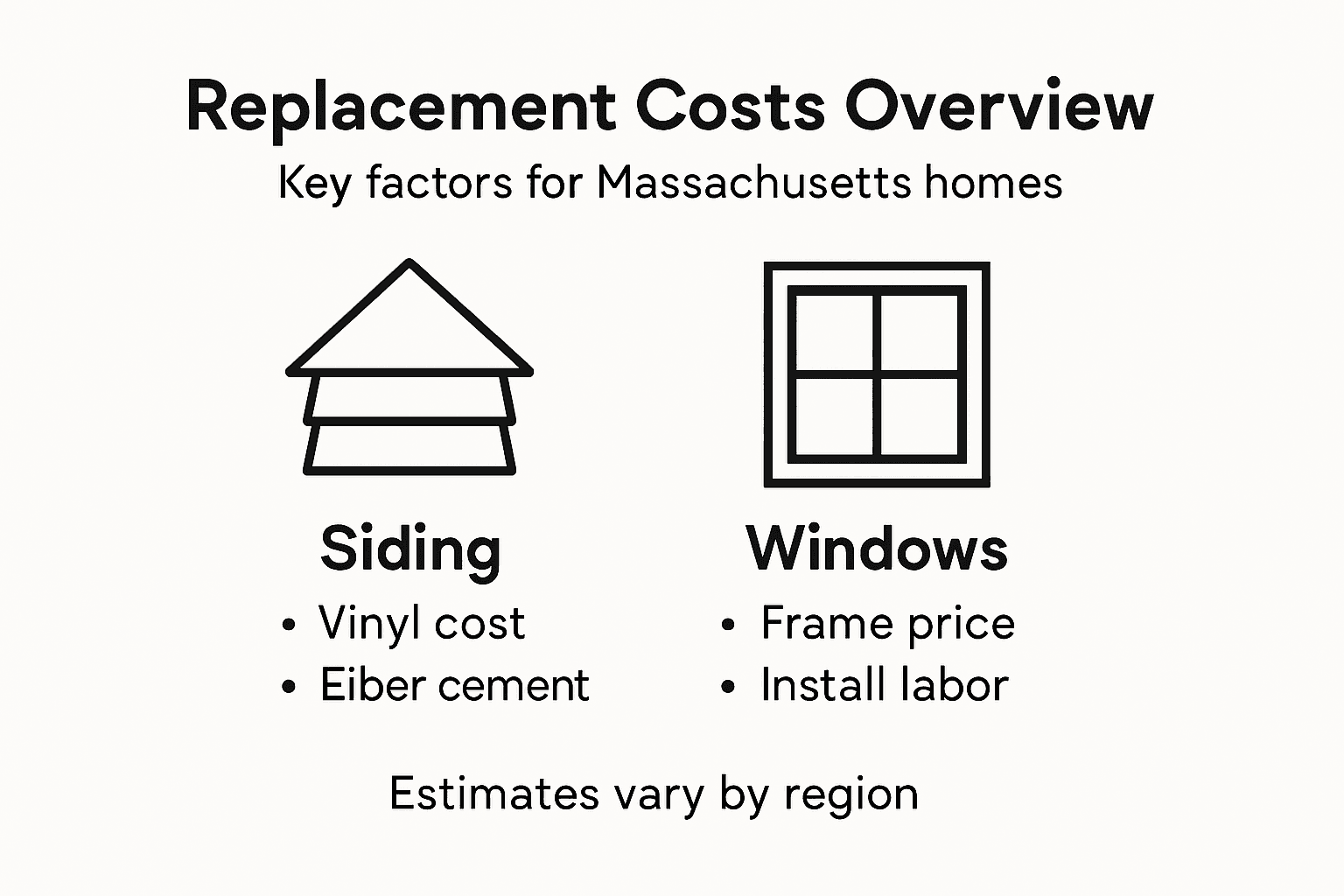
Budget materials deliver value. Premium materials offer longevity. The right choice depends on how long you plan to stay in your home.
Project Scope and Size
Window costs depend on type, material, size, and installation complexity. A single window costs less than replacing a full home’s windows. Replacing only sashes costs less than full-frame replacements with new exterior trim.
Siding scope matters too. A 2,000-square-foot ranch costs less to side than a 4,000-square-foot colonial. Complex roof lines, dormers, and architectural details increase labor time and material waste.
Key scope factors:
- Number of windows or linear feet of siding
- Full-frame versus sash-only window replacements
- New exterior trim, flashing, or caulking needs
- Removal and disposal of old materials
- Structural repairs discovered during installation
Labor and Installation
Labor is a significant cost factor influenced by installation complexity and local market conditions. Massachusetts contractors charge $40-80 per hour depending on experience and location. Boston area costs exceed western Massachusetts rates.
Complicated installations increase labor. Homes with asbestos siding require hazardous material removal. Rotted underlying wood needs replacement. Installing around difficult architectural features (bay windows, wraparound porches) takes longer.
Labor represents 40-60% of total replacement costs in Massachusetts.
Location and Market Conditions
Local supply chains affect pricing. Coastal properties pay premium rates. Urban areas cost more than rural towns. Seasonal demand peaks in spring and summer, raising contractor availability and pricing.
Contractor experience matters. Established contractors with 15+ years of local expertise command higher rates but deliver superior results. New companies undercut pricing but may lack warranty backing.
Additional Hidden Costs
Permits required by your town add $200-500. Structural repairs uncovered during work aren’t predictable. Upgrades to underlayment, insulation, or drainage systems increase final costs.
Pro tip: Request a detailed quote breaking down material, labor, permits, and contingency costs separately—this reveals where your money goes and helps you identify cost-saving opportunities without sacrificing quality.
Regional Considerations For Massachusetts Homes
Massachusetts climate, coastal exposure, and local building codes directly shape your replacement strategy. Your location within the state affects material choices, installation requirements, and long-term durability. Understanding these regional factors prevents costly mistakes.
New England Climate Demands
Massachusetts winters are brutal. Temperatures plunge below freezing for months. Snow loads, ice damming, and freeze-thaw cycles stress exteriors relentlessly. Your siding and windows must withstand these extremes without failing.
Vinyl siding is the most common exterior material in Massachusetts due to its durability and weather resistance. It flexes with temperature changes, doesn’t rot, and resists moisture infiltration that causes structural damage.
Windows face similar stress. Single-pane windows fail in Massachusetts winters. Modern replacements with low-emissivity glass and insulated frames prevent condensation and maintain interior warmth. Double and triple-glazed windows outperform single-pane units significantly.
Coastal Versus Inland Considerations
Coastal Massachusetts properties face salt air corrosion. Regular saltwater spray accelerates metal oxidation and paint failure. Aluminum window frames corrode unless thermally broken. Steel hardware rusts rapidly without protective coatings.
Coastal recommendations differ from inland homes:
- Choose vinyl or fiberglass frames (metal frames corrode)
- Specify stainless steel hardware instead of galvanized
- Select marine-grade sealants that resist salt spray
- Upgrade to high-quality underlayment beneath siding
- Install drainage plane systems to manage moisture
Inland homes (western Massachusetts, central regions) face less corrosion stress. Standard vinyl or wood products perform reliably. Budget flexibility allows cost-saving choices without sacrificing durability.
Energy Codes and Permits
Massachusetts enforces the Massachusetts Energy Code, which mandates minimum window and insulation performance. ENERGY STAR certified windows rated for northern climate zones meet state requirements and qualify for rebates.
Local towns add their own requirements. Some mandate specific siding materials. Others require permits for exterior work. Boston, Cambridge, and other municipalities have strict historic district rules.
Massachusetts energy codes mean your replacement windows must meet specific performance standards—not all cheap windows qualify.
Permits typically cost $200-500 and require inspection before and after work. Building officials verify compliance with current codes. This protects you and ensures quality installation.
Contractor Availability and Pricing
Boston and surrounding suburbs have abundant contractors, increasing competition and options. Western Massachusetts has fewer choices, sometimes requiring travel time that increases labor costs.
Seasonal demand peaks April through October. Winter projects (November-March) sometimes negotiate better rates due to contractor availability. Spring and summer demand drives pricing up.
Pro tip: Request quotes from multiple contractors in your specific town or region—Massachusetts pricing varies significantly by location, and comparing 3-4 bids reveals the local market rate for your exact situation.
Maximizing Value And Long-Term Savings
Replacement siding and windows are major investments. Treating them strategically turns costs into long-term savings. Value extends beyond the initial purchase—it compounds through energy savings, durability, and home appreciation.
Energy Efficiency as an Investment
Understanding window ratings including U-factor and solar heat gain coefficient helps select windows optimized for local climate. A low U-factor means better insulation. Low solar heat gain reduces cooling costs in summer. Together, these factors determine annual energy savings.
Massachusetts winters demand high-performance windows. Modern replacements reduce heating costs 15-20% compared to original single-pane units. That translates to $150-300 annually for typical homes. Over 20 years, savings reach $3,000-6,000.
Siding upgrades deliver similar returns. Quality underlayment and proper installation prevent moisture damage that costs thousands to repair. Prevention is cheaper than cure.
Strategic Material Selection
Don’t confuse cheap with valuable. Budget vinyl performs adequately but fades and becomes brittle in 15-20 years. Premium vinyl or fiber cement lasts 30-40 years with minimal maintenance. Higher upfront cost spreads across decades, lowering annual expense.
Consider these value-building choices:
- Insulated frames – Reduce condensation and drafts significantly
- Low-emissivity glass – Blocks heat in summer, retains warmth in winter
- Quality underlayment – Prevents moisture damage that destroys framing
- Stainless steel fasteners – Resist corrosion permanently
- Thicker siding – Withstands impact and weather better
These upgrades cost 10-20% more initially but deliver measurable returns through lower utility bills and fewer repairs.
Installation Quality Matters
Proper installation and maintenance extend lifespan and benefits of replacement windows. Poor installation ruins even premium products. Air leaks around frames erase insulation benefits. Improper flashing allows water infiltration that causes structural rot.
Experienced contractors install correctly. Verify they follow manufacturer specifications exactly. Request they seal all gaps with proper caulk. Check that flashing extends beyond siding.
Poor installation costs thousands more than hiring a skilled contractor—don’t save $500 on labor and spend $5,000 fixing water damage.
Home Value and Curb Appeal
Siding and window replacements rank among the highest return-on-investment home improvements. You recover 70-80% of replacement costs through increased home value. Beautiful, modern exteriors attract buyers and command premium prices.
Energy-efficient windows appeal to environmentally conscious buyers. Modern siding eliminates dated appearance that discourages sales. These improvements sell homes faster and at higher prices.
Long-Term Warranty Protection
Reputable contractors offer 10-15 year warranties on labor. Quality window manufacturers guarantee frames and glass 20-25 years. Fiber cement siding carries lifetime warranties. These protections provide peace of mind and future cost protection.
Pro tip: Prioritize contractor reputation and warranty coverage over lowest price—a contractor backing their work with warranties stands behind quality, while the cheapest bid often reflects shortcuts you’ll regret within five years.
Enhance Your Massachusetts Home with Expert Siding and Window Replacement
Facing high energy bills or battling Massachusetts weather damage? Investing in quality siding and window replacements is key to protecting your home from moisture, drafts, and costly repairs. At Sabatalo Contracting & Home Improvement, we understand the challenge of selecting durable materials that meet local energy codes and withstand coastal erosion or harsh winters. Our team brings over 15 years of local expertise ensuring every installation reduces air leakage and improves thermal performance for lasting comfort and savings.
Discover how our full range of Siding and Windows solutions can transform your home’s exterior with superior craftsmanship and materials tailored to Massachusetts climates.

Ready to tackle your siding and window concerns with trusted professionals who prioritize quality and transparency? Visit Sabatalo Contracting & Home Improvement today to request a detailed consultation and receive a personalized quote designed to maximize your home’s value and energy efficiency. Don’t delay; the sooner you act, the sooner your home is protected and your energy costs decrease.
Frequently Asked Questions
What factors influence the cost of siding and window replacement?
The cost is influenced by material selection, project scope and size, labor and installation complexity, location, and additional hidden costs such as permits and structural repairs.
How long can I expect new siding and windows to last?
The lifespan varies by material; for example, vinyl siding typically lasts 20-30 years, fiber cement lasts 25-40 years, and windows can last 15-25 years depending on the frame material and installation quality.
What are the benefits of energy-efficient windows?
Energy-efficient windows can significantly reduce heating and cooling costs, improve home comfort, and provide better insulation, potentially lowering energy bills by 15-20% compared to single-pane windows.
What should I consider when choosing siding materials?
Consider factors such as durability, maintenance requirements, aesthetics, weather resistance, and the costs of materials. Vinyl and fiber cement are popular choices due to their durability and lower maintenance needs.
Recommended
- Reasonable Window Replacement for Massachusetts Homes | Sabatalo Contracting
- Window Replacement in Massachusetts: Boost Home Efficiency | Sabatalo Contracting
- Window Replacement Near Me – Boosting Home Value and Comfort | Sabatalo Contracting
- When to Replace Windows: Guide for Massachusetts Homes 2025
- Water Heater Replacements Cost Estimate and Options Home Therapist Cooling, Heating, and Plumbing
