
TL;DR:
- Energy-efficient windows meeting ENERGY STAR standards cost between $450 and $2,000 per window installed. Most Massachusetts homeowners see the best return with double-pane Low-E windows filled with argon gas, especially when combined with proper air sealing.
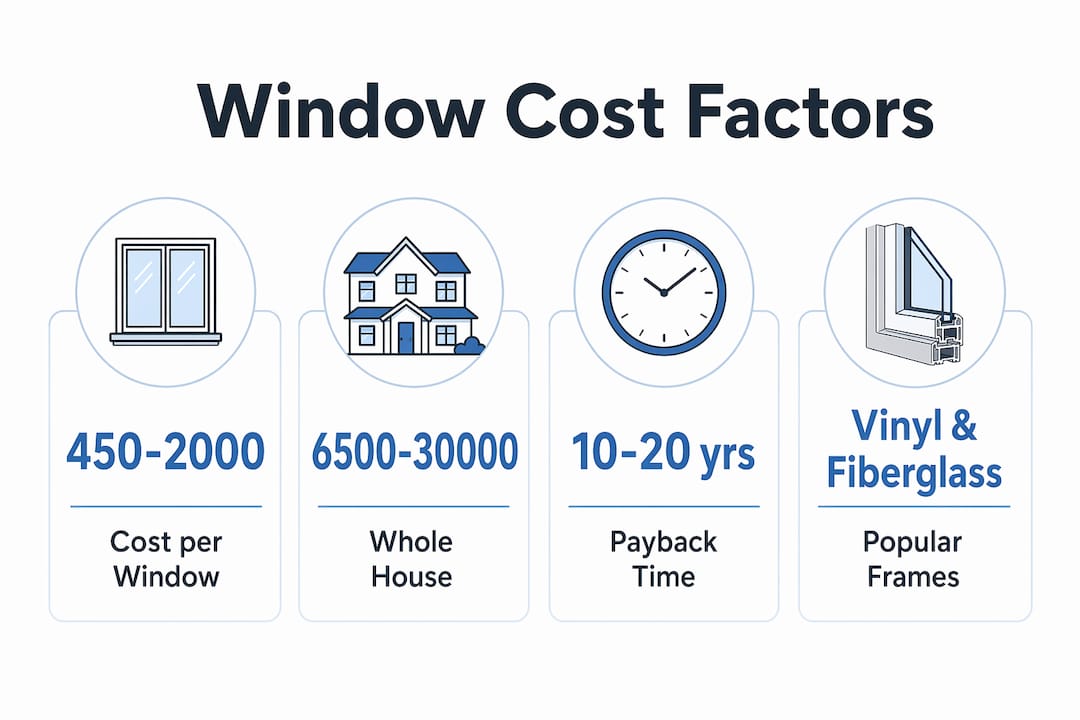
Energy-efficient windows, the industry term for fenestration products meeting ENERGY STAR thermal performance standards, cost between $450 and $2,000 per window installed as of 2026. A whole-house replacement project runs $6,500 to $33,425 depending on how many windows your home has. For Massachusetts homeowners dealing with brutal winters and humid summers, understanding what drives that price range is the difference between a smart investment and an expensive mistake.
What factors influence the average cost of energy efficient windows?
Glass type is the single biggest cost driver in any window project. Basic double-pane glass is the entry point, but double-pane with Low-E coating and argon gas costs $100–$200 more per window and delivers a much better return on investment. Triple-pane glass adds another $250–$400 per window on top of that. Each step up in glass technology meaningfully improves thermal performance, but the price jumps are not always proportional to the comfort gains.
Frame material is the second major variable. Here is how common options stack up:
| Frame material | Relative cost | Key trait |
|---|---|---|
| Vinyl | Lowest | Low maintenance, good insulation |
| Fiberglass | Mid to high | Strongest, best thermal performance |
| Wood | Mid to high | Classic look, requires upkeep |
| Aluminum | Low to mid | Durable but conducts cold |
| Composite | Mid | Wood look with vinyl durability |
For most Massachusetts homes, vinyl and fiberglass frames dominate because they handle freeze-thaw cycles without warping or rotting. Wood frames look beautiful but demand annual maintenance in a climate that sees ice, snow, and humidity in the same year.
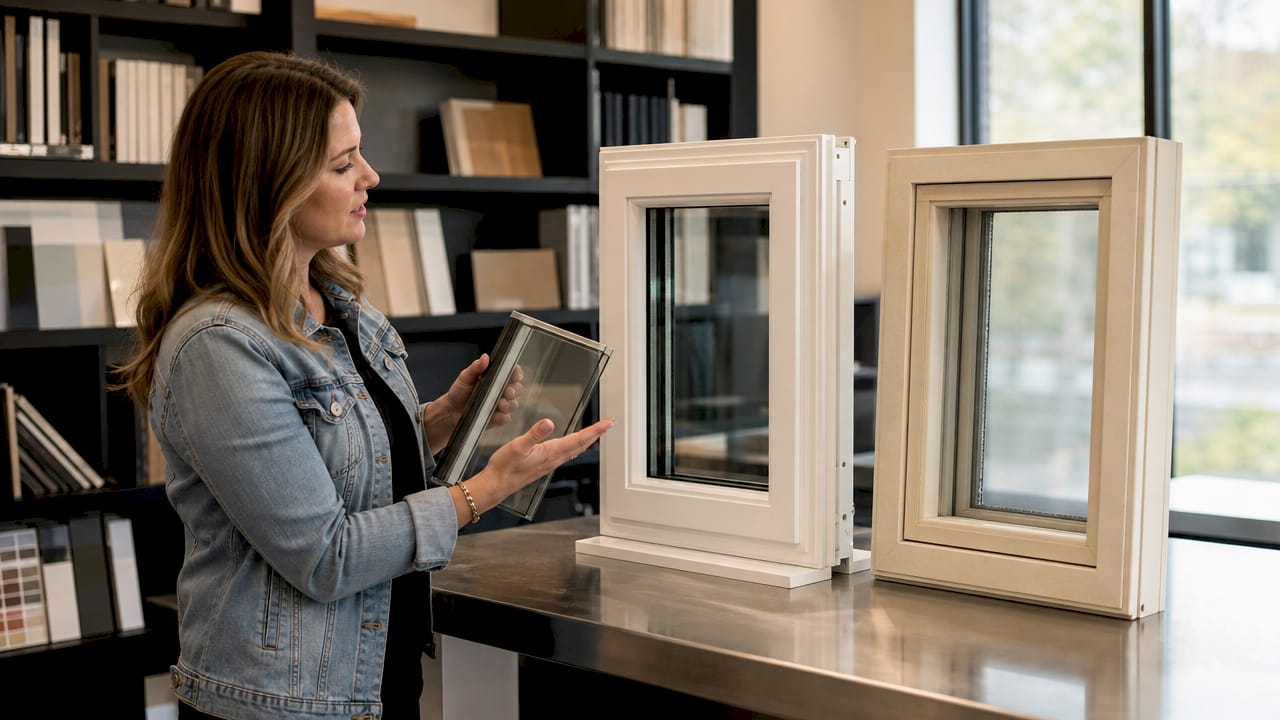
Installation method also shifts the final price considerably. A retrofit installation, where the new window slides into the existing frame, costs less because it requires less labor. A full-frame replacement removes everything down to the rough opening and is necessary when frames are rotted or damaged. Multi-story or custom homes require specialized labor that pushes total project costs well above national averages. Massachusetts labor rates are higher than the national median, so budget accordingly.
Pro Tip: Get at least three quotes from licensed Massachusetts contractors. Ask each one to specify whether the bid covers retrofit or full-frame installation. The difference in scope explains most price gaps between bids.
How do energy savings compare across different window types?
The payback math on energy-efficient windows depends heavily on what you are replacing. Upgrading from single-pane to modern double-pane Low-E windows cuts heating and cooling costs by 20–30%, saving $125 to $465 per year. That is a meaningful number for a Massachusetts household running the heat from october through april.
Payback periods vary by window type and existing conditions:
- Double-pane basic: Longest payback, lowest upfront cost, modest savings over single-pane.
- Double-pane Low-E with argon: Best overall value. Meets ENERGY STAR requirements and delivers favorable payback in most Massachusetts climate zones.
- Triple-pane: Highest upfront cost, best insulation, longest payback period but strongest comfort gains in cold climates.
“The most cost-effective upgrade for most Massachusetts homeowners is double-pane Low-E with argon gas fill. It meets ENERGY STAR standards and delivers the best balance of upfront cost and annual savings.”
ENERGY STAR certification matters beyond just performance. Certified windows qualify for federal tax credits and Massachusetts utility rebates, which directly reduce your net cost. The Mass Save program, administered by Massachusetts utilities, offers rebates on qualifying window upgrades. Those rebates can shave hundreds of dollars off a whole-house project. Check with your utility provider before purchasing to confirm current rebate amounts, since they change annually.
The payback period for double-pane Low-E windows typically runs 10–20 years. That sounds long, but the calculation changes when you factor in non-energy benefits. Vinyl windows recoup 65–73% of their cost at resale. Noise reduction, eliminated cold spots near windows, and better moisture control all add livable comfort that does not show up in an energy bill but absolutely shows up in daily quality of life.
Are triple-pane windows worth the cost for Massachusetts homes?
Triple-pane windows are worth the premium in specific situations. They provide 20–30% better insulation than double-pane and cost $250–$400 more per window. That premium adds up fast on a whole-house project, so the decision requires honest math.
Massachusetts sits in IECC climate zone 5, which means cold winters with significant heating loads. That climate profile is exactly where triple-pane windows earn their keep. The benefits go beyond lower heating bills:
- Dramatically reduced cold drafts near window surfaces in january and february
- Noticeably better sound dampening from street noise and wind
- Lower interior condensation because the inner pane stays warmer
- Greater long-term durability in freeze-thaw conditions
The honest downside is payback period. Triple-pane windows take longer to pay back their premium cost through energy savings alone. For a home with very high heating demand, an older house with poor insulation, or a homeowner planning to stay for 15-plus years, the investment makes sense. For a homeowner planning to sell within five years, double-pane energy efficient windows deliver better financial returns.
Pro Tip: If your home already has good attic insulation and air sealing, the marginal gain from triple-pane over double-pane Low-E narrows considerably. Spend the extra money on triple-pane only after the rest of your building envelope is tight.
How can Massachusetts homeowners maximize energy savings beyond window replacement?
Windows are not the most cost-effective place to start an energy-saving project. Attic insulation and professional air sealing typically deliver 5–10 times better financial returns per dollar spent than window replacement alone. That does not mean windows are a bad investment. It means the order of upgrades matters.
A smart sequence for Massachusetts homeowners looks like this:
- Air seal the attic and basement: Stop conditioned air from escaping before spending on new windows.
- Add attic insulation: Bring levels up to Massachusetts code minimums before replacing windows.
- Replace the worst windows first: Prioritize single-pane, broken seals, or visibly damaged frames.
- Consider storm windows for historic homes: Storm windows over single-pane achieve 60–80% of full replacement energy benefits at 20–30% of the cost. For a historic property or a tight budget, that math is hard to ignore.
Installation quality determines whether new windows actually perform as rated. Improper installation voids warranties and eliminates energy savings by creating air leaks and water infiltration paths. A window installed with gaps in the flashing or missing interior air sealing performs no better than the old window it replaced. Hire a licensed Massachusetts contractor who pulls the required permits and follows manufacturer installation specs.
The non-energy benefits of quality window replacement deserve more attention than they typically get. Noise reduction in a busy neighborhood, elimination of cold spots that make rooms feel uncomfortable even at the right temperature, and improved curb appeal all contribute to home resale value. These benefits justify the investment even when the energy payback period stretches beyond ten years.
Key Takeaways
Double-pane Low-E windows with argon gas fill deliver the best balance of upfront cost and long-term energy savings for most Massachusetts homeowners, with installed costs ranging $450 to $2,000 per window and whole-house projects running $6,500 to $33,425.
| Point | Details |
|---|---|
| Installed cost range | Budget $450 to $2,000 per window; whole-house projects run $6,500 to $33,425. |
| Best value glass type | Double-pane Low-E with argon meets ENERGY STAR standards and saves $125 to $465 annually. |
| Triple-pane trade-off | Costs $250 to $400 more per window but delivers 20 to 30% better insulation in cold climates. |
| Prioritize air sealing first | Attic insulation and air sealing return 5 to 10 times more per dollar than windows alone. |
| Installation quality is non-negotiable | Improper installation voids warranties and eliminates energy savings through air leaks. |
What I have learned after 15 years of window projects in Massachusetts
After working on hundreds of window replacement projects across Massachusetts, the pattern I see most often is homeowners spending more than they need to because they skipped the fundamentals. They invest in triple-pane windows on a house with a leaky attic and single-stud walls with no insulation. The windows perform beautifully in isolation and the heating bill barely moves.
My honest recommendation for most homeowners is to start with mid-tier double-pane Low-E with argon gas. It hits the ENERGY STAR threshold, qualifies for rebates, and delivers real annual savings without the premium price of triple-pane. Spend the money you save on a professional air sealing job. That combination outperforms triple-pane windows in a leaky house every single time.
The other thing I push back on is the DIY installation temptation. I understand the appeal when you are already spending $10,000 or more on windows. But the installation is where the performance lives. A window rated for exceptional thermal performance becomes an average window the moment someone skips the backer rod and sealant at the interior jamb. Hire someone who knows Massachusetts building codes, pulls permits, and stands behind the work with a warranty.
Finally, do not underestimate the comfort gains. Homeowners who replace drafty single-pane windows with quality double-pane Low-E units consistently tell me the house feels different immediately. Not just warmer. Quieter. More comfortable near the windows. That quality-of-life improvement is real, and it does not show up in any payback calculation.
Window replacement services from Sabatalo contracting
Massachusetts homeowners who want expert guidance on energy-efficient window options do not have to figure out the cost and product maze alone. Sabatalo contracting brings over 15 years of local experience to every window project, from evaluating your existing frames to recommending the right glass package for your climate zone and budget.

Sabatalo contracting handles licensed installation that meets Massachusetts building codes, helps homeowners identify rebate opportunities through Mass Save, and ensures every window is sealed and flashed correctly. Whether you are replacing one problem window or upgrading an entire home, the team at Sabatalo contracting connects the right product to the right installation. Learn how exterior upgrades increase home value and request a free consultation today.
FAQ
What is the average cost of energy efficient windows in Massachusetts?
The average installed cost runs $450 to $2,000 per window, with whole-house projects typically ranging from $6,500 to $33,425. Massachusetts labor rates and multi-story installation complexity can push costs above national averages.
Which window type gives the best return on investment?
Double-pane Low-E with argon gas fill delivers the best ROI for most Massachusetts homeowners. It meets ENERGY STAR standards, saves $125 to $465 annually on energy bills, and costs significantly less than triple-pane.
Are triple-pane windows worth it in Massachusetts?
Triple-pane windows are worth the $250 to $400 per-window premium for homes with high heating demands or homeowners planning to stay long-term. Massachusetts IECC zone 5 conditions make triple-pane a strong choice for maximum comfort and insulation.
How long does it take for energy efficient windows to pay for themselves?
Payback periods typically run 10–20 years depending on what you replace and your current energy costs. Utility rebates through programs like Mass Save and federal tax credits reduce that timeline by lowering your net upfront cost.
Can storm windows replace full window replacement?
Storm windows installed over existing single-pane glass achieve 60–80% of full replacement energy benefits at 20–30% of the cost. They are a practical option for budget-conscious homeowners or properties with historic preservation requirements.
Recommended
- Energy efficient windows in Massachusetts: save money | Sabatalo Contracting
- New Energy Efficient Windows: Lower Bills, Enhanced Comfort | Sabatalo Contracting
- Energy efficient window benefits Massachusetts homeowners | Sabatalo Contracting
- Energy Star Windows: Boosting Comfort and Savings in MA | Sabatalo Contracting
