
Cold winters and humid summers in Massachusetts can push energy bills higher than you expect, leaving many homeowners searching for reliable ways to save. Upgrading to Energy Star windows gives you a proven path to greater comfort and lower costs, thanks to strict standards set by the Environmental Protection Agency and Department of Energy. Discover how these certified windows combine superior energy performance and appealing design to deliver long-term value for Massachusetts homes.
Table of Contents
- Defining Energy Star Windows And Certification
- Window Types And Material Choices For Massachusetts
- Performance Ratings And Features Explained
- Massachusetts Code Requirements And Rebates
- Cost Savings, ROI, And Potential Risks
- Comparing Alternatives And Common Mistakes
Key Takeaways
| Point | Details |
|---|---|
| Energy Star Windows | Energy Star windows provide superior energy efficiency, helping Massachusetts homeowners save on utility costs and improve comfort. |
| Certification Benefits | Certified windows can lower energy bills, enhance comfort, and qualify homeowners for federal tax credits. |
| Window Material Choices | Selecting the right window materials, such as vinyl or fiberglass, is crucial for maximizing energy performance and durability. |
| Financial Incentives and Risks | Homeowners can benefit from tax credits and rebates, but risks like poor installation or incorrect selection can undermine financial gains. |
Defining Energy Star Windows and Certification
Energy Star windows represent a gold standard in residential energy efficiency, providing Massachusetts homeowners with a reliable way to reduce utility costs and improve home comfort. Energy Star certification is a joint program between the Environmental Protection Agency (EPA) and the Department of Energy (DOE) designed to help consumers identify top-performing, cost-effective products.
To earn the prestigious Energy Star label, windows must meet rigorous performance criteria that vary by specific climate zones. The certification process involves comprehensive testing and verification through the National Fenestration Rating Council (NFRC), which evaluates critical factors like:
- U-Factor: Measures heat transfer and insulation performance
- Solar Heat Gain Coefficient (SHGC): Indicates how effectively windows block heat from sunlight
- Air Leakage: Assesses window seal integrity and potential energy loss
- Visible Transmittance: Determines how much natural light passes through the window
Energy Star specifications are designed to help consumers identify windows that deliver superior energy performance. By meeting these stringent standards, certified windows can help homeowners save significantly on heating and cooling expenses while maintaining comfortable indoor temperatures.
Certification Benefits for Massachusetts Residents:
- Lower energy bills
- Improved home comfort
- Potential federal tax credits
- Reduced carbon footprint
Energy Star windows represent more than just an upgrade—they’re an investment in your home’s long-term efficiency and comfort.
Pro tip: When selecting Energy Star windows, always verify the specific climate zone ratings to ensure maximum performance for Massachusetts’ diverse seasonal conditions.
Window Types and Material Choices for Massachusetts
Choosing the right windows for Massachusetts homes requires careful consideration of climate-specific performance requirements and material characteristics. Energy efficient window options range from traditional materials like wood to modern alternatives like vinyl and fiberglass, each offering unique benefits for homeowners seeking optimal thermal performance.
Massachusetts building codes specify strict energy efficiency standards for residential windows, particularly in Climate Zone 5. The key performance metrics homeowners must consider include:
- U-Factor: Measures heat transfer and insulation effectiveness
- Solar Heat Gain Coefficient (SHGC): Indicates solar radiation transmission
- Air Leakage Rate: Determines window seal performance
- Thermal Resistance: Measures overall energy efficiency
Window frame materials dramatically impact overall energy performance. The most common options include:
Here’s a summary comparing common window frame materials for Massachusetts homes:
| Material | Energy Efficiency | Durability | Maintenance Level |
|---|---|---|---|
| Vinyl | Excellent | Good | Low |
| Fiberglass | High | Superior | Very Low |
| Wood | Good | Moderate | High |
| Composite | High | Excellent | Moderate |
- Vinyl: Low maintenance, excellent thermal performance, budget-friendly
- Fiberglass: Superior durability, minimal expansion/contraction, high energy efficiency
- Wood: Classic aesthetic, good insulating properties, requires more maintenance
- Composite: Combines multiple material benefits, enhanced structural integrity
Massachusetts homeowners should prioritize windows that balance thermal performance, durability, and aesthetic appeal for maximum long-term value.
Thermal Performance Considerations:
- Match window type to specific home orientation
- Consider local climate zone requirements
- Evaluate long-term maintenance needs
- Balance initial cost with energy savings potential
Pro tip: When selecting windows for Massachusetts homes, always verify the specific climate zone ratings and choose materials that can withstand dramatic temperature fluctuations.

Performance Ratings and Features Explained
Window performance ratings provide Massachusetts homeowners with critical insights into energy efficiency, comfort, and potential cost savings. These scientifically verified metrics help consumers make informed decisions about window investments, ensuring optimal performance in the region’s diverse climate conditions.
The National Fenestration Rating Council (NFRC) establishes the gold standard for window performance evaluation through four primary rating categories:
- U-Factor: Measures heat transfer and insulation capability
- Solar Heat Gain Coefficient (SHGC): Quantifies solar radiation transmission
- Visible Transmittance: Indicates natural light penetration
- Air Leakage: Determines window seal effectiveness
Understanding these ratings is crucial for Massachusetts homeowners, as each metric directly impacts home energy efficiency and comfort. The U-Factor, for instance, becomes particularly important in regions with extreme temperature variations, helping residents select windows that minimize heat loss during cold winters and reduce heat gain during summer months.
Key Performance Rating Implications:
- Lower U-Factor means better insulation
- SHGC impacts cooling and heating costs
- Higher Visible Transmittance increases natural lighting
- Minimal Air Leakage reduces energy waste
Selecting windows with optimal NFRC ratings can significantly reduce annual energy expenses and improve overall home comfort.
Pro tip: When comparing window performance ratings, focus on the entire rating profile rather than fixating on a single metric, as comprehensive efficiency depends on balanced performance.
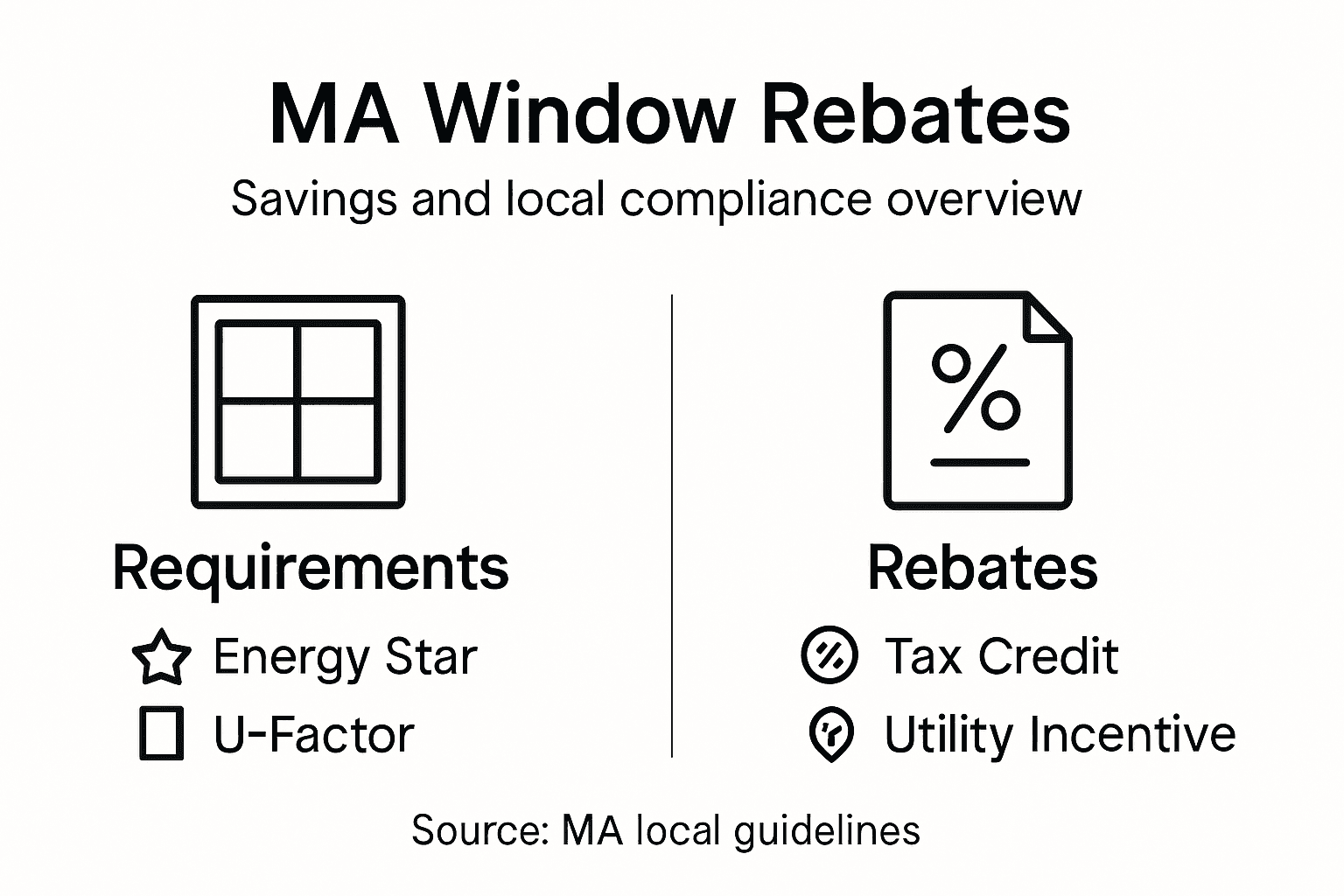
Massachusetts Code Requirements and Rebates
Massachusetts homeowners have access to significant financial incentives and strict energy efficiency standards when installing new windows. Federal tax credits for windows currently offer substantial savings, covering 30% of product costs up to $600 for Energy Star certified installations through December 31, 2025.
The state’s building code, aligned with the International Energy Conservation Code (IECC), establishes rigorous performance requirements for window installations. Key regulatory specifications include:
- Mandatory U-Factor Limits: Specific heat transfer thresholds
- Solar Heat Gain Coefficient (SHGC) Standards: Radiation transmission controls
- Air Leakage Performance Requirements: Seal effectiveness measurements
- Climate Zone-Specific Performance Criteria: Tailored efficiency guidelines
Additional financial incentives are available through utility programs like Mass Save, which provide additional rebates for energy-efficient window upgrades. These programs encourage homeowners to exceed baseline code requirements and invest in high-performance window technologies.
Financial Incentive Breakdown:
- Federal Tax Credit: Up to $600
- Utility Rebates: Varies by provider
- Energy Cost Savings: Long-term financial benefits
- Increased Home Value: Improved property efficiency
Massachusetts window regulations represent a comprehensive approach to reducing energy consumption and promoting sustainable home improvements.
Pro tip: Always verify current rebate programs and tax credit eligibility with local authorities, as incentives can change annually.
Cost Savings, ROI, and Potential Risks
Homeowners in Massachusetts can realize significant financial benefits by investing in Energy Star windows, with long-term energy savings offsetting initial installation costs. The return on investment (ROI) extends beyond immediate utility bill reductions, encompassing increased home value and enhanced comfort.
Key financial considerations for window investments include:
- Initial Investment: Upfront costs for high-quality Energy Star windows
- Utility Bill Reduction: Potential annual savings of 10-30% on energy expenses
- Tax Credit Benefits: Federal incentives up to $600
- Home Value Appreciation: Increased property marketability
However, potential risks can undermine the financial advantages if not carefully managed. Critical risk factors include:
- Poor Installation: Compromises window performance and energy efficiency
- Incorrect Window Selection: Mismatched to Massachusetts climate requirements
- Substandard Materials: Reduced durability and long-term performance
- Improper Maintenance: Decreased window lifespan and effectiveness
Estimated Financial Impact:
- Average window replacement cost: $300-$1,000 per window
- Potential annual energy savings: $200-$500
- Typical ROI timeline: 5-10 years
- Potential home value increase: 2-5%
Careful selection and professional installation are crucial to maximizing the financial benefits of energy-efficient windows.
Pro tip: Always obtain multiple quotes and verify installer credentials to minimize potential risks and optimize your window investment.
Comparing Alternatives and Common Mistakes
Massachusetts homeowners must carefully evaluate window alternatives and understand potential installation pitfalls to ensure optimal energy efficiency. Window installation standards provide critical guidance for avoiding costly mistakes that can compromise long-term performance and energy savings.
Alternative window options for Massachusetts homes include:
This table outlines window types and their suitability for common Massachusetts homeowner needs:
| Window Type | Insulation Quality | Best For | Limitation |
|---|---|---|---|
| Double-Hung | Moderate | Traditional homes | Moderate air leakage |
| Casement | High | Energy efficiency | Limited width options |
| Slider | Moderate | Budget projects | Lower seal integrity |
| Fixed | Superior | Maximum insulation | No ventilation possible |
| Bay/Bow | Varies | Aesthetic appeal | Potential heat loss spots |
- Traditional Double-Hung Windows: Classic design, moderate efficiency
- Casement Windows: Superior air sealing, excellent energy performance
- Slider Windows: Cost-effective, good for certain architectural styles
- Fixed Windows: Maximized insulation, no operational air leakage
- Bay and Bow Windows: Enhanced aesthetic, potential energy efficiency challenges
Common installation mistakes that can significantly reduce window performance include:
- Improper Flashing: Allows water infiltration and potential structural damage
- Inadequate Insulation: Creates thermal bridges and energy loss
- Incorrect Sizing: Leads to air leakage and reduced efficiency
- Neglecting Local Building Codes: Risks failed inspections and potential retrofitting
Comparative Performance Metrics:
- Seal integrity
- Thermal resistance
- Moisture protection
- Long-term durability
Proper window selection and installation are more critical than the initial purchase price.
Pro tip: Always consult a certified professional who understands Massachusetts building codes and can recommend window solutions tailored to your specific home requirements.
Upgrade Your Home with Energy Star Windows from Sabatalo Contracting
Struggling with high energy bills and uncomfortable indoor temperatures in Massachusetts is a common challenge. This article highlighted how Energy Star windows can transform your home by improving insulation, reducing heat loss, and maximizing energy efficiency. If you want windows that meet strict Energy Star performance ratings like optimal U-Factor and Solar Heat Gain Coefficient, it is crucial to choose a trusted contractor who understands local climate requirements and proper installation techniques.

Take control of your comfort and savings today by exploring our wide selection of top-quality Windows and Single Windows. With over 15 years of local expertise, Sabatalo Contracting & Home Improvement ensures your project receives personalized attention, expert craftsmanship, and full compliance with Massachusetts energy codes. Visit our main site now to request a quote or consultation. Don’t wait to invest in durable, energy-efficient windows that will protect and enhance your home for years to come.
Frequently Asked Questions
What are Energy Star windows?
Energy Star windows are high-performance windows certified to meet strict energy efficiency standards set by the Environmental Protection Agency (EPA) and the Department of Energy (DOE). They help homeowners reduce energy costs and improve comfort by minimizing heat loss and enhancing insulation.
How are Energy Star windows evaluated for certification?
Energy Star windows are evaluated based on several criteria, including U-Factor (heat transfer), Solar Heat Gain Coefficient (SHGC), Air Leakage rates, and Visible Transmittance. These metrics are measured and verified by the National Fenestration Rating Council (NFRC).
What are the benefits of installing Energy Star windows?
Installing Energy Star windows can lead to lower energy bills, improved home comfort, potential federal tax credits, and a reduced carbon footprint, making them a smart long-term investment for homeowners.
How do window materials affect energy efficiency?
Window materials significantly impact energy efficiency. Common options like vinyl, fiberglass, wood, and composite each have unique insulation properties, durability, and maintenance requirements, which can influence overall energy performance and comfort in the home.
Recommended
- New Energy Efficient Windows: Lower Bills, Enhanced Comfort | Sabatalo Contracting
- Window Replacement in Massachusetts: Boost Home Efficiency | Sabatalo Contracting
- Energy Efficient Impact Windows: Savings and Protection | Sabatalo Contracting
- Energy Star Exterior Doors: Lower Bills and Boost Comfort | Sabatalo Contracting
- 7 Smart Tips for Choosing Energy Efficient Window Treatments
- Energy-Efficient Shutters: Smart Solutions for UK Homes 2025 | Shutter World
