
Frigid Massachusetts winters can turn basements into drafty, energy-draining spaces if the windows are outdated. When small air leaks and poor insulation start nibbling away at your comfort and budget, it becomes clear why energy-efficient basement windows make such a difference. Upgrading to the right window technology means less heat loss, consistent temperatures, and a substantial decrease in seasonal heating costs for any Massachusetts home, whether you’re remodeling or planning a full-scale energy upgrade.
Table of Contents
- What Makes Basement Windows Energy Efficient
- Types of Energy Efficient Basement Windows
- Key Features For Massachusetts Homes
- State Codes And Rebates For 2026
- Cost, Installation, And Common Pitfalls
Key Takeaways
| Point | Details |
|---|---|
| Energy-Efficient Features | Basement windows should have advanced framing, multi-pane glazing, low-emissivity coatings, and precision sealing to optimize thermal performance. |
| Window Type Selection | Choose from casement, sliding, awning, or fixed windows based on insulation level and air leakage protection suitable for your basement needs. |
| Importance of Installation | Professional installation is essential to prevent air leaks and ensure optimal energy efficiency, regardless of window quality. |
| Regulatory Incentives | Take advantage of state rebates and federal tax credits for upgrading to ENERGY STAR-certified windows to enhance savings on replacement costs. |
What Makes Basement Windows Energy Efficient
Basement windows in Massachusetts play a critical role in home energy efficiency, especially during harsh winter months. Unlike standard windows, energy-efficient basement windows incorporate specialized design features that minimize heat loss and improve overall thermal performance.
The core components that make basement windows energy efficient include:
- Advanced Framing Materials: High-performance frames constructed from vinyl, fiberglass, or composite materials that provide superior thermal resistance compared to traditional metal frames
- Multi-Pane Glazing: Double or triple-pane glass configurations with inert gas fills like argon to reduce heat transfer
- Low-Emissivity Coatings: Specialized metallic coatings that reflect interior heat back into the living space during cold Massachusetts winters
- Precision Sealing: Tight weatherstripping and thermal breaks that minimize air infiltration and prevent drafts
These advanced technologies work together to create a comprehensive energy-saving solution. The low-E coatings, for instance, act like a microscopic mirror, reflecting interior heat back into the basement while allowing solar radiation to pass through. This means your basement stays warmer without additional heating costs.
Proper installation is equally crucial for maximizing energy efficiency. Even the most advanced window will underperform if not correctly sealed and fitted. Professional installers ensure that each window integrates seamlessly with your basement’s structural elements, eliminating potential air leakage points.
Pro tip: When selecting basement windows, always check the ENERGY STAR and NFRC ratings to verify actual thermal performance and potential energy savings.
Types of Energy Efficient Basement Windows
When selecting basement windows for Massachusetts homes, homeowners have several energy-efficient options designed to combat harsh winter conditions. Different window types offer unique performance characteristics that can significantly impact your home’s thermal efficiency and comfort.
The primary types of energy-efficient basement windows include:
- Casement Windows: Hinged on one side and opening outward, providing excellent air sealing and minimal air infiltration
- Sliding Windows: Horizontal operation with multiple locking points for improved insulation
- Awning Windows: Hinged at the top and opening outward, creating a tight seal when closed
- Fixed Windows: Stationary design with no moving parts, offering maximum insulation and minimal air leakage
Each window type has specific advantages for basement applications. Casement windows, for example, create a compression seal when closed, making them particularly effective at preventing drafts and heat loss. Sliding windows offer ease of operation while maintaining good thermal performance through multiple locking mechanisms.
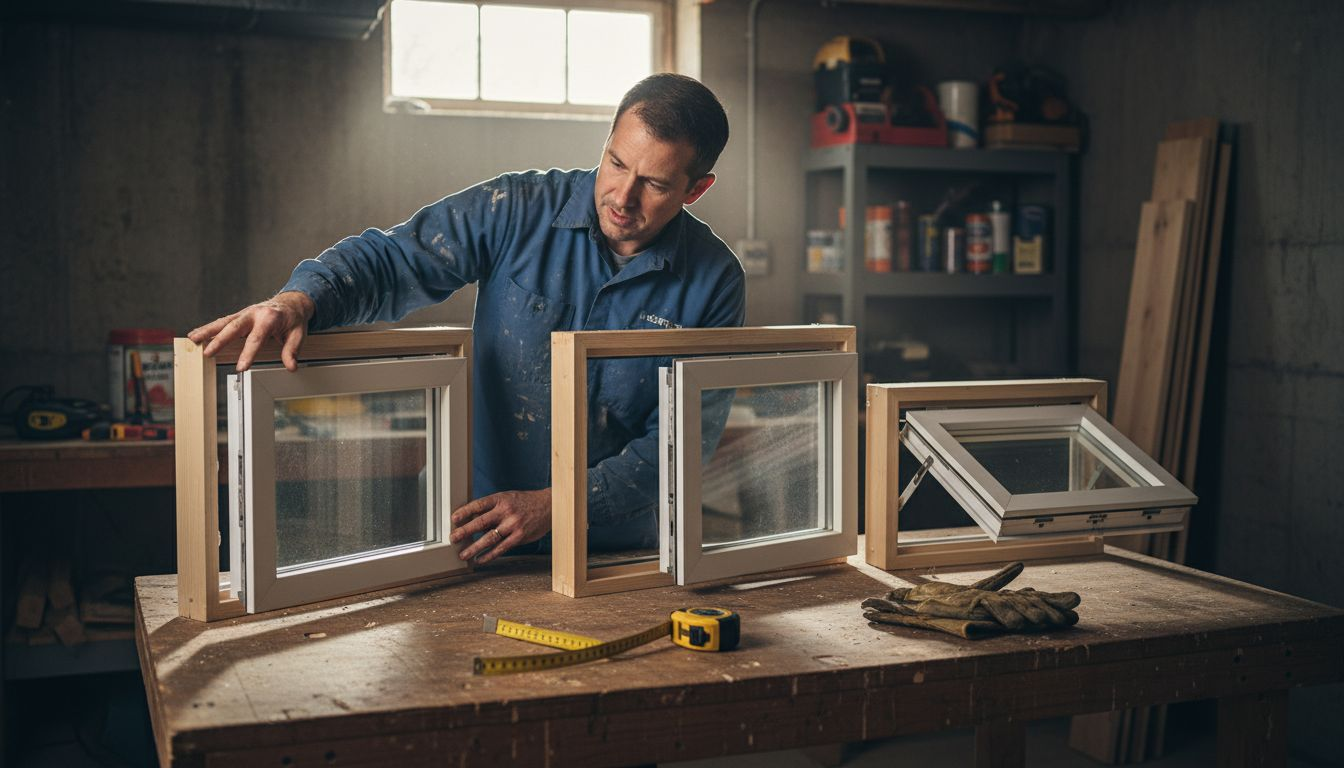
Here’s a quick comparison of basement window types for energy efficiency in Massachusetts:
| Window Type | Insulation Level | Air Leakage Protection | Best For |
|---|---|---|---|
| Casement | Very High | Excellent | Preventing drafts |
| Sliding | Moderate to High | Good | Easy operation |
| Awning | High | Very Good | Ventilation needs |
| Fixed | Maximum | Excellent | Static openings |
The selection process involves considering factors like basement orientation, ventilation needs, and local climate requirements. In Massachusetts, where winters are particularly challenging, windows with low U-factor ratings and ENERGY STAR certification become crucial for maintaining indoor comfort and reducing heating expenses.
Pro tip: Consult with a local window professional who understands Massachusetts climate specifics to select the most appropriate energy-efficient basement window type for your home.
Key Features for Massachusetts Homes
Basement windows in Massachusetts require specialized features to withstand the state’s challenging winter conditions and meet stringent energy efficiency standards. Massachusetts energy codes mandate specific window performance requirements that go beyond standard residential window specifications.
Key performance features for Massachusetts basement windows include:
- Thermal Resistance: U-factor ratings no greater than 0.35 to minimize heat loss
- Solar Heat Gain Coefficient (SHGC): Optimized levels to balance solar heat absorption and retention
- Air Leakage Prevention: Tight sealing mechanisms to eliminate drafts and heat escape
- Moisture Resistance: Advanced materials and designs that prevent condensation and potential mold growth
- Insulation Technologies: Triple-pane glass with argon gas fills and low-E coatings
The state’s Updated Stretch Energy Code emphasizes comprehensive thermal performance. This means basement windows must not only provide excellent insulation but also contribute to overall home energy efficiency. Multiple locking points, compression seals, and advanced frame materials like fiberglass or vinyl become critical in achieving these performance standards.
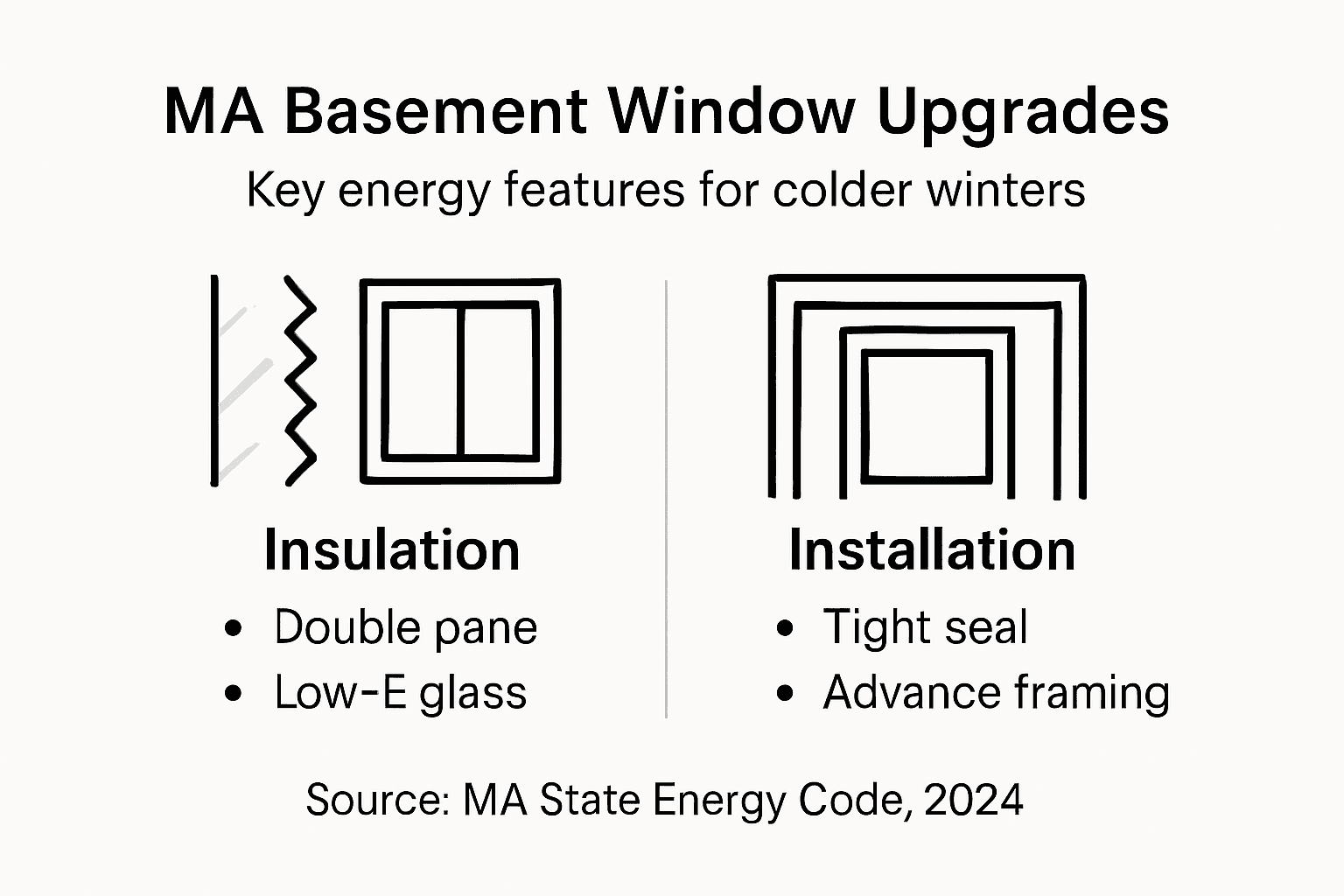
Homeowners should prioritize windows that integrate seamlessly with mechanical ventilation systems, such as heat recovery ventilators (HRVs), to maintain indoor air quality while minimizing energy loss. Professional installation becomes paramount, as even the most advanced window can underperform if not properly sealed and integrated with the home’s existing structural elements.
Pro tip: Request a comprehensive energy performance assessment to ensure your basement windows meet Massachusetts-specific efficiency standards and qualify for potential energy rebates.
State Codes and Rebates for 2026
Massachusetts building codes are evolving to address increasingly stringent energy efficiency requirements, particularly for residential window installations. The Tenth Edition of the Massachusetts State Building Code, effective from 2024, introduces comprehensive guidelines that directly impact basement window replacements and upgrades.
Key regulatory and financial incentives for Massachusetts homeowners include:
-
State Building Code Requirements:
- Mandatory U-factor and air leakage criteria for basement windows
- Specific installation guidelines to enhance window performance
- Compliance with 2021 International Energy Conservation Code amendments
-
Rebate Opportunities:
- Approximately $75 per window when upgrading from single-pane to ENERGY STAR most efficient windows
- Federal tax credits covering up to 30% of window replacement costs
- Maximum credit limits apply to window installations through 2025
Homeowners must pay close attention to certification requirements. ENERGY STAR Most Efficient certification becomes crucial for qualifying for these financial incentives. This means selecting basement windows that not only meet but exceed standard energy efficiency benchmarks specific to Massachusetts’ climate zone.
The intersection of state regulations and financial incentives creates a compelling case for proactive window upgrades. Professional contractors familiar with Massachusetts building codes can help navigate these complex requirements, ensuring both regulatory compliance and maximum financial benefits.
To help homeowners navigate rebates and costs, here’s a summary of Massachusetts window upgrade incentives:
| Incentive Type | Potential Savings | Key Requirement |
|---|---|---|
| State Rebate | $75 per window | Upgrade to ENERGY STAR certified |
| Federal Tax Credit | Up to 30% of project cost | Meet federal efficiency standards |
| Maximum Credit Limit | Applies through 2025 | Proper certification documentation |
Pro tip: Document all window replacement details and keep manufacturer certifications, as these will be critical for claiming rebates and demonstrating code compliance.
Cost, Installation, and Common Pitfalls
Energy efficient basement windows represent a significant investment for Massachusetts homeowners, with costs ranging from $300 to $1,000 per window. The total expense includes not just the window itself, but professional installation, which can substantially impact overall performance and energy savings.
Common installation challenges and cost considerations include:
-
Pricing Factors:
- Window material (vinyl, fiberglass, composite)
- Size and glazing complexity
- Professional installation fees
- Additional moisture control preparations
-
Installation Pitfalls:
- Improper window frame sealing
- Inadequate moisture barrier implementation
- Incorrect window sizing for basement openings
- Insufficient thermal break techniques
Professional installation becomes critical in preventing common basement window failures. Inexperienced installers might overlook crucial details like proper flashing, insulation techniques, and moisture management. These oversights can lead to air leaks, water intrusion, and compromised window performance, ultimately negating potential energy savings.
Massachusetts’ unique climate demands exceptional attention to installation details. Basement windows must withstand significant temperature variations and potential moisture challenges. Homeowners should prioritize contractors with specific experience in cold climate window installations, ensuring comprehensive sealing, insulation, and structural integration.
Pro tip: Request detailed installation documentation and verify the contractor’s experience with Massachusetts-specific basement window requirements before finalizing your project.
Upgrade to Energy Efficient Basement Windows with Sabatalo Contracting
Struggling with cold drafts and high heating bills during harsh Massachusetts winters is a common challenge for many homeowners. This article highlighted the importance of advanced framing materials, multi-pane glazing, low-emissivity coatings, and precision sealing for basement windows to save energy and maintain comfort. If you want to tackle heat loss issues and meet the latest Massachusetts building codes, investing in high-quality energy-efficient basement windows is essential.
At Sabatalo Contracting, we specialize in professional installation of durable, weather-resistant windows tailored for Massachusetts homes. Explore our wide range of Windows or select from our premium Single Windows to find the perfect fit for your basement. With over 15 years of local expertise, we ensure every project meets stringent energy efficiency standards while enhancing your home’s protection and aesthetic appeal.

Don’t wait for another cold season to experience unnecessary heat loss or costly repairs. Contact us today at Sabatalo Contracting for a free consultation and start saving on your Massachusetts winter energy bills with expertly installed basement windows designed for lasting performance.
Frequently Asked Questions
What features make basement windows energy efficient?
Energy efficient basement windows incorporate advanced framing materials, multi-pane glazing with inert gas fills, low-emissivity coatings, and precision sealing to minimize air infiltration and improve thermal performance.
How do I choose the right type of energy-efficient basement window for my home?
Consider factors such as insulation levels, air leakage protection, and your basement’s ventilation needs. Options include casement, sliding, awning, and fixed windows, each offering unique performance characteristics suited to different applications.
What are the key installation considerations to maximize energy efficiency?
Proper installation is crucial. Ensure that windows are correctly sealed, fitted, and integrated with your basement’s structure to prevent air leaks and moisture issues, which can undermine energy savings.
How can I qualify for energy rebates when upgrading my basement windows?
To qualify for energy rebates, choose ENERGY STAR certified windows that meet specific U-factor and air leakage criteria. Keep detailed documentation of your installation and product certifications to support your rebate claims.
Recommended
- New Energy Efficient Windows: Lower Bills, Enhanced Comfort | Sabatalo Contracting
- Energy Efficient Impact Windows: Savings and Protection | Sabatalo Contracting
- Window Replacement in Massachusetts: Boost Home Efficiency | Sabatalo Contracting
- Window Replacement Near Me – Boosting Home Value and Comfort | Sabatalo Contracting
- Energy-Efficient Shutters: Smart Solutions for UK Homes 2025 | Shutter World
