
Most homeowners focus on windows when thinking about energy loss, but doors can account for up to 15% of heating and cooling costs. In Massachusetts, where winters are harsh and summers humid, old exterior doors create drafts that force heating systems to work overtime. Replacing outdated doors with energy-efficient models reduces utility bills while improving comfort throughout your home. This guide explains how energy escapes through doors, what features maximize savings, and how professional installation ensures you get the results you expect from your investment.
Table of Contents
- Key takeaways
- How energy loss occurs through exterior doors
- Choosing the right energy-efficient doors for Massachusetts homes
- Installation best practices to ensure maximum energy savings
- Estimating energy savings and added home value from new doors
- Enhance your Massachusetts home with expert door replacements
- FAQ
Key Takeaways
| Point | Details |
|---|---|
| Energy loss share | Exterior doors can account for up to 15 percent of a home’s heating and cooling energy loss, making door upgrades a priority. |
| Energy Star choice | Choosing Energy Star rated doors helps ensure higher real world efficiency in Massachusetts climates. |
| Professional installation | Professional installation ensures weatherstripping, frames, and thresholds seal properly to maximize energy savings. |
| Materials and labels | Fib fiberglass and steel doors provide better insulation than wood, and NFRC labels help verify U factor and Solar Heat Gain Coefficient ratings for Massachusetts climates. |
How energy loss occurs through exterior doors
Your front door does more than welcome guests. It acts as a barrier between your controlled indoor environment and harsh outdoor conditions. When that barrier fails, your HVAC system compensates by running longer cycles, driving up energy bills. Understanding how energy escapes helps you recognize why replacement matters.
Thermal bridging happens when heat moves through solid materials in your door and frame. Metal components conduct temperature rapidly, creating cold spots in winter and warm spots in summer. Air leakage occurs around edges, through weatherstripping gaps, and at threshold joints. Even small cracks allow conditioned air to escape while outdoor air infiltrates your home.
Older doors suffer from multiple weak points:
- Deteriorated weatherstripping that no longer creates an airtight seal
- Warped frames from decades of temperature cycling and moisture exposure
- Single-pane glass inserts with minimal insulation value
- Hollow cores that provide virtually no thermal resistance
- Damaged thresholds that create gaps at the bottom edge
Door frames and thresholds represent the most common failure zones. The connection between door and frame must remain tight as materials expand and contract with temperature changes. Massachusetts experiences temperature swings from below zero in January to above 90 degrees in July, stressing these connections constantly. When frames shift or thresholds wear down, gaps form that compromise the entire door system.
“The average home loses conditioned air through doors at a rate that costs hundreds of dollars annually in wasted energy.”
Energy loss through doors impacts heating costs especially during Massachusetts winters. When your furnace runs extra cycles to compensate for cold air infiltration, you pay for energy that literally blows away. Doors can account for up to 15% of a home’s heating and cooling energy loss, making them a priority upgrade for reducing utility bills. The combination of air leakage and poor insulation creates a compounding effect that old weatherstripping alone cannot fix.
Choosing the right energy-efficient doors for Massachusetts homes
Selecting a replacement door involves balancing insulation performance, durability, maintenance requirements, and aesthetics. Different materials offer distinct advantages depending on your priorities and budget. Understanding these differences helps you make an informed choice that delivers long-term energy savings.
| Material | Insulation | Durability | Maintenance | Cost |
|---|---|---|---|---|
| Fiberglass | Excellent | Very high | Minimal | High |
| Steel | Very good | High | Low | Moderate |
| Wood | Good | Moderate | Regular | High |
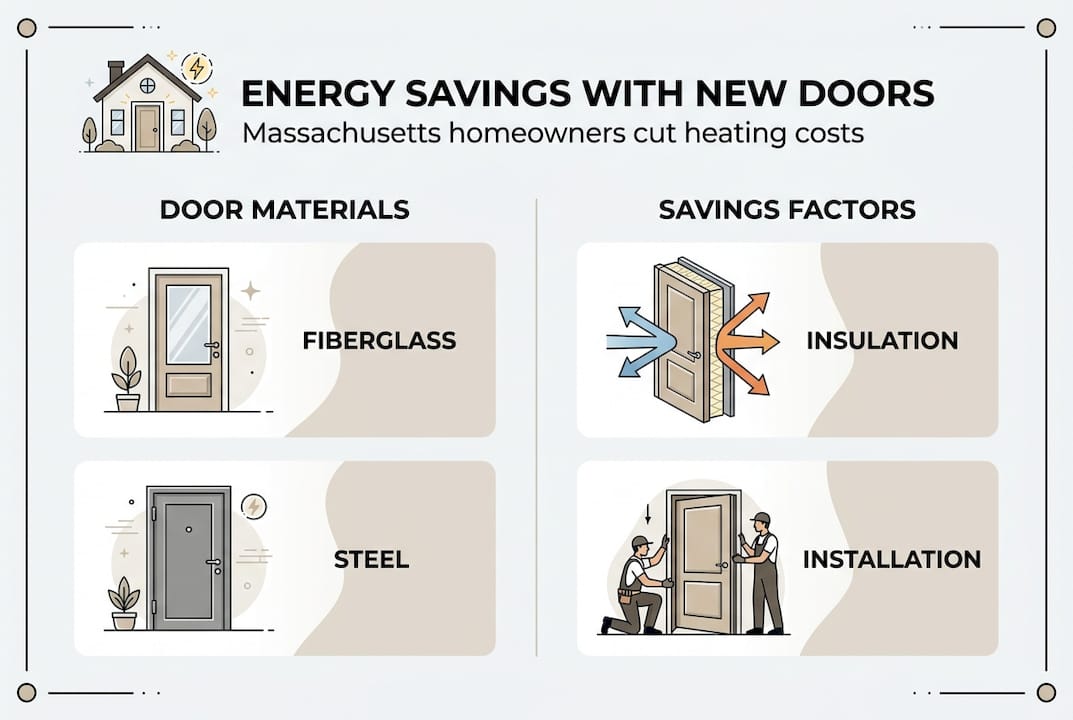
Fiberglass doors resist warping, denting, and moisture damage while providing superior insulation. They mimic wood grain appearance without the maintenance burden. Steel doors often include polyurethane foam cores that deliver excellent thermal resistance at a lower price point than fiberglass. They dent more easily but offer strong security. Wood doors provide classic beauty but require periodic refinishing to maintain weather resistance and can warp if not properly maintained.
Certifications matter more than marketing claims. Energy Star rated doors meet strict efficiency guidelines ideal for Massachusetts climates, ensuring they perform in real-world conditions. Look for NFRC labels that specify U-factor and Solar Heat Gain Coefficient ratings. U-factor measures heat transfer, lower numbers indicate better insulation. For Massachusetts, target U-factors of 0.30 or below.
Door core insulation type determines thermal resistance:
- Polyurethane foam cores provide the highest R-value per inch
- Polystyrene foam offers good insulation at lower cost
- Honeycomb cardboard cores in budget doors provide minimal thermal protection
- Solid wood cores depend on wood species and thickness for insulation value
Matching door style with insulation needs requires considering exposure and usage patterns. A north-facing entry receives less solar heat but faces harsh winter winds. South-facing doors gain passive solar warmth but need protection from summer heat. Glass panels add natural light but reduce overall insulation unless you choose triple-pane or low-E glass options.
Pro Tip: Request actual test data showing U-factor and air leakage ratings rather than relying on general product descriptions. Manufacturers test doors under controlled conditions, and certified results provide reliable comparisons between models.
Color selection affects energy performance more than most homeowners realize. Dark colors absorb solar radiation, causing door surfaces to heat significantly in summer sun. Light colors reflect heat, keeping door temperatures closer to ambient levels. In Massachusetts, where cooling costs matter less than heating, darker colors on south-facing doors can provide modest passive solar benefits during winter months.

Installation best practices to ensure maximum energy savings
Even the most efficient door fails to perform if installed incorrectly. Gaps around the frame, misaligned thresholds, and inadequate insulation negate the benefits you paid for. Professional installation following proven methods ensures your new door delivers promised energy savings.
Follow this installation sequence for optimal results:
- Remove the old door and inspect the rough opening for damage or rot
- Verify the opening is square, plumb, and level before proceeding
- Apply a continuous bead of sealant to the exterior side of the opening
- Set the new door frame and shim it carefully to maintain alignment
- Secure the frame with screws through shims into structural framing
- Fill gaps between frame and rough opening with low-expansion foam insulation
- Install exterior trim and caulk all joints to prevent water infiltration
- Adjust threshold height to create proper compression of door bottom seal
- Test door operation and check weatherstripping contact around entire perimeter
- Perform final air leakage check using incense smoke or a blower door test
Common installation mistakes compromise energy efficiency even with premium doors. Improper frame alignment prevents weatherstripping from sealing consistently around the perimeter. Using high-expansion foam insulation can bow the frame, creating gaps. Failing to seal the connection between door frame and house wrap allows air to bypass the door entirely through wall cavities.
Temperature and humidity in Massachusetts affect installation timing and methods. Installing doors during extreme cold makes sealants difficult to apply and prevents proper curing. High humidity during summer months can cause wood components to swell, affecting fit. Schedule installation during mild weather when possible, typically late spring or early fall.
Pro Tip: Proper installation seals gaps and ensures doors perform to their energy efficiency potential. Hiring experienced professionals familiar with Massachusetts building codes and climate conditions prevents costly mistakes that reduce long-term savings.
Weatherstripping requires special attention during installation. The seal must compress enough to block air movement but not so much that it prevents smooth door operation or causes premature wear. Adjustable thresholds allow fine-tuning this compression after installation. Check seal contact by closing the door on a dollar bill at multiple points around the perimeter. You should feel resistance when pulling the bill out, indicating proper compression.
Estimating energy savings and added home value from new doors
Quantifying the financial benefits of door replacement helps justify the investment. Energy savings accumulate month after month, while improved curb appeal and functionality increase your property value immediately. Understanding these returns puts the upfront cost in perspective.
| Door upgrade scenario | Annual energy savings | Payback period | Added home value |
|---|---|---|---|
| Single entry door replacement | $150 to $250 | 8 to 12 years | $1,200 to $2,000 |
| Entry plus storm door | $200 to $350 | 7 to 10 years | $1,500 to $2,500 |
| Multiple exterior doors | $300 to $500 | 6 to 9 years | $2,500 to $4,000 |
Replacing old doors can reduce annual heating and cooling costs by up to 15%, with actual savings depending on your current door condition and new door specifications. A Massachusetts home spending $2,000 annually on heating and cooling could save $300 per year with comprehensive door upgrades. These savings compound over the door’s 20 to 30-year lifespan.
Savings breakdown by door type and installation quality:
- Premium fiberglass door with professional installation: 12% to 15% reduction in energy costs
- Mid-range steel door with proper sealing: 8% to 12% reduction
- Budget door with DIY installation: 3% to 6% reduction
- Door replacement without addressing frame issues: minimal improvement
Curb appeal improvements from new doors influence buyer perceptions significantly. Real estate professionals consistently rank entry doors among the top features buyers notice during showings. A dated, worn door suggests deferred maintenance throughout the property. A beautiful, energy-efficient entry door signals that the home has been well cared for.
“First impressions matter in real estate, and your entry door creates that impression before buyers step inside.”
Energy efficiency incentives available in Massachusetts can offset initial costs. Mass Save programs offer rebates for qualifying energy improvements, though door replacements typically receive smaller incentives than windows or insulation. Check current programs before purchasing to maximize available benefits. Federal tax credits for energy-efficient home improvements may apply depending on door specifications and current tax law.
Installation quality dramatically affects realized savings. A premium door installed poorly performs worse than a mid-range door installed correctly. The difference between professional and amateur installation can mean 50% less energy savings than projected. This performance gap explains why the cheapest installation quote rarely delivers the best value over time.
Enhance your Massachusetts home with expert door replacements
Upgrading to energy-efficient doors requires expertise that goes beyond basic carpentry. You need professionals who understand Massachusetts building codes, climate-specific installation methods, and how door systems integrate with your home’s thermal envelope. Sabatalo Contracting brings over 15 years of local experience to every door replacement project.

Our team helps you select exterior doors that match your home’s architecture while maximizing energy performance. We guide you through material options, explain certification ratings, and provide honest assessments of what different door systems will deliver. Professional installation ensures weatherstripping seals properly, frames align correctly, and insulation fills every gap.
Door replacement often makes sense as part of broader exterior upgrades. Combining new doors with siding, window, or roofing projects creates comprehensive improvements that increase home value while reducing overall project costs. We coordinate these upgrades to minimize disruption and maximize results. Schedule a consultation to discuss how new doors fit into your home improvement plans and start reducing energy bills while enhancing comfort throughout your Massachusetts home. Explore our full range of services to see how we transform homes across the region.
FAQ
Can new energy-efficient doors really lower my heating bills?
Yes, energy-efficient doors reduce heat loss significantly, lowering heating bills especially in cold climates like Massachusetts. Properly installed doors with good insulation and weatherstripping prevent drafts that force your heating system to run longer cycles. The savings vary based on your current door condition, but most homeowners see noticeable reductions in winter heating costs within the first season.
What types of doors offer the best energy savings?
Fiberglass and steel doors with insulated cores typically offer top energy performance for Massachusetts homes. Fiberglass resists warping and provides excellent insulation without extensive maintenance. Steel doors with polyurethane foam cores deliver strong thermal resistance at moderate cost. Wood doors can perform well but require regular maintenance to preserve their insulating properties and prevent weather damage.
How important is professional installation for energy savings?
Professional installation is critical because improper door installation can negate energy efficiency benefits completely. Sealing gaps, aligning frames correctly, and adjusting weatherstripping require experience and precision. Even small installation errors create air leaks that waste energy and reduce comfort. The cost difference between professional and DIY installation is minor compared to years of reduced performance from improper fitting.
How long do energy-efficient doors last in Massachusetts weather?
Quality energy-efficient doors last 20 to 30 years in Massachusetts climates when properly maintained. Fiberglass and steel doors require minimal upkeep beyond occasional cleaning and hardware lubrication. Wood doors need periodic refinishing to protect against moisture and temperature extremes. Regular inspection of weatherstripping and threshold seals ensures continued performance throughout the door’s lifespan.
Do storm doors improve energy efficiency of entry doors?
Storm doors add a secondary barrier that reduces air infiltration and provides additional insulation value. They work best with older entry doors that lack modern efficiency features. If you install a new energy-efficient entry door, a storm door provides marginal additional savings unless you frequently leave the entry door open for ventilation. Storm doors also protect your entry door from weather exposure, extending its lifespan.
Recommended
- Energy Efficient Front Doors: Maximizing Home Comfort | Sabatalo Contracting
- Energy Efficient Back Doors: Comfort, Savings, and Compliance | Sabatalo Contracting
- Energy Star Exterior Doors: Lower Bills and Boost Comfort | Sabatalo Contracting
- New Windows Energy Savings: Lower Bills in Massachusetts | Sabatalo Contracting
- Insulated Curtains For Winter Thermal Blackout Door Curtain With Eyelet Rings – Save Energy, Reduce Heat Loss, Available In Multiple Sizes & Colors Thermal Curtain
