
TL;DR:
- Massachusetts homes face unique seasonal challenges, making year-round maintenance essential to prevent costly damage. Prioritizing moisture control, water management, and timely inspections can significantly extend your home’s longevity. Partnering with experienced local contractors ensures expert care in safeguarding your property against the state’s harsh weather conditions.
Massachusetts puts your home through the wringer every single year. Spring flooding, summer humidity, fall freeze-thaw cycles, and brutal winters with ice dams and heavy snow loads make seasonal home maintenance in Massachusetts more demanding than in most other states. Skip one season’s upkeep and you’re not just looking at peeling paint or a clogged gutter. You’re looking at foundation cracks, mold in the basement, and roof leaks that turn a $200 repair into a $6,000 emergency. This guide gives you a practical, season-by-season plan to protect your home’s exterior, cut energy costs, and stay ahead of the damage before it starts.
Table of Contents
- How to evaluate your home’s seasonal maintenance needs in Massachusetts
- Spring maintenance tips to prepare your Massachusetts home
- Summer exterior maintenance strategies for Massachusetts homeowners
- Fall preparations to shield your Massachusetts home from winter damage
- Winter care essentials to protect your Massachusetts home’s exterior
- Comparing seasonal maintenance tasks: a Massachusetts homeowner’s checklist
- Why focusing on moisture control transforms your Massachusetts home maintenance
- Connect with Sabatalo Contracting for expert seasonal exterior maintenance
- Frequently asked questions
Key Takeaways
| Point | Details |
|---|---|
| Seasonal tailoring | Adjust home maintenance tasks seasonally to address Massachusetts-specific weather challenges effectively. |
| Moisture control priority | Controlling moisture is the key to preventing mold, water damage, and costly repairs. |
| Energy efficiency | Use Mass Save® assessments and air sealing to boost comfort and cut heating costs. |
| Gutter maintenance | Cleaning gutters twice a year prevents water damage and ice dam formation. |
| Professional help | Hiring experts ensures safe, thorough seasonal maintenance and protects your home investment. |
How to evaluate your home’s seasonal maintenance needs in Massachusetts
Before you grab a ladder or call a contractor, it pays to understand what you’re actually dealing with. Massachusetts homeowners face a specific set of threats that aren’t universal. Massachusetts homes face unique challenges like ice dams, mold growth, and humidity variations that shape what your maintenance priorities should be in any given month.
Start your assessment by walking the perimeter of your home and looking at the following:
- Gutters and downspouts: Are they sagging, pulling away from the fascia, or showing rust? Debris buildup here causes water to spill toward your foundation.
- Roofing: Look for missing or curling shingles, dark staining, or visible daylight around flashing near chimneys and skylights.
- Siding and trim: Cracks, gaps, or paint failure let moisture in and signal deeper problems behind the surface.
- Foundation and grading: Does the ground slope toward your house? Even a slight grade inward channels water directly against your foundation wall.
- Basement and crawl spaces: Musty smells, efflorescence (white mineral deposits on concrete), or visible mold indicate moisture intrusion that needs immediate attention.
- Windows and doors: Drafts around frames, fogged double-pane glass, or water staining below sills are energy and moisture red flags.
Once you’ve identified problem areas, use a seasonal home maintenance checklist to rank tasks by urgency and season. Don’t try to fix everything at once. Prioritize anything involving water, because moisture is the root cause of most serious home damage in New England.
Spring maintenance tips to prepare your Massachusetts home
After a Massachusetts winter, your home’s exterior has taken a beating. Spring is your window to catch winter damage before it compounds. Here’s how to move through it efficiently.
- Clean gutters and extend downspouts. This is the most important spring task. Downspouts should extend 3 to 5 feet away from your foundation. Spring rain and thawing ground dramatically increase moisture pressure around your foundation walls, and a blocked or short downspout turns that rain into a direct threat.
- Inspect the basement and crawl spaces. Check corners, wall bases, and around any pipe penetrations for dampness or staining. Spring thaw pushes water into even small foundation gaps.
- Pressure wash your exterior surfaces. Road salt and sand spray from Massachusetts winters coat your siding, windows, and trim. Left in place through the warmer months, that residue accelerates deterioration. Wash everything from top to bottom before temperatures climb.
- Schedule your HVAC tune-up. Late spring, before air conditioning season, is the best time to have a technician inspect your system, clean coils, and replace filters. You’ll catch efficiency problems before peak demand.
- Examine your roof from the ground or with binoculars. Look for missing shingles or lifted flashing after winter storms. Small gaps allow water to track into sheathing and insulation well before you see any interior damage.
Pro Tip: Before hiring anyone for exterior work, check whether your project qualifies for Mass Save® rebates on insulation or air sealing. Spring is when most contractors still have availability, and combining projects saves on mobilization costs.
Completing your seasonal maintenance checklist each spring also flags which exterior upgrades for Massachusetts homes might make sense if you’re planning to sell or refinance in the next few years.
Summer exterior maintenance strategies for Massachusetts homeowners
Summer in Massachusetts isn’t gentle. Coastal towns get salt air. Inland areas get humid stretches that push moisture into every gap in your building envelope. This is the season to be proactive about what you can’t easily see.
- Monitor indoor humidity levels. Summer humidity promotes mold growth in basements and poorly ventilated areas. A basic digital hygrometer costs under $20. If your basement consistently reads above 60% relative humidity, run a dehumidifier and check that your exhaust fans are actually venting outside.
- Inspect and clean air conditioning units. Rinse the condenser coils on your central AC unit or window units. Clear debris from around the unit. A dirty system works harder, costs more to run, and fails sooner.
- Clean your dryer vent. Lint buildup is a fire hazard, and a clogged vent reduces efficiency. Summer is a good time because you’re less likely to forget and run the dryer while a technician is mid-work.
- Check coastal and wood surfaces. If your home is within a few miles of the ocean, salt air accelerates paint failure and wood rot on decks, railings, and trim. Inspect these surfaces in July when the prior winter’s damage is most visible but before fall prep season arrives.
- Walk your deck and outdoor structures. Look for soft spots, popped fasteners, or split boards. These are safety issues, not just cosmetic ones.
Pro Tip: Check your summer home maintenance tips page before July. Catching a cracked deck board or loose railing now costs a fraction of what an injury claim or full deck replacement would run.
Fall preparations to shield your Massachusetts home from winter damage
Fall is the single most important season for preventive home maintenance Massachusetts homeowners can do. Everything you skip in October will try to collect payment from you in January. Work through this list before the ground freezes.
- Clean gutters thoroughly, including flushing downspouts with a garden hose. Gutters and downspouts must direct water at least 4 feet from your foundation and attic insulation needs to be checked to reduce ice dam risk.
- Service your heating system. Have your furnace or boiler inspected, burner cleaned, and filters replaced. Schedule this in September, not December, when every HVAC technician in Massachusetts is booked solid.
- Weatherstrip doors and windows. Drafts around frames cost real money in heating bills. A simple foam or V-strip seal on a drafty door can save $50 to $100 per winter.
- Drain and shut off outdoor faucets. Disconnect hoses. Shut the interior valve that feeds outdoor bibs. Frozen pipes burst, and a burst pipe inside a wall is a full renovation event.
- Inspect and clear attic ventilation. Proper airflow through your attic keeps the roof deck cold, which is the fundamental mechanism for preventing ice dams.
Additional fall tasks worth scheduling:
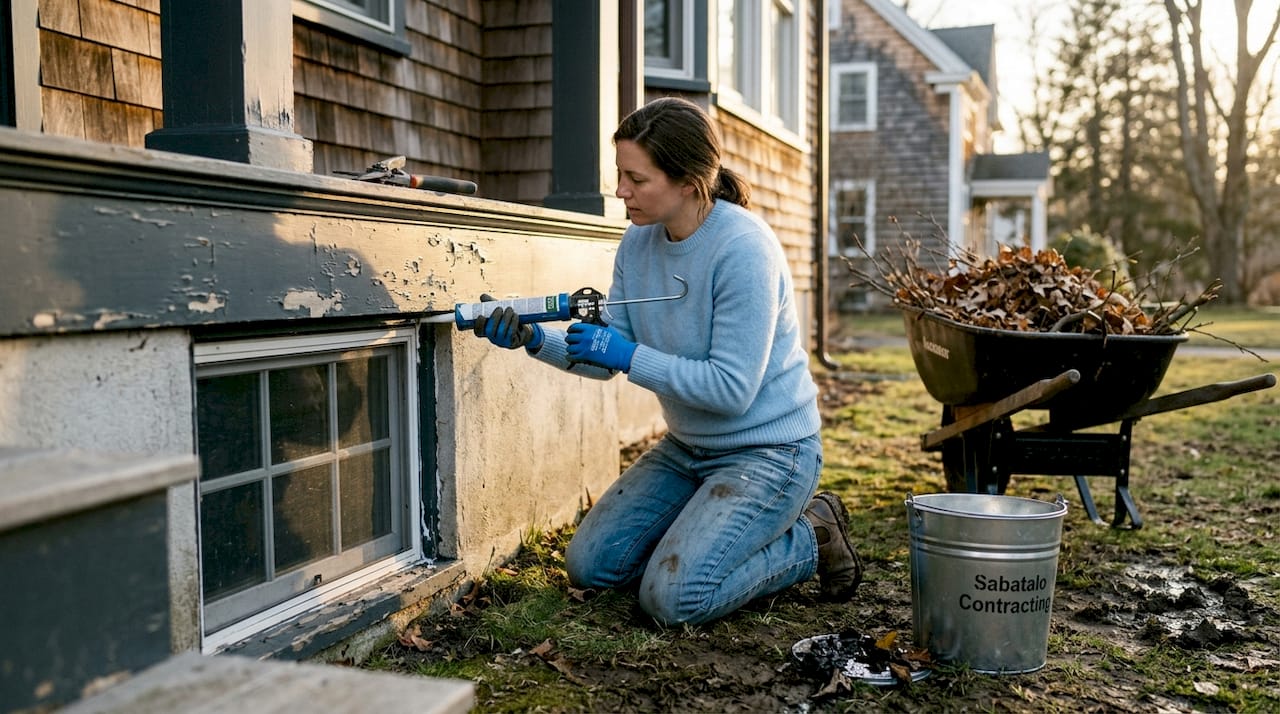
- Caulk around windows and door frames where old sealant has cracked
- Test smoke and carbon monoxide detectors and replace batteries
- Check the chimney cap and flashing if you use a wood or gas fireplace
- Stack and cover firewood away from the house to keep pests out
| Fall maintenance task | Why it matters in Massachusetts | When to do it |
|---|---|---|
| Gutter cleaning | Prevents ice dam formation | Late October |
| Heating system service | Avoids mid-winter breakdowns | September |
| Weatherstripping | Reduces heat loss and drafts | October |
| Attic insulation check | Lowers ice dam risk | October |
| Outdoor faucet winterization | Prevents frozen pipe bursts | Before first hard freeze |
Your ice dams prevention guide and winterize your home checklist are worth bookmarking before the first snowfall.
Winter care essentials to protect your Massachusetts home’s exterior
Winter maintenance is less about doing new projects and more about protecting what you already have. Your goals in December through March are simple: prevent ice dam damage, control salt intrusion, and catch small problems before they get bigger under snow cover.
- Rake snow off your roof after major storms. A roof rake with an extension handle lets you clear the bottom 3 to 4 feet of your roof from the ground. This is the most effective DIY method for preventing ice dams on roofs with moderate pitch.
- Inspect shingles and flashing early in winter. Inspect roofs for missing shingles and flashing damage before heavy snow arrives. A loose piece of flashing found in November is a 30-minute repair. Found in February under 18 inches of ice, it’s a much bigger job.
- Place heavy-duty mats at all entries. Heavy-duty mats at entrances reduce salt damage tracked indoors. Road salt and calcium chloride are highly corrosive and will destroy hardwood floors and tile grout if tracked through the house repeatedly.
- Keep interior humidity in check. During cold snaps, interior air gets very dry. But humidifiers set too high cause condensation on window glass and in wall cavities, which feeds mold.
- Monitor the attic temperature. If your attic is significantly warmer than the outside air, heat is escaping through your ceiling, and ice dam risk goes up fast.
| Approach | DIY roof raking | Professional snow removal |
|---|---|---|
| Cost | Low (equipment only) | Higher per event |
| Risk | Moderate if misused | Low |
| Effectiveness | Good for lower sections | Full roof coverage |
| Best for | Typical storms | Heavy accumulation or steep roofs |
Comparing seasonal maintenance tasks: a Massachusetts homeowner’s checklist
Understanding how tasks stack up across the year makes it much easier to build a realistic schedule. Investing 1 to 2% of your home’s value annually in preventive maintenance avoids emergency repairs that cost 10 to 20 times more.
| Season | Top priority | Key exterior tasks | Energy focus |
|---|---|---|---|
| Spring | Water management | Gutter cleaning, pressure washing, roof inspection | HVAC tune-up, filter replacement |
| Summer | Mold prevention | Deck inspection, coastal surface checks | AC maintenance, humidity control |
| Fall | Winter preparation | Gutter cleaning, weatherstripping, faucet winterization | Attic insulation, heating service |
| Winter | Ice dam prevention | Snow removal, entry mat maintenance, shingle checks | Ventilation balance, humidity control |
Quick-reference priorities by season:
- Spring: Fix winter damage, manage water, prep mechanical systems
- Summer: Control humidity, protect wood and coastal surfaces, inspect outdoor structures
- Fall: Seal the building envelope, service heating, protect plumbing
- Winter: Manage ice and snow, protect entryways, monitor attic conditions
Bookmark your seasonal maintenance checklist to keep these tasks organized throughout the year.
Why focusing on moisture control transforms your Massachusetts home maintenance
Here’s the perspective most seasonal maintenance guides skip: every major home damage category in Massachusetts, from ice dams to mold to rotting siding to foundation cracks, has moisture at its center. Not age. Not poor construction. Moisture.
The EPA is direct about this: preventing mold is primarily about fixing water sources and drying affected areas quickly, making moisture control the single highest-impact maintenance strategy available to any homeowner.
Most people treat gutter cleaning as a cosmetic task. It isn’t. It’s moisture management. Weatherstripping isn’t just about comfort. It keeps warm, humid interior air from contacting cold wall cavities where it condenses and feeds mold colonies you’ll never see until they’re expensive to remove. Attic ventilation isn’t an insulation detail. It’s the mechanism that keeps your roof cold enough to prevent ice dams.
When we look at the calls that come in after a bad Massachusetts winter, the pattern is consistent. Homeowners who had drainage issues they noticed but deferred almost always end up with a compounded problem. A small foundation crack plus a poorly directed downspout plus one wet fall turns into a wet basement and a mold remediation job.
Here’s the shift worth making: instead of maintaining a list of seasonal tasks, maintain a moisture map of your home. Know where your water comes from, where it tends to collect, and how fast it dries. Your seasonal home maintenance checklist becomes far more useful when every item on it connects back to that single question.
Connect with Sabatalo Contracting for expert seasonal exterior maintenance
Knowing what to do is the first step. Having the right team to do it well is what actually protects your home. At Sabatalo Contracting, we’ve spent 15 to 18 years working on Massachusetts homes from Cape Cod to the Merrimack Valley, and we know exactly what New England weather does to roofing, siding, gutters, windows, and decks over time.

Our services go beyond repairs. We help homeowners increase home value with exterior upgrades that pay off in energy savings, curb appeal, and long-term durability. Whether you’re getting ready for winter, recovering from it, or looking to prepare your home for sale with exterior upgrades, we bring the local knowledge and craftsmanship to do it right. Start with our seasonal home maintenance checklist and then reach out to schedule a consultation. Your home does a lot to protect you. It’s worth protecting back.
Frequently asked questions
How often should I clean gutters in Massachusetts to prevent damage?
You should clean gutters at least twice yearly, in spring and fall, and more often if your home sits under large trees. Skipping cleanings creates the conditions for ice dams and foundation water intrusion.
When is the best time to schedule a Mass Save® home energy assessment?
Schedule in early spring or fall so any insulation or air sealing work can be completed before peak heating or cooling season. Contractor availability is also better outside of summer and mid-winter.
What are the signs of moisture problems I should check in my basement?
Look for musty odors, damp concrete, efflorescence, or visible mold on walls and framing. A humidity reading above 60% signals active risk and needs attention within 24 to 48 hours to prevent mold from establishing.
How can I prevent ice dams on my Massachusetts home roof?
Keep gutters clear and downspouts directing water at least 4 feet from your foundation, and make sure your attic has adequate insulation and ventilation to keep the roof deck uniformly cold. Those two steps eliminate the conditions that create ice dams.
Are professional seasonal cleaning services recommended for Massachusetts homes?
Professional services are especially valuable for gutter maintenance, exterior washing, and post-winter restoration, where the risks of working on ladders or roofs and the need for specialized equipment make DIY approaches genuinely hazardous and often less thorough.
Recommended
- 7 Steps to a Seasonal Home Maintenance Checklist for MA Owners | Sabatalo Contracting
- 7 Essential Summer Home Maintenance Tips for Massachusetts | Sabatalo Contracting
- Annual Roof Inspections in Massachusetts: A 2025 Guide for Homeowners | Sabatalo Contracting
- Prepare your home for sale in Massachusetts with exterior upgrades | Sabatalo Contracting
