TL;DR:
- Building a screened porch in Massachusetts requires understanding local permit processes, zoning rules, and weather considerations. Proper design should comply with structural and openness standards to ensure durability, safety, and cost efficiency. Hiring experienced professionals helps homeowners meet code requirements and avoid costly delays or safety issues.
Mosquitoes, black flies, and the unpredictability of New England weather have a way of turning a beautiful backyard into a space you rarely use. Building a screened porch changes that equation entirely. Done right, it gives you a protected outdoor room you can use from late spring through fall, host guests in comfort, and enjoy your property in a way a plain deck never allows. This guide walks you through everything Massachusetts homeowners need to know, including permits, structural design, materials, and construction steps, so your project goes smoothly from day one.
Table of Contents
- Understanding Massachusetts building permits for screened porches
- Designing your screened porch to meet code and withstand Massachusetts weather
- Materials, tools, and preparation checklist for building your screened porch
- Step-by-step instructions to build and screen your porch
- Common challenges and verification tips for screened porches in Massachusetts
- Why upfront planning and respecting Massachusetts code saves time and money
- Get professional help for your Massachusetts screened porch project
- Frequently asked questions
Key Takeaways
| Point | Details |
|---|---|
| Permit requirements | Most screened porches need a Massachusetts building permit, especially if attached or roofed. |
| Design for weather | Your porch design must meet snow and wind load codes typical in Massachusetts. |
| Material preparation | Gather proper materials, tools, and budget realistically before building. |
| Follow step-by-step | Use a clear stepwise process for framing, screening, and finishing the porch. |
| Avoid costly mistakes | Get permits upfront and consider professional supervision to avoid fines and delays. |
Understanding Massachusetts building permits for screened porches
To build your screened porch properly, first understand Massachusetts building permit requirements. Skipping this step is the single most expensive mistake homeowners make, and it is more common than you might think.
In Massachusetts, a permit is required if your screened porch is attached to the house, exceeds 200 square feet, sits more than 30 inches above grade, or includes a roof, electrical work, or any screen enclosure. That covers the vast majority of residential screened porch projects. A freestanding, ground-level structure under 200 square feet might be exempt from the building permit itself, but you will still need zoning approval before you break ground.
Here is what the permit process typically involves in Massachusetts:
- Plan submission: You must submit drawings showing setbacks from property lines, structural details, and materials.
- Review timeline: Expect a wait of 2 to 6 weeks depending on your municipality.
- Inspections: Most permits require footing, framing, and final inspections at minimum.
- Electrical work: Any lighting, outlets, or ceiling fans trigger a separate electrical permit and inspection.
Before you commit to a design, schedule a deck safety inspection to confirm your existing deck or porch structure is in sound condition. Inspectors will not sign off on new work built over a compromised foundation.
Pro Tip: Call your local building department before hiring anyone or buying materials. Ask specifically about zoning setbacks for your lot. In many Massachusetts towns, side yard setbacks alone can eliminate your first design choice.
Designing your screened porch to meet code and withstand Massachusetts weather
Once you know the permit rules, plan your porch’s design to comply with structural and code requirements. Massachusetts is not a forgiving climate for under-engineered outdoor structures, and screened porches have specific legal definitions that affect cost significantly.
Under 780 CMR Appendix H, screened enclosures must maintain at least 65% openness across their walls to qualify as patio covers rather than conditioned additions. This matters because the moment your design crosses into “conditioned space” territory, you trigger full energy code compliance, including insulation, air barriers, and thermal performance requirements. Keeping your design open is not just aesthetically appealing. It saves thousands of dollars in construction costs.
Beyond openness, your structure must be engineered for local weather extremes. Massachusetts snow and wind loads are no joke.
| Design factor | Massachusetts requirement |
|---|---|
| Snow load (psf) | 50 to 60 psf depending on location |
| Wind exposure | Typically Exposure Category B or C |
| Frost depth for footings | 48 inches minimum |
| Wall openness | 65% minimum to qualify as patio cover |
| Guardrail height (if elevated) | 36 to 42 inches minimum |
Choosing the right screen material also matters for durability in wind and heavy rain. Here are your main options:
- Fiberglass screen: Affordable and rust-proof, but less resistant to tears from branches or pets.
- Aluminum screen: Stronger and more rigid, holds up better in high wind areas.
- Pet-resistant screen: Vinyl-coated polyester, much heavier gauge, ideal if you have dogs or cats on the porch.
- Solar screen: Reduces glare and heat gain while maintaining visibility. Useful if your porch faces south or west.
Understanding how your porch roof ties into the existing structure is equally important. Your local roofing regulations govern how that connection must be made, and inspectors will check it carefully during the framing inspection.
Pro Tip: Design for the worst storm you have seen in your neighborhood, not the average one. A screened porch that loses panels every August nor’easter becomes a project, not a retreat.
Materials, tools, and preparation checklist for building your screened porch
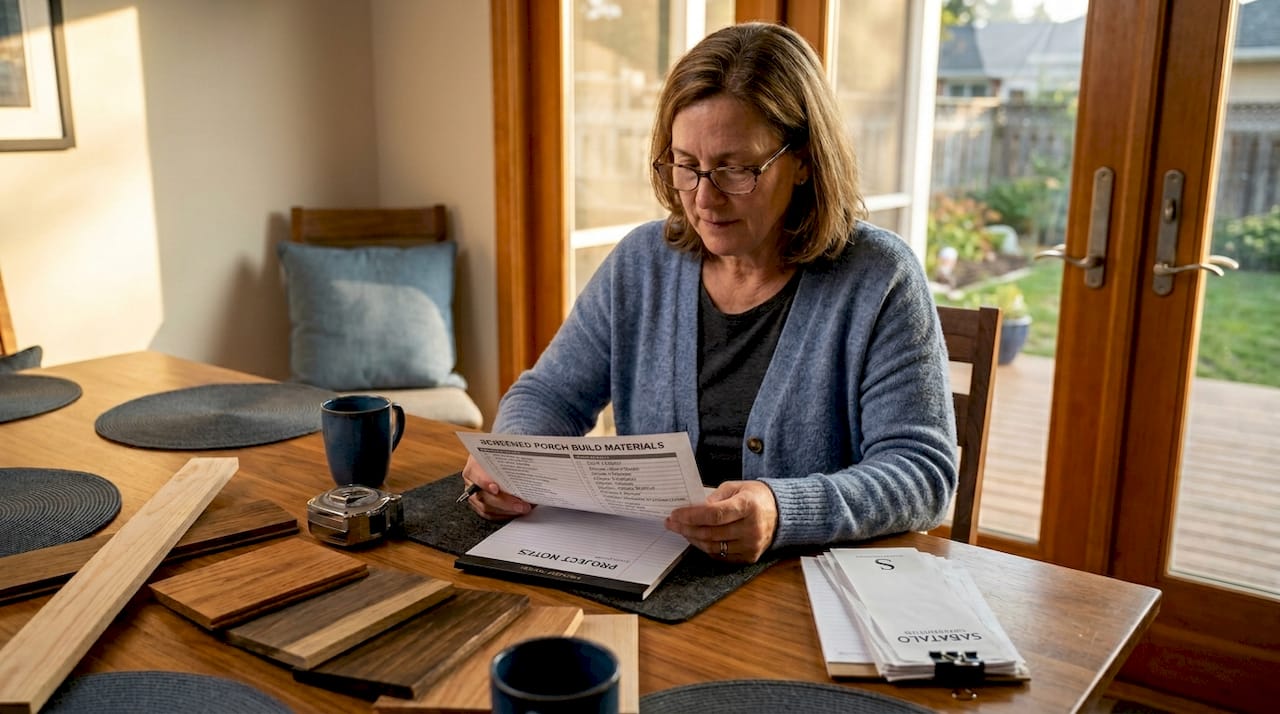
Now that you understand design needs, let’s assemble the required materials and prepare your workspace. Getting this organized before construction starts is the difference between a smooth two-weekend project and a month-long headache.
According to screened porch cost data, screening an existing porch typically costs between $2,000 and $5,800, while building a new screened porch from scratch can run from $15,000 to $40,000 or more, depending on foundation work, roofing complexity, and finish level. Knowing where you fall on that range before you start prevents the most common budget surprises.
Screen material comparison:
| Screen type | Cost per sq ft | Durability | Best use |
|---|---|---|---|
| Fiberglass | $0.10 to $0.25 | Moderate | General residential |
| Aluminum | $0.25 to $0.40 | High | Windy or coastal areas |
| Pet-resistant | $0.50 to $1.00 | Very high | Homes with large pets |
| Solar screen | $0.40 to $0.80 | High | South and west-facing porches |
Core materials you will need:
- Pressure-treated 2×4 and 2×6 lumber for frames and framing
- Screen mesh in your chosen material
- Screen spline and spline roller tool
- Exterior-grade wood screws and structural connectors
- Exterior paint or stain rated for treated lumber
Essential tools:
- Measuring tape and a reliable level
- Circular saw or miter saw
- Power drill with assorted bits
- Router or table saw for cutting spline grooves (if not pre-grooved)
- Spline roller
Before you start building, complete these preparation steps:
- Confirm your permit is approved and posted on-site.
- Inspect existing deck boards, posts, and ledger connections for rot or structural weakness.
- Measure every opening you plan to screen, accounting for posts and trim.
- Check local zoning setbacks one final time against your actual layout.
- Clean existing porch surfaces and repair any damage before framing begins.
Step-by-step instructions to build and screen your porch
With materials ready, follow these steps to construct and screen your porch effectively. This process applies whether you are working with an existing open deck or framing a new structure from scratch.
The correct installation sequence matters for both quality and longevity. Rushing through painting or screen tensioning creates problems that are expensive to fix later.
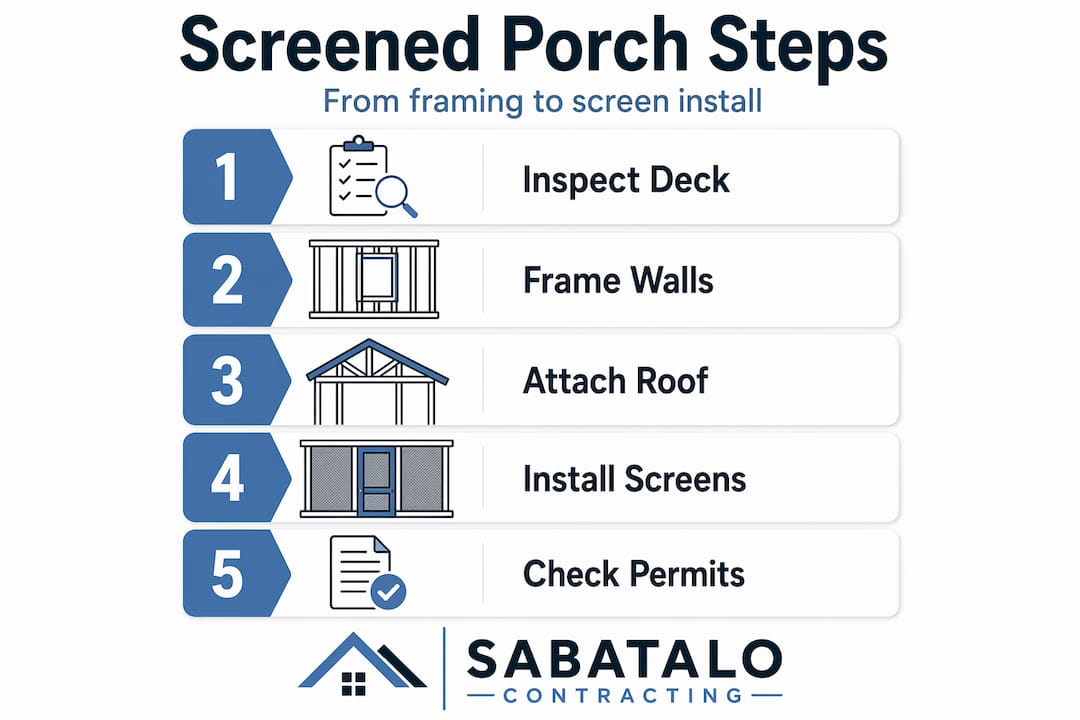
- Frame the screen panels. Cut pressure-treated 2×4 lumber into rectangular frames sized to fit each porch opening. Make them slightly smaller than the opening to allow for adjustment and trim.
- Cut spline grooves. If your lumber does not have pre-routed grooves, use a router to cut a 3/8-inch channel around the perimeter of each frame. This is what holds the screen spline in place.
- Paint or stain the frames first. This is the step most DIY builders skip. Painting assembled frames before installing the screen makes the job far cleaner and protects the wood from moisture from day one.
- Lay screen mesh over the frame. Unroll your screen material across the frame, leaving two to three inches of overhang on each side. Keep it flat and wrinkle-free on a clean surface.
- Install the spline. Using a spline roller, press the spline into the groove over the screen mesh, starting with one long side and working around the frame. Keep tension consistent as you go, pulling the mesh taut but not so tight that it distorts the frame.
- Trim excess screen. Use a utility knife to cut the overhang flush with the outer edge of the spline channel. A sharp blade matters here. Dull blades drag and create uneven edges.
- Install frames in the porch openings. Fasten frames to existing posts and structural members using exterior screws. Confirm they are plumb and level before fully fastening.
- Install the screen door. Hang a pre-hung screen door in the designated opening. Adjust the tension spring so the door closes firmly but without slamming.
Pro Tip: Before pressing the spline all the way around, test one corner of the screen for tautness by pressing it gently with your finger. It should have slight resistance without visible slack. Correct tension now, before the spline locks everything in place.
If framing feels beyond your skill level, working with experienced deck contractors for the structural work while handling the screening yourself is a practical and cost-effective split.
Common challenges and verification tips for screened porches in Massachusetts
After building your porch, these tips help you avoid issues and pass inspections smoothly. The most common problems are not construction errors. They are documentation and sequencing mistakes that cause delays and cost money.
“Unpermitted porches discovered during home sales can lead to costly retroactive permits, fines, and added code upgrades like guardrails.”
That scenario plays out regularly in Massachusetts real estate transactions. Buyers and their attorneys now routinely request permit records during due diligence. An unpermitted addition can collapse a sale or force a price reduction that far exceeds what the permit would have cost originally.
Verification tips to protect your project:
- Confirm footing depth. Footings must reach at least 48 inches below grade to sit below the frost line in most Massachusetts locations. Your inspector will verify this at the footing inspection.
- Licensed construction supervisor: Massachusetts law requires a licensed construction supervisor for most permitted work unless you are the homeowner building on your own residence.
- Schedule all inspections in order: footing first, then framing, then guardrail (if elevated), then final.
- Guardrail compliance: If your porch floor is 30 inches or more above grade, guardrails are required at 36 to 42 inches in height with balusters spaced no more than 4 inches apart.
- Document everything: Take dated photos at each stage. Store permits, approved plans, and inspection sign-offs together in a file you can hand to a future buyer without scrambling.
Why upfront planning and respecting Massachusetts code saves time and money
Most homeowners approach a screened porch the way they approach buying furniture. They fall in love with a design, commit to it emotionally, and then discover the permit requirements or structural demands that make the original plan impractical or expensive to execute. That sequence is backwards.
The smarter approach is to start with your local building department and zoning map, then design around what the rules allow. Homeowners who do this almost never face project delays. Those who don’t can face zoning setback issues and historic district reviews that delay projects by weeks, sometimes months.
Here is the opinion you rarely hear: the simplest screened porch is usually the best one. A rectangular structure built over an existing deck, with basic pressure-treated framing, aluminum or fiberglass screen panels, and a simple shed roof, can be permitted faster, built cheaper, and maintained more easily than elaborate designs with curved rooflines and custom millwork. The return on investment for a well-executed basic screened porch in Massachusetts is real. The return on an over-designed one that took nine months to permit is not.
Acting as your own construction supervisor is legal for homeowners building on their primary residence in Massachusetts, but be honest with yourself about your experience level. Structural errors in framing or footing depth are not cosmetic problems. They are safety issues that inspectors will catch, and correcting them mid-build is expensive. Understanding the roofing regulations guide before your project starts will clarify what you can realistically self-manage and where professional input is worth every dollar.
Budget for 20% more than your best estimate. Snow load engineering, energy code questions, and unexpected rot in existing framing are the three surprises that derail most Massachusetts screened porch projects. Knowing they might happen and reserving budget for them transforms a potential crisis into a manageable line item.
Get professional help for your Massachusetts screened porch project
Building a screened porch that genuinely holds up through New England winters, passes every inspection, and adds real value to your home takes more than good intentions. It takes licensed expertise and knowledge of Massachusetts codes specific to your town.

At Sabatalo Contracting, we have spent 15 to 18 years building and improving homes across Massachusetts, and we know exactly what local inspectors expect. From roofing connections that meet snow load requirements to expert window installation that improves porch usability year-round, our team handles the details that protect your investment. We also specialize in exterior door installation that keeps your screened porch functional and secure in every season. When you are ready to move from planning to building, our Massachusetts roofing and contracting team is ready to help you get it done right the first time.
Frequently asked questions
Do I always need a building permit to build a screened porch in Massachusetts?
You generally need a permit if your porch is attached to your house, has a roof, includes electrical work, or exceeds 200 square feet. Small freestanding, ground-level structures under 200 square feet may be exempt from the building permit, but zoning approval is still required before construction.
What snow load should my screened porch support in Massachusetts?
Most Massachusetts areas require porch roofs to support snow loads between 50 and 60 psf to safely handle typical winter weather. Your structural plans must reflect the specific requirement for your location.
Can I build a screened porch myself without a contractor in Massachusetts?
If you own the home, you can supervise the work yourself as long as you pull the required permits and pass all inspections. However, skipping licensed oversight when required leads to fines and potential stop-work orders that cost far more than the contractor would have.
What energy codes apply if I enclose my screened porch?
Enclosing your screened porch to create a three-season or four-season room triggers full energy code compliance, including insulation, thermal performance, and air sealing requirements under Massachusetts base or stretch energy codes.
What happens if I build a screened porch without a permit in Massachusetts?
Unpermitted porches found during a home sale require retroactive permits at double the fees, mandatory safety upgrades such as guardrails, and construction delays that can stretch 6 to 12 months, often at the worst possible time.
Recommended
- Massachusetts Roof Replacement: Homeowner’s Prep Guide | Sabatalo Contracting
- Deck Safety Inspection Guide for Massachusetts Homeowners | Sabatalo Contracting
- Signs You Need New Siding: Complete Guide for MA Homes | Sabatalo Contracting
- Prepare your home for sale in Massachusetts with exterior upgrades | Sabatalo Contracting
