Roofing projects in Massachusetts can feel overwhelming when you’re unsure whether you need a permit, what licenses your contractor should hold, or which building codes apply to your home. Many homeowners assume minor repairs never require permits or believe any contractor with a business card is properly licensed. These misconceptions can lead to compliance issues, safety risks, and costly corrections down the road. Understanding Massachusetts roofing regulations protects your investment and ensures your project meets all legal requirements. This guide walks you through permit requirements, contractor licensing, material standards, and local variations so you can confidently plan your roofing work.
Table of Contents
- Understanding Massachusetts Roofing Codes And Permits
- Contractor Licensing And Insurance Requirements In Massachusetts Roofing
- Essential Roofing Material And Installation Standards In Massachusetts
- Navigating Local Exceptions, Multi-Family Rules, And Common Pitfalls
- Make Your Massachusetts Roofing Project Easy And Compliant
- What Are The Common Questions About Massachusetts Roofing Regulations?
Key takeaways
| Point | Details |
|---|---|
| Permit requirements | Most roofing work over 25% of roof area or involving structural changes requires a permit in Massachusetts. |
| Contractor licensing | Contractors need HIC registration for residential work and CSL licenses for permitted or structural roofing projects. |
| Material standards | Code mandates maximum two shingle layers, ice barriers, rust-resistant flashing, and compliance with snow and wind loads. |
| Local variations | Municipalities may enforce additional requirements, especially for multi-family buildings, historic districts, or coastal zones. |
| Verification steps | Always confirm contractor insurance, license status, and local permit rules before starting any roofing project. |
Understanding Massachusetts roofing codes and permits
The Massachusetts State Building Code (780 CMR, 10th Edition effective October 2024) governs all roofing work in the state. This code adapts the International Building Code 2021 and International Residential Code 2021 with Massachusetts-specific amendments to address local climate challenges like heavy snow loads and ice dams. Chapter 15 of the code covers roof assemblies for different building types, including residential structures, and sets minimum standards for materials, installation methods, and structural integrity.
Permits are legally required for most substantial roofing projects. You need a permit for full roof replacement options, roof overlays, structural repairs, or any work covering more than 25% of your roof area within a 12-month period. This threshold exists to ensure significant roofing work receives proper inspection and meets safety standards. Even if you’re only replacing damaged sections, exceeding that 25% area triggers permit requirements regardless of whether you’re making structural changes.
Minor repairs covering less than 25% of roof area without structural modifications may be exempt from permits in some municipalities. However, this exemption is not universal across Massachusetts. Local building departments have authority to interpret and enforce these thresholds differently based on community needs and resources. What qualifies as permit-exempt in one town might require full permitting in another.
Pro Tip: Contact your local building department before starting any roofing work, even minor repairs. A quick phone call can save you from permit violations and potential fines. Building officials can clarify whether your specific project requires a permit and what documentation you’ll need to submit.
Key permit triggers include:
- Full roof tear-offs and replacements
- Installing new roof decking or structural supports
- Adding roof penetrations like skylights or vents
- Changing roof slope or configuration
- Installing solar panels or rooftop equipment
Homeowners should always verify requirements with their municipal building department before beginning work. Permit processes vary by location, but most require submitting plans, paying fees, and scheduling inspections at various project stages. Working without required permits can result in stop-work orders, fines, and complications when selling your home.
Contractor licensing and insurance requirements in Massachusetts roofing
Massachusetts requires specific licenses for roofing contractors, and understanding these requirements protects you from hiring unqualified workers. The Home Improvement Contractor registration is mandatory for any contractor performing residential work on one to four family homes with contracts exceeding $500 to $1,000, depending on the municipality. This HIC registration ensures contractors meet basic business standards and provides homeowner protections through the state’s guaranty fund.
The Construction Supervisor License is a separate credential required for permitted or structural work, demanding three years of documented experience and passing a comprehensive exam. CSL holders demonstrate technical knowledge of building codes, safety regulations, and construction practices. Many homeowners mistakenly believe HIC and CSL licenses are interchangeable, but they serve distinct purposes and neither replaces the other. A contractor needs both credentials to legally perform substantial roofing work on residential properties.
This licensing gap creates compliance risks. A contractor with only HIC registration cannot legally supervise permitted roofing work, while a CSL holder without HIC registration cannot enter into home improvement contracts over the threshold amount. Always verify that your roofing contractor holds both appropriate licenses for your project scope.
Insurance requirements add another critical protection layer. Massachusetts law mandates general liability insurance to cover property damage and accidents during roofing work. If contractors employ workers, they must carry workers’ compensation insurance under Massachusetts General Law Chapter 152. Without proper workers’ comp coverage, homeowners can become liable for injuries to workers on their property, exposing them to potentially devastating financial claims.
Pro Tip: Request certificates of insurance directly from the contractor’s insurance company, not just copies the contractor provides. This verification ensures policies are current and covers your project dates. Insurance companies can confirm coverage amounts and expiration dates within minutes.
Verification steps for contractor credentials:
- Check HIC registration status through the Office of Consumer Affairs and Business Regulation website
- Confirm CSL license with the Board of Building Regulations and Standards
- Request current insurance certificates showing general liability and workers’ compensation
- Verify the contractor’s business address and contact information match official records
- Review complaint history and disciplinary actions through state databases
Working with properly licensed and insured professional roofers protects your investment and ensures accountability if problems arise. Licensed contractors must maintain bonds and follow specific business practices, giving you recourse through state agencies if disputes occur. This regulatory framework exists specifically to protect Massachusetts homeowners from unqualified contractors and fraudulent practices.
Essential roofing material and installation standards in Massachusetts
Massachusetts building codes establish specific material and installation requirements that roofing contractors must follow to ensure durability and safety. These standards address the state’s challenging climate, including heavy snow loads, ice dams, high winds, and temperature extremes that stress roofing systems throughout the year.
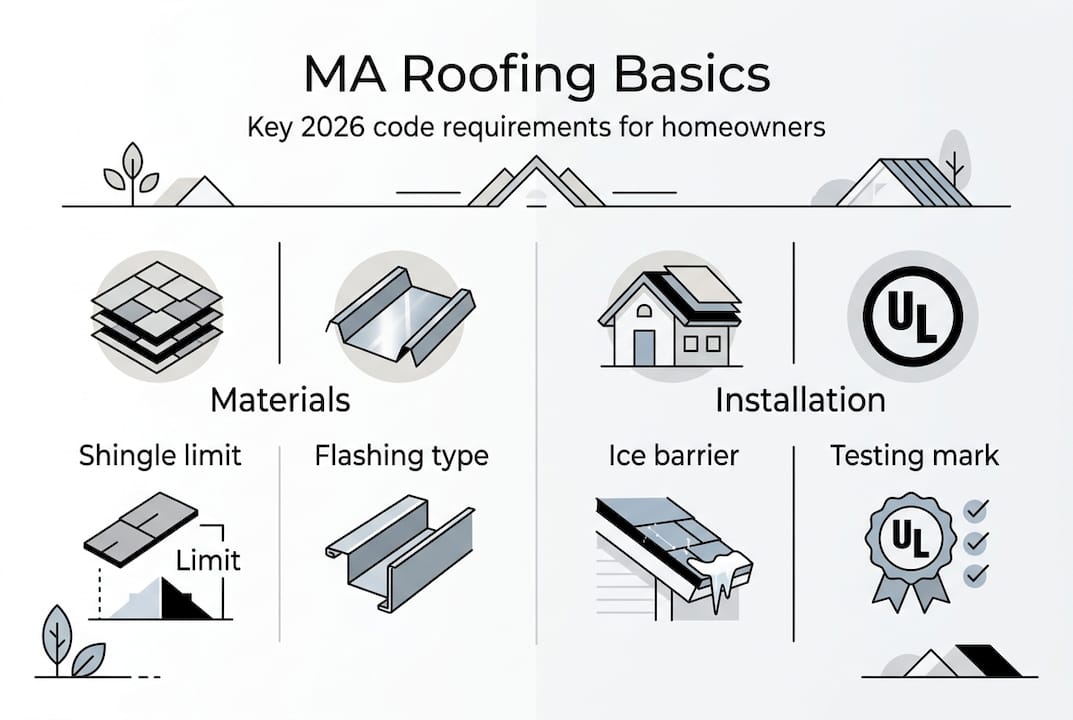
Asphalt shingle installations are limited to a maximum of two layers to prevent excessive weight on roof structures. This restriction protects structural integrity and ensures proper ventilation. Many older homes have multiple shingle layers from decades of overlays, but current code prohibits adding a third layer. If your roof already has two layers, you must remove all existing shingles before installing new ones, adding cost but ensuring code compliance and structural safety.
Ice and water shield barriers are mandatory in Massachusetts to combat ice dam damage prevalent during winter months. These self-adhering membranes must extend from roof edges up the slope to a point at least 24 inches inside the exterior wall line. In areas experiencing average daily temperatures of 25°F or colder in January, enhanced ice barrier coverage is required. This protection prevents water infiltration when ice dams force melting snow under shingles.
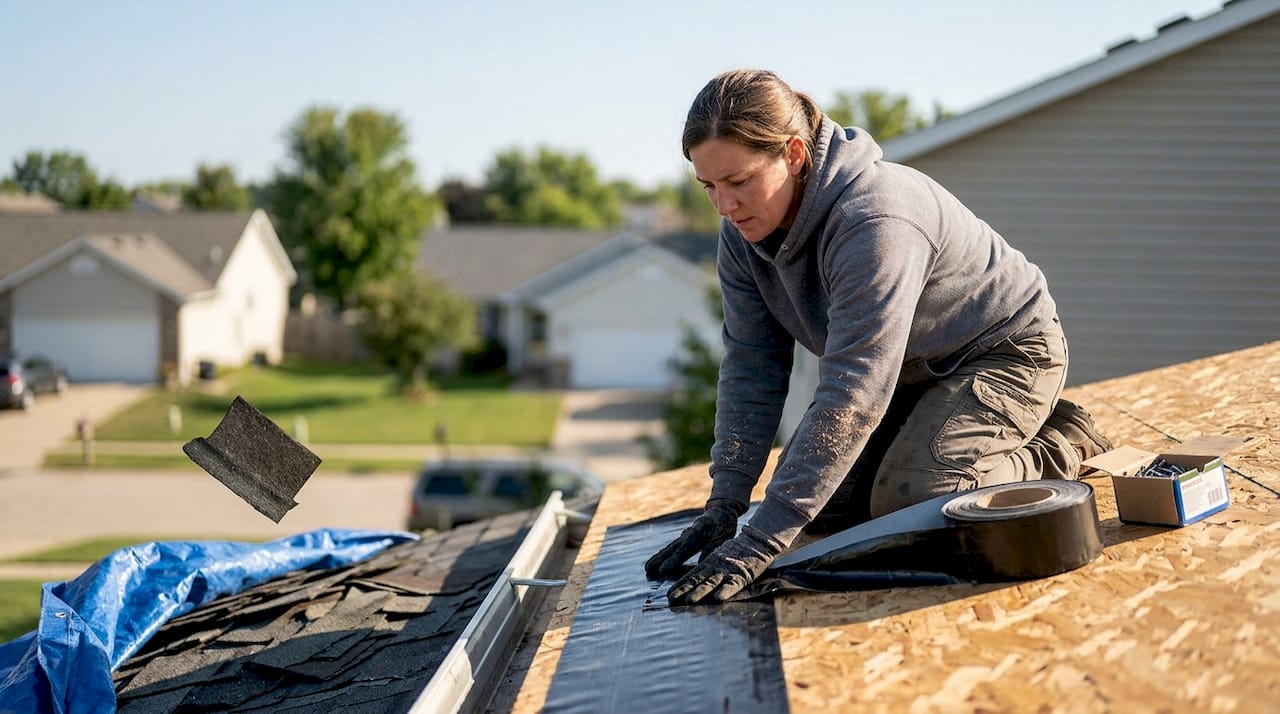
Flashing requirements mandate rust-resistant materials with minimum thickness of 0.019 inches for long-term weather resistance. Galvanized steel, aluminum, or copper flashing must be properly installed at all roof penetrations, valleys, chimneys, and wall intersections. Improper flashing causes most roof leaks, making this requirement critical for waterproofing.
Attic ventilation standards ensure proper air circulation to prevent moisture accumulation and ice dam formation. Code requires balanced intake and exhaust ventilation with minimum net free ventilation area of 1 square foot per 150 square feet of attic space, or 1 per 300 if certain conditions are met. Adequate ventilation extends shingle life and prevents structural damage from trapped moisture.
Structural requirements include:
- Snow load calculations based on ASCE 7 standards for your specific location
- Wind resistance ratings appropriate for Massachusetts wind zones
- Proper roof deck attachment to resist uplift forces
- Fire-rated materials meeting Class A, B, or C ratings depending on building type
- Drainage systems including scuppers for low-slope roofs to prevent water ponding
All roofing materials must carry approval from recognized testing organizations like ASTM International, Underwriters Laboratories, or FM Global. These certifications verify materials meet performance standards for fire resistance, wind uplift, impact resistance, and weathering. Using unapproved materials can void warranties and create code violations.
| Requirement | Standard | Purpose |
|---|---|---|
| Shingle layers | Maximum 2 layers | Prevents excess structural load |
| Ice barrier | 24+ inches past wall line | Protects against ice dam leaks |
| Flashing thickness | Minimum 0.019 inches | Ensures long-term weather resistance |
| Ventilation ratio | 1:150 or 1:300 sq ft | Prevents moisture and ice dams |
| Material approval | ASTM/UL/FM certified | Guarantees safety and performance |
Pro Tip: Request material specifications and certifications from your contractor before work begins. Verify that proposed materials meet or exceed code requirements and carry manufacturer warranties appropriate for Massachusetts climate conditions. Quality materials cost more upfront but provide superior long-term performance.
Professional roofers understand these technical requirements and incorporate them into every installation. The roof replacement process should include verification that all materials and methods comply with current Massachusetts building codes. Cutting corners on material quality or installation standards creates future problems and potential code violations that can complicate home sales.
Navigating local exceptions, multi-family rules, and common pitfalls
While state building codes provide baseline standards, local municipalities often enforce additional requirements that homeowners must navigate. Multi-family buildings face particularly stringent regulations compared to single-family homes. R-2 occupancy buildings with more than two dwelling units fall under stricter International Building Code Chapter 15 provisions rather than residential code sections. These properties cannot use owner-builder permit exemptions and require licensed contractors for all roofing work regardless of project scope.
Many Massachusetts communities have local amendments approved by the Board of Building Regulations and Standards that modify state code requirements. Historic districts often impose additional restrictions on roofing materials, colors, and installation methods to preserve architectural character. Homeowner associations may have their own rules governing roof appearance and material selection that operate alongside building codes. You must satisfy both code requirements and HOA restrictions, which sometimes conflict and require negotiation.
Coastal and high wind zones trigger enhanced structural requirements beyond standard Massachusetts provisions. Properties in these areas must use roofing materials rated for higher wind speeds and install them with additional fasteners and adhesives. Wind load calculations become more complex, and inspectors scrutinize installation details more carefully to ensure roofs can withstand coastal storm conditions.
Permit triggers extend beyond simple roof replacements. Adding solar panels, installing skylights, or mounting satellite dishes often requires separate permits even if you’re not replacing roofing materials. These penetrations affect roof integrity and must be properly flashed and sealed to prevent leaks. Many homeowners discover permit requirements only after starting work, leading to stop-work orders and potential fines.
Common compliance pitfalls include:
- Assuming repairs under 25% never require permits without checking local rules
- Hiring contractors based solely on price without verifying licenses and insurance
- Starting work before obtaining required permits to save time
- Accepting verbal agreements instead of detailed written contracts
- Failing to request lien waivers from contractors and material suppliers
Steps to verify requirements and credentials:
- Contact your local building department to confirm permit requirements for your specific project
- Request and verify contractor HIC registration and CSL license numbers through state databases
- Obtain current insurance certificates directly from insurance companies
- Review contractor references and completed project examples
- Get detailed written estimates specifying materials, methods, timeline, and payment schedule
- Confirm the contractor will obtain all necessary permits and schedule required inspections
- Verify HOA or historic district requirements if applicable to your property
Working with experienced contractors familiar with local requirements streamlines the permit process and ensures compliance. Annual roof inspections can identify potential issues before they become major problems requiring extensive permitted work. Regular maintenance extends roof life and helps you plan for eventual replacement when it becomes necessary.
Multi-family property owners and managers face additional complexity. Commercial roofing regulations apply to larger apartment buildings, requiring specialized contractors and more extensive permitting. Fire safety requirements become more stringent as building size and occupancy increase. Consulting with contractors experienced in multi-family work prevents costly mistakes and ensures all regulatory requirements are met.
Make your Massachusetts roofing project easy and compliant
Navigating Massachusetts roofing regulations doesn’t have to be complicated when you work with experienced professionals who understand state and local requirements. Sabatalo Contracting specializes in helping Massachusetts homeowners plan and execute roofing projects that meet all code requirements while delivering superior quality and craftsmanship.

Our team of licensed roofing contractors handles permit applications, material selection, and installation with full compliance to Massachusetts building codes. We maintain all required licenses and insurance, giving you peace of mind that your project meets legal standards and protects your investment. With over 15 years of local experience, we understand the nuances of municipal requirements across Massachusetts and can guide you through the entire process.
Working with properly licensed professionals minimizes risks of code violations, ensures manufacturer warranty protection, and enhances your home’s value. Beyond roofing, we offer comprehensive exterior services to plan your home remodel and increase property value through strategic upgrades. Our commitment to quality, transparency, and customer satisfaction has made us a trusted partner for Massachusetts homeowners seeking reliable exterior improvements.
What are the common questions about Massachusetts roofing regulations?
When do I need a roofing permit in Massachusetts?
You need a permit for full roof replacements, work covering more than 25% of roof area within 12 months, structural repairs, or adding roof penetrations like skylights. Minor repairs under the 25% threshold may be exempt, but requirements vary by municipality, so always check with your local building department before starting work.
What licenses should my contractor have for roof work?
Contractors need Home Improvement Contractor registration for residential work over $500 to $1,000 and a Construction Supervisor License for permitted or structural roofing projects. Both licenses serve different purposes and are not interchangeable, so verify your contractor holds appropriate credentials for your project scope.
Can I do minor repairs without a permit?
Minor repairs covering less than 25% of roof area without structural changes may not require permits in some municipalities. However, this exemption varies by location, and some communities require permits for any roofing work. Contact your building department to confirm whether your specific repair project needs a permit.
How do I verify my contractor’s insurance and license?
Check HIC registration through the Office of Consumer Affairs and Business Regulation website and confirm CSL licenses with the Board of Building Regulations and Standards. Request insurance certificates directly from the contractor’s insurance company to verify current general liability and workers’ compensation coverage before work begins.
Are there extra requirements for multi-family buildings?
Multi-family R-2 buildings with more than two units face stricter International Building Code Chapter 15 requirements and cannot use owner-builder exemptions. These properties require licensed contractors for all roofing work and may have additional fire safety, structural, and material requirements beyond single-family home standards.
Recommended
- Annual Roof Inspections in Massachusetts: A 2025 Guide for Homeowners | Sabatalo Contracting
- Professional Roofers: Raising Standards in Massachusetts | Sabatalo Contracting
- Roof Replacement Options for Massachusetts Homes | Sabatalo Contracting
- Roof Replacement Process for Massachusetts Homeowners 2025 | Sabatalo Contracting
