TL;DR:
- Storm roofers specializing in damage assessment and insurance support can maximize claim payouts and ensure code compliance. Verifying Massachusetts licenses, including CSL and HIC, is essential to avoid unpermitted work and insurance issues. Choosing local, licensed contractors with proper documentation protects your home and eases the post-storm repair process.
After a serious storm tears through Massachusetts, the decisions you make in the next 48 hours can determine whether your insurance claim pays out fully or gets denied entirely. Qualified storm roofers are not the same as general contractors who happen to own a ladder. The gap between a licensed, experienced storm specialist and an out-of-state storm chaser knocking on your door can cost you thousands of dollars, a failed inspection, or a roof that leaks again by spring. This guide breaks down exactly what to look for, what to verify, and how to protect yourself.
Table of Contents
- Key Takeaways
- What storm roofers do and why expertise matters
- Massachusetts licensing requirements you must verify
- Navigating insurance claims with your storm roofer
- How to choose the best storm roofers in Massachusetts
- Post-repair maintenance to protect your investment
- My honest take on choosing storm roofers in Massachusetts
- Protect your Massachusetts home with the right storm roofer
- FAQ
Key Takeaways
| Point | Details |
|---|---|
| Licensing is non-negotiable | Massachusetts roofers must hold both a CSL and HIC registration to legally perform structural roofing work. |
| Documentation drives claims | Detailed photos and professional reports can increase insurance settlement value by up to 18%. |
| Storm chasers are a real threat | Unsolicited post-storm offers often signal unlicensed contractors who may commit insurance fraud. |
| Xactimate knowledge matters | Contractors who understand claim supplementation recover $1,500 to $3,000 more per job on average. |
| Local contractors outperform outsiders | Massachusetts-based roofers understand regional codes, weather patterns, and permit requirements. |
What storm roofers do and why expertise matters
Not every roofer is equipped to handle storm damage, and that distinction matters more than most homeowners realize. Storm roofers specialize in three specific areas: accurate damage assessment, insurance claim documentation, and complex structural repairs caused by wind, hail, and ice. A general contractor may replace shingles. A storm roofer documents every damaged component, identifies code-required upgrades, and communicates those findings in the format your insurance adjuster expects.
The timeline matters just as much as the expertise. Professional roof inspections after major weather events are critical because storm damage is rarely limited to what you can see from the ground. Hail bruises asphalt shingles in ways that only show under a trained eye. Wind lifts flashing and creates gaps that won’t leak until the next heavy rain. The longer you wait, the harder it becomes to connect damage to a specific storm event, which gives insurers a reason to question your claim.
Here is what specialized storm roofers bring to the table:
- Damage identification: They assess not just shingles, but decking, flashing, gutters, ridge caps, and ventilation components
- Photographic evidence: Systematic documentation using close-up photos, drone imagery, and written reports
- Insurance claim support: Presence during adjuster visits to advocate for full scope identification
- Code compliance: Knowledge of Massachusetts building codes that require specific upgrades during repairs
Pro Tip: Schedule your roof inspection within 72 hours of a storm. Most insurance policies require you to report damage promptly, and a documented inspection creates a time-stamped record that protects your claim.
Massachusetts licensing requirements you must verify
This is where most homeowners get into serious trouble. Massachusetts has two separate credentials that every roofing contractor must carry, and they are not interchangeable.
A Construction Supervisor License (CSL) is required to legally perform structural roofing work and pull permits. The Home Improvement Contractor (HIC) registration provides consumer protection for work done on owner-occupied homes with fewer than six units. You need both. A contractor with only one of these is not fully qualified to handle a storm repair job on your home.
Here is how to verify credentials before signing anything:
- Visit the official mass.gov license lookup portal and search for the contractor’s CSL by name or license number
- Visit the HIC registration search on the Office of Consumer Affairs and Business Regulation website to confirm active HIC status
- Request certificates of insurance for general liability and workers’ compensation, then call the insurer directly to confirm coverage is current
- Check the contractor’s permit-pulling history. A CSL holder should be able to pull permits in your municipality without issue
Most homeowners confuse HIC and CSL because contractors rarely explain the difference. Failing to verify both can result in unpermitted work, insurance disputes, and complications when you sell your home.
| Credential | Purpose | Required for |
|---|---|---|
| CSL (Construction Supervisor License) | Authorizes structural work and permit pulls | All structural roofing repairs |
| HIC (Home Improvement Contractor) | Consumer protection registration | Work on owner-occupied homes |
| General Liability Insurance | Covers property damage during work | Protects homeowner from liability |
| Workers’ Compensation | Covers injuries to crew on your property | Required by Massachusetts law |
The consequences of skipping this verification are significant. Unlicensed HIC work carries fines up to $5,000 for a first offense, and those penalties can fall on the homeowner as the property owner of record. Beyond fines, the state’s Guaranty Fund only protects you when you hire properly registered contractors.
Pro Tip: Ask for the CSL number and HIC number in writing before your first meeting ends. Any legitimate contractor will provide these without hesitation. Hesitation is your answer.
Navigating insurance claims with your storm roofer
The insurance claim process after storm damage has more moving parts than most homeowners expect, and your contractor’s role in that process is larger than just fixing the roof.
Proper documentation including detailed photos, drone imagery, and professional reports significantly increases claim approval rates. Claims backed by thorough evidence receive settlements up to 18% higher than those with minimal documentation. That difference can easily represent several thousand dollars on a full roof replacement.
Most residential insurance claims are estimated using a software platform called Xactimate. Your adjuster uses it to calculate repair costs based on line items, and the accuracy of those line items determines how much money you receive. The problem is that 15 to 20% of residential roofing insurance claims are initially denied or underpaid due to incomplete documentation or improper Xactimate coding. Adjusters frequently miss code-required upgrades, labor costs, and materials specific to Massachusetts building standards.
This is where a storm roofer who understands Xactimate becomes genuinely valuable. Contractors who supplement Xactimate claims recover $1,500 to $3,000 or more per job compared to those who accept the first adjuster estimate.
Key things to know about the insurance claim process:
- Attend the adjuster visit: Request that your contractor be present. They can point out damage the adjuster might miss and ensure every damaged component is documented
- Request a supplement: If your contractor identifies additional scope after the initial estimate, they can submit a supplement with supporting documentation
- Keep all records: Save every email, phone call log, and document exchanged with your insurer. This becomes critical if a dispute arises
- Understand depreciation: Ask your insurer whether your policy pays actual cash value or replacement cost value. The difference affects how much you receive upfront
| Claim Factor | Impact on Payout |
|---|---|
| Contractor presence at adjuster visit | Catches missed damage and code upgrades |
| Xactimate supplement submission | Recovers $1,500 to $3,000 or more |
| Detailed photo and drone documentation | Up to 18% higher settlement value |
| Timely claim filing | Avoids denial based on policy timing clauses |
Pro Tip: Never sign an Assignment of Benefits (AOB) form without reading it carefully and consulting your insurer. Some contractors use AOB agreements to take over your claim entirely, removing your ability to negotiate or dispute the outcome.
How to choose the best storm roofers in Massachusetts
Choosing the right contractor after a storm is not just about getting a quote. You are selecting someone who will represent your interests during an insurance claim, pull permits on your behalf, and stand behind their work for years. Here is how to separate the best roofers for storms from the ones you should avoid.
Watch for these red flags first:
- A contractor who knocks on your door unprompted within days of a storm. Storm chaser companies use high-pressure tactics and may engage in insurance fraud, putting your claim and your home at risk
- Requests for a large cash deposit before any work begins
- Vague estimates without line items, material specifications, or permit information
- Pressure to sign immediately before you have reviewed anything
- No physical business address or local Massachusetts presence
Once you have filtered out the obvious risks, here is how to evaluate the contractors who remain. Verify both the CSL and HIC, as covered above. Then ask for at least three references from Massachusetts homeowners who had storm-related work done within the past two years. Call those references and ask specifically about the insurance claim experience, not just the finished roof.
Local Massachusetts contractors understand regional building codes, know which permit offices have specific requirements, and have established reputations you can verify through the Better Business Bureau or Google reviews. An out-of-state company has no local accountability once the job is done.
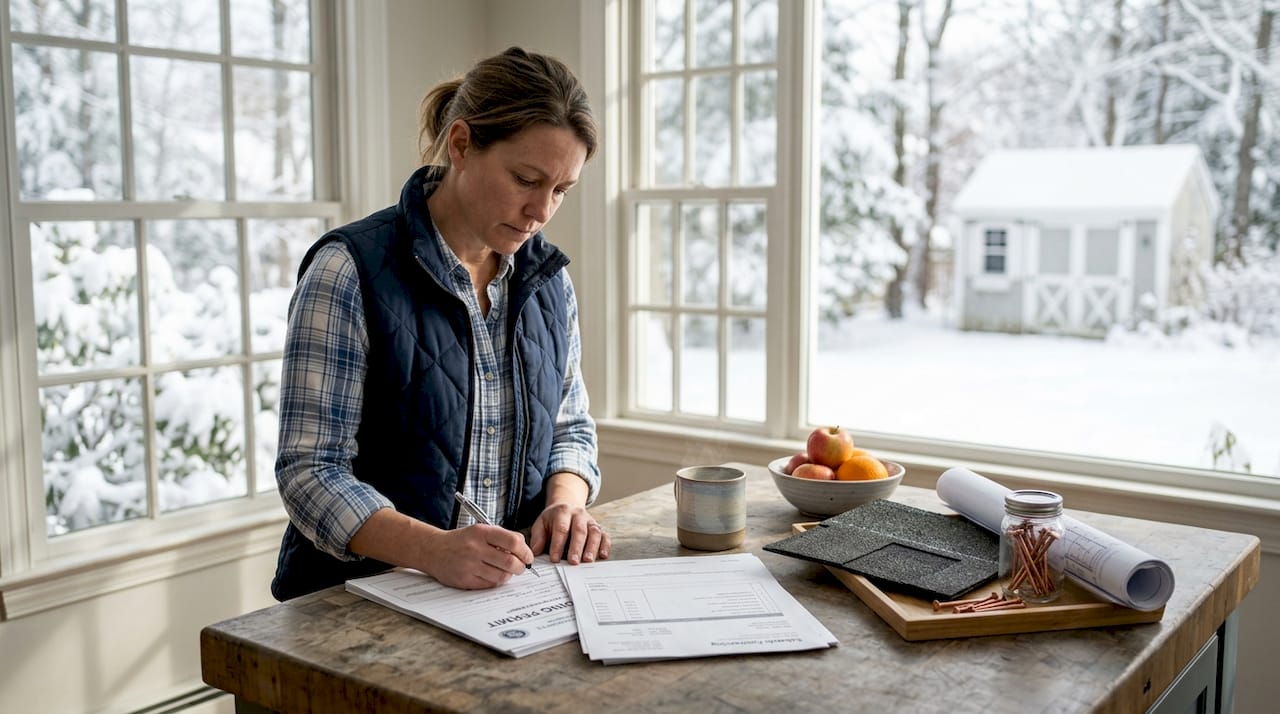
When comparing estimates, look beyond the total dollar amount. A lower bid may be using substandard materials, skipping permits, or underestimating scope that you will eventually pay for out of pocket. Ask each contractor which shingle brand and product line they are specifying, how they handle permit pulls, and what their warranty covers for labor and materials separately.
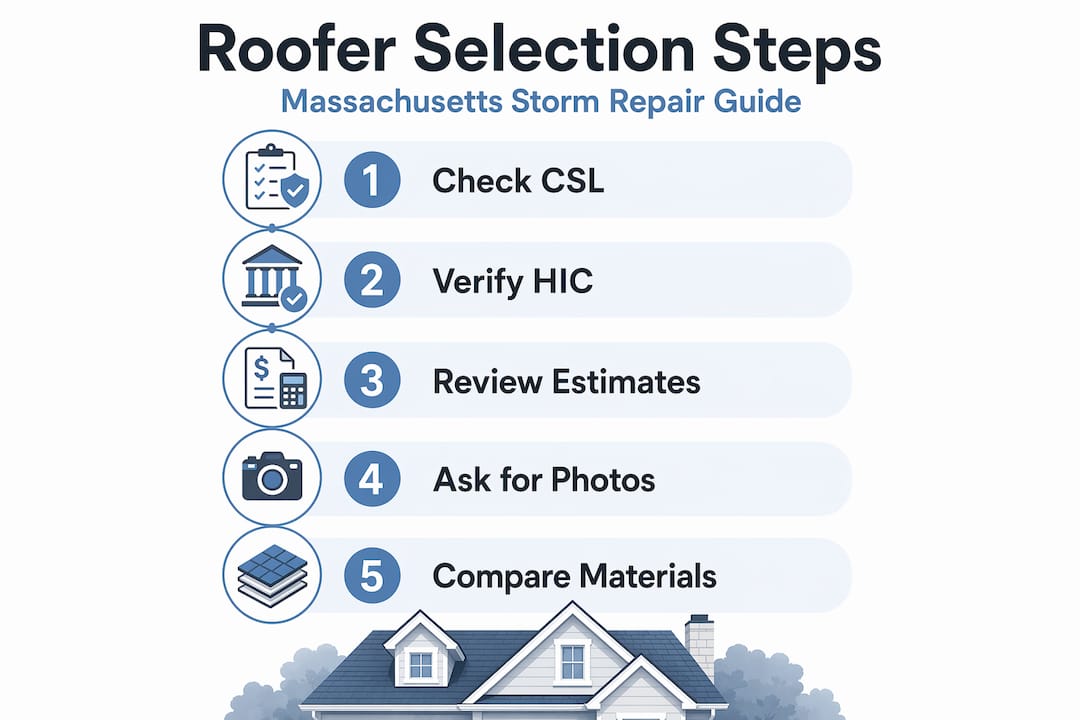
Pro Tip: Get a minimum of three written estimates. If one bid is dramatically lower than the others, that gap almost always reflects missing scope or unlicensed work, not a better deal.
Post-repair maintenance to protect your investment
Getting a quality storm repair is the first step. Keeping that repair functioning for decades requires a deliberate maintenance plan.
Follow this sequence after any storm repair work is complete:
- Collect all documentation on the day of completion. Get the signed permit card, manufacturer warranty documents, and the contractor’s labor warranty in writing before they leave your property
- Schedule a follow-up inspection at 90 days. Settling, minor flashing adjustments, and sealant issues typically appear within the first season after installation
- Book professional inspections twice a year going forward. Twice-yearly inspections catch small problems before they become costly failures and keep your roof eligible for insurance coverage
- Maintain your gutters. Clogged gutters after Massachusetts winters create ice dams that force water under shingles. Clean them every fall and after major storms
- Keep a maintenance log. Record every inspection, repair, and weather event. This documentation supports future insurance claims and adds credibility when you sell your home
You can also work with your contractor to understand what voids your manufacturer warranty. Foot traffic, pressure washing, and improper repairs by uncertified installers are common triggers. Learn how to prevent roof leaks before they start rather than reacting after damage appears.
My honest take on choosing storm roofers in Massachusetts
I have seen homeowners make the same mistake over and over. A storm hits, someone shows up at the door with a clipboard and a friendly pitch, and the homeowner signs something before they have verified a single credential. Six months later they are dealing with a failed inspection, a denied insurance claim, or a roof that was never properly permitted.
In my experience, the contractors who do the best work rarely need to knock on your door. They have local reputations that generate referrals. They carry the right licenses, they pull permits without being asked twice, and they know Xactimate well enough to protect your claim.
The licensing check takes five minutes on mass.gov. Most homeowners skip it entirely because the contractor seemed professional. “Seemed professional” is not the same as licensed and insured. Those are facts you verify, not impressions you form.
Investing in a properly credentialed, locally established storm roofer will always cost less in the long run than fixing the mistakes of one who was not. The claims process, the permit process, and the quality of materials all compound over time. Get those fundamentals right at the start and everything else follows.
— Andrew
Protect your Massachusetts home with the right storm roofer
Storms in Massachusetts are not going anywhere. Nor-easters, summer hailstorms, and heavy wind events are a regular part of life here, and your roof takes the full force of all of them. Choosing an unqualified contractor after one of those events is a risk no homeowner should take.

Sabatalocontracting has spent over 15 years performing storm damage repairs for homeowners across Massachusetts. Every job is handled by properly licensed, CSL-certified professionals who understand both the technical demands of storm repair and the insurance claim process that follows. From the first inspection through final permit sign-off, the team at Sabatalocontracting is built for exactly this kind of work.
If your roof took damage in a recent storm, do not wait. Reach out to explore licensed contractor services and get a documented assessment that protects both your home and your claim.
FAQ
What qualifications should storm roofers have in Massachusetts?
Storm roofers in Massachusetts must hold both a Construction Supervisor License (CSL) and a Home Improvement Contractor (HIC) registration. Both credentials are required for structural roofing work and permit pulls on residential properties.
How soon should I get a roof inspection after a storm?
Schedule a professional roof inspection within 72 hours of a significant weather event. Prompt documentation creates a time-stamped record that supports your insurance claim and prevents disputes about when damage occurred.
How do storm roofers help with insurance claims?
Experienced storm roofers document all damage through photos and professional reports, attend adjuster visits to ensure full scope identification, and submit Xactimate supplements to recover costs adjusters miss. Contractors who supplement claims recover $1,500 to $3,000 or more per job on average.
How can I spot a storm chaser roofing scam in Massachusetts?
Watch for unsolicited door-to-door offers immediately after a storm, pressure to sign contracts on the spot, and requests for large upfront cash payments. Verifying CSL and HIC credentials through mass.gov before signing anything is the most reliable protection.
What happens if I hire an unlicensed roofer in Massachusetts?
Unlicensed HIC work carries fines up to $5,000 for a first offense, and homeowners lose access to the state Guaranty Fund, which only protects those who hire registered contractors. Unpermitted work can also cause problems during future home sales and insurance inspections.
Recommended
- Massachusetts Roof Replacement: Homeowner’s Prep Guide | Sabatalo Contracting
- Annual Roof Inspections in Massachusetts: A 2025 Guide for Homeowners | Sabatalo Contracting
- Massachusetts roofing regulations guide homeowners 2026 | Sabatalo Contracting
- Roofers Contractors: Ensuring Safe, Durable Homes | Sabatalo Contracting
