TL;DR:
- Massachusetts requires permits, ice-water shields, and proper attic ventilation for roof replacements.
- Choosing materials like asphalt, metal, or slate ensures durability during harsh winter conditions.
- Hire licensed, insured contractors who will manage permits and follow state-specific roofing codes.
Replacing your roof in Massachusetts is not a weekend project you can wing. Between unpredictable nor’easters, strict building codes, and snow loads that can exceed 50 pounds per square foot, a poorly planned roof replacement can lead to failed inspections, voided warranties, or structural damage that costs far more than the original job. This guide walks you through every critical step: understanding state and local permitting requirements, choosing materials built for Massachusetts winters, preparing your property for the crew, and hiring a contractor who is properly licensed and insured. Get these steps right, and your new roof will protect your home for decades.
Table of Contents
- Understand Massachusetts roof replacement requirements
- Plan your materials and timeline for Massachusetts weather
- Prepare your home and property for roof work
- Choose and manage your Massachusetts roofing contractor
- What most guides miss about Massachusetts roof replacement preparation
- Next steps: Expert help for Massachusetts roof projects
- Frequently asked questions
Key Takeaways
| Point | Details |
|---|---|
| Massachusetts codes matter | Getting a permit and following key requirements like ice-water shield and permitted overlays is essential for roof replacements. |
| Right materials prevent problems | Choose roofing materials designed for snow, ice, and wind to maximize your roof’s life and minimize cold-season issues. |
| Prep inside and out | Moving valuables and protecting attic and landscaping helps ensure a smooth, damage-free installation day. |
| Vet your contractor carefully | Always verify licenses and insurance to avoid code or warranty problems. |
Understand Massachusetts roof replacement requirements
Before you order a single shingle or schedule a crew, you need to understand what the law actually requires. Massachusetts takes roofing seriously, and the Massachusetts roofing codes are more detailed than most homeowners expect.
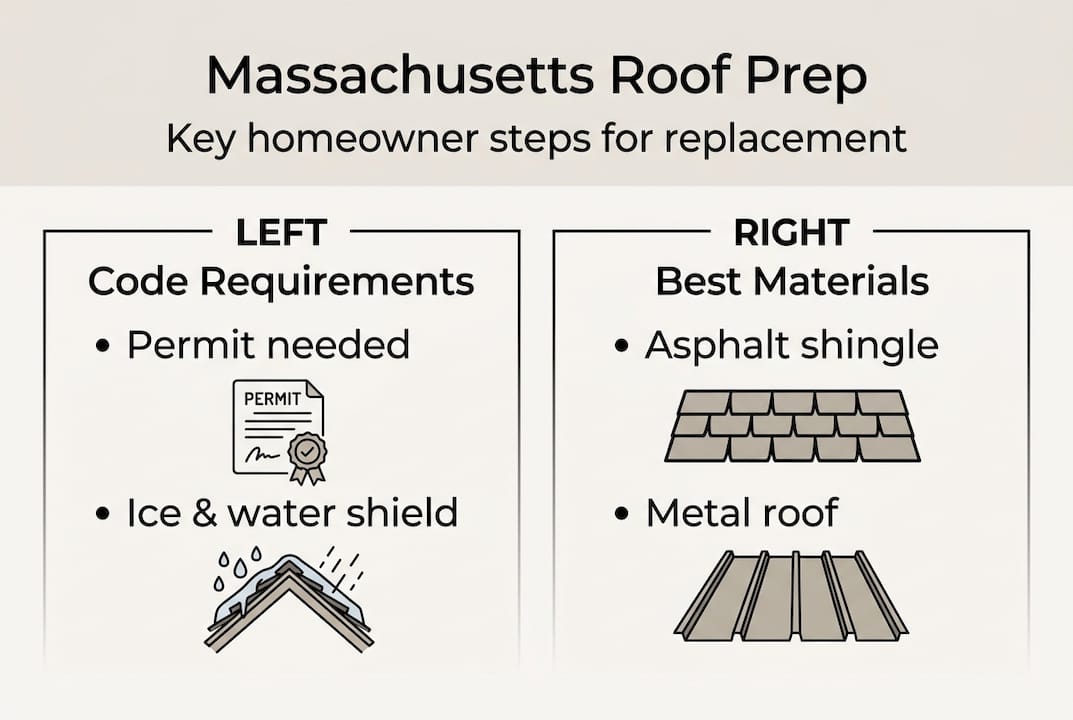
Permits are not optional. Every municipality in the state requires a building permit for roof replacement. According to the state building code rules, Massachusetts mandates permits, ice-water shield, and attic ventilation for all residential roof work. Your contractor is responsible for pulling the permit, not you, but you should confirm it is done before work begins.
Ice and water shield is mandatory. Massachusetts requires this self-adhering membrane to extend at least 24 inches inside the warm wall line of your home. This is not a suggestion. It is a code requirement that protects against ice dams, which form when heat escapes through the roof and melts snow that then refreezes at the eaves.
Ventilation ratios matter. Your attic must meet minimum ventilation standards: 1/150 of the attic floor area, or 1/300 if you have balanced intake and exhaust venting. Poor ventilation shortens shingle life and contributes to ice dam formation.
Overlays are limited. Massachusetts allows only one overlay, meaning you can have a maximum of two roof layers total. If your home already has two layers, a full tear-off is required before new shingles go on. Skipping this step is a code violation.
If your home is in a historic district, plan for additional design review. Local historic commissions may require specific materials or colors that match the neighborhood’s character, and approval can add weeks to your timeline.
Here is a quick reference for the key requirements:
| Requirement | Massachusetts standard |
|---|---|
| Building permit | Required in all municipalities |
| Ice and water shield | 24 inches inside warm wall |
| Attic ventilation | 1/150 or 1/300 (balanced) |
| Overlay limit | One overlay maximum (2 layers total) |
| Snow load compliance | Per local structural requirements |
| Historic district approval | Required where applicable |
Understanding the full roof replacement process from a code perspective helps you ask the right questions before work starts and avoid surprises during the inspection phase.
Plan your materials and timeline for Massachusetts weather
With code essentials in hand, the next step is choosing the best materials and project schedule for Massachusetts’s challenging climate. Not every roofing product performs equally when temperatures drop below freezing and ice dams start forming along your eaves.
Here is how the most common roofing material options compare for Massachusetts conditions:
| Material | Lifespan | Snow performance | Cost range | Best for |
|---|---|---|---|---|
| Architectural asphalt shingles | 25-30 years | Good | $$ | Most residential homes |
| Metal roofing | 40-70 years | Excellent (sheds snow fast) | $$$ | High-snow areas |
| Natural slate | 75-150 years | Excellent | $$$$ | Premium homes, historic districts |
| EPDM/TPO (flat roofs) | 20-30 years | Adequate with proper drainage | $$ | Low-slope or flat roofs |
As the roof material requirements confirm, asphalt, metal, and slate all perform well under snow load and cold conditions, but each has trade-offs worth knowing.
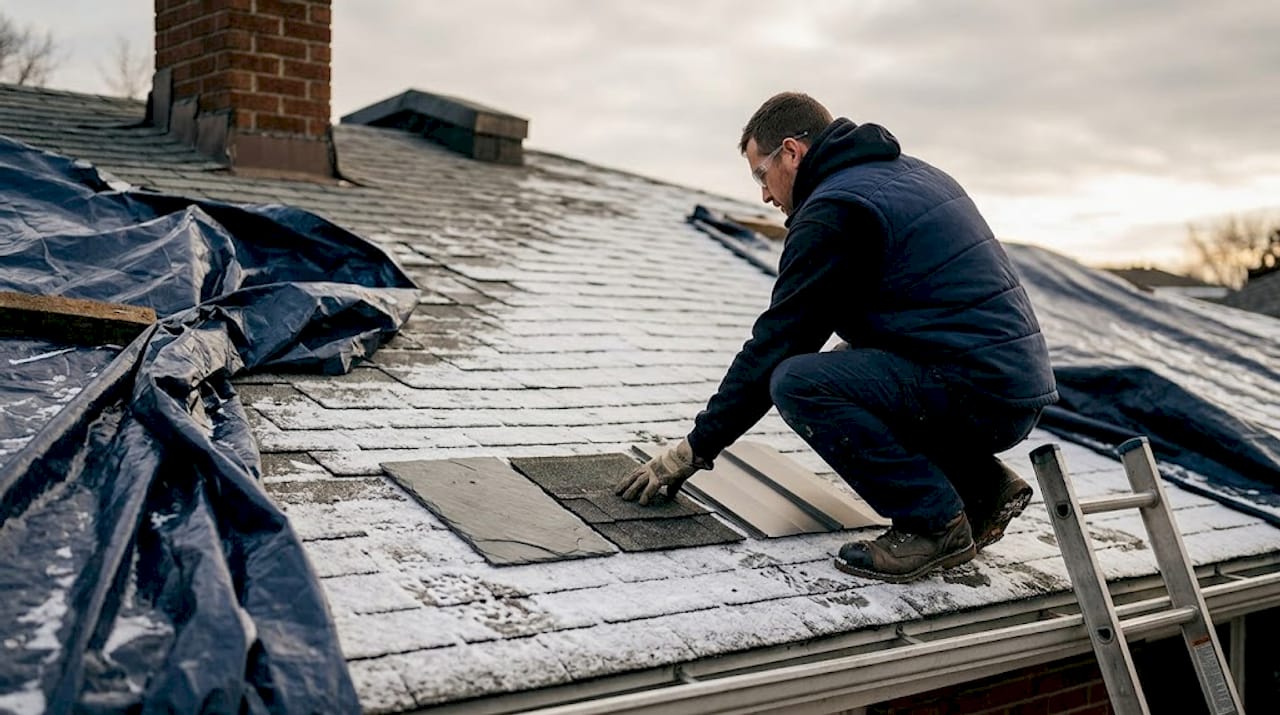
Architectural asphalt shingles are the most popular choice. They are affordable, widely available, and hold up well through freeze-thaw cycles. Look for shingles rated for Class 4 impact resistance if hail is a concern in your area.
Metal roofs are worth the higher upfront cost if you live in a high-snow zone. Snow slides off naturally, reducing ice dam risk and structural load. They also last twice as long as asphalt.
Slate is the most durable option, but it is also the heaviest. Your roof structure must be able to handle the added weight, which requires a structural assessment before installation.
Flat roofs need EPDM or TPO membranes and must meet Class A fire rating requirements where applicable.
Pro Tip: If your project runs into late fall or winter, ask your contractor about cold-weather underlayments. Standard products can become brittle and crack in freezing temperatures, which compromises the waterproof layer beneath your shingles.
For timeline planning, follow this sequence:
- Submit permit application (allow 1-3 weeks for approval depending on your municipality)
- Order materials and confirm delivery dates
- Schedule the crew with a weather buffer of at least 3-5 extra days built in
- Allow 1-2 days for inspection after installation
- Confirm final sign-off before making final payment
Also factor in preventing ice dams as part of your material and ventilation planning, not just an afterthought.
Prepare your home and property for roof work
After materials are selected, ensure your home is truly ready by prepping interiors and exteriors to streamline the actual installation. A little preparation before the crew arrives saves time, prevents damage, and keeps everyone safer.
Exterior preparation checklist:
- Move all vehicles out of the driveway and away from the home’s perimeter
- Remove or secure patio furniture, grills, potted plants, and outdoor decorations
- Clear the yard of children’s toys, garden tools, and anything that could be struck by falling debris
- Trim back tree branches that overhang the roofline if possible
- Mark any underground irrigation lines or utility flags so the crew avoids them
Interior preparation checklist:
- Cover attic contents with tarps or plastic sheeting to protect from dust and debris, especially during a full tear-off
- Remove wall hangings and fragile items from interior walls, since vibration from nail guns can shake things loose
- Keep pets indoors in a quiet room away from the noise and activity
- Plan for children to be out of the house or in a safe, supervised area during work hours
Snow load safety requirements confirm that Massachusetts snow loads range from 25 to 55 psf, which means your attic structure is already under significant seasonal stress. Clearing out stored items before the project reduces risk and gives your contractor easier access for inspection.
Pro Tip: Before the crew starts, photograph your landscaping, driveway, and exterior features from multiple angles. If a shrub gets damaged or the driveway gets scratched by equipment, you will have documentation to support an insurance or contractor claim.
Also, alert your immediate neighbors before work begins. A large roofing project generates noise, debris, and foot traffic that can affect adjacent properties. A quick heads-up goes a long way toward keeping good relationships. Review the full roof replacement steps so you know exactly what to expect each day of the project.
Choose and manage your Massachusetts roofing contractor
With your home ready for action, the last critical ingredient is choosing a professional who can deliver compliant, quality results. Massachusetts has specific licensing requirements that protect you as a homeowner, and hiring outside those requirements creates serious risk.
The contractor selection checklist is clear: Massachusetts contractors must hold CSL and HIC licenses, carry liability and workers’ compensation insurance, and pull all required permits themselves.
Here is what to verify before signing any contract:
- Construction Supervisor License (CSL): Required for anyone overseeing structural work in Massachusetts. Verify it on the state licensing portal.
- Home Improvement Contractor (HIC) registration: Required for any residential improvement project over $1,000. Also verifiable online.
- Liability insurance: Ask for a certificate of insurance naming you as an additional insured.
- Workers’ compensation coverage: If a worker is injured on your property and the contractor lacks this, you could be held liable.
- Permit responsibility: Confirm in writing that the contractor will pull all required permits before work begins.
Understanding the roofing license requirements in Massachusetts protects you from contractors who cut corners on compliance.
Never hire a contractor who asks you to pull the permit yourself. In Massachusetts, the licensed contractor is legally responsible for pulling permits. If they ask you to do it, that is a red flag.
Additional vetting steps:
- Request at least three local references and actually call them
- Ask to see photos or visit completed projects in your area
- Get a minimum of three written bids before deciding
- Confirm they follow professional roofing standards for installation and cleanup
If your home is in a historic district, ask specifically whether the contractor has experience working with local historic commissions. That process involves extra design approvals and can delay your timeline if the contractor is unfamiliar with it. Look for qualified roofing contractors who have a track record with Massachusetts-specific requirements.
What most guides miss about Massachusetts roof replacement preparation
Most articles hand you a checklist and call it done. After years of working on roofs across Massachusetts, we have seen where projects actually fall apart, and it is rarely about materials or budget.
The biggest underestimated factor is weather unpredictability. Even a well-planned spring project can get pushed back two weeks by a late-season nor’easter. Homeowners who build zero buffer into their timeline end up rushing the final stages, which is when mistakes happen. Always plan for at least one week of weather delays, no matter the season.
The second blind spot is attic ventilation. Most homeowners focus entirely on shingles and never think about what is happening underneath. Ventilation violations are one of the most common reasons inspections fail in Massachusetts, and fixing them after installation is expensive and disruptive.
Finally, the permit and licensing shortcuts that seem harmless upfront become serious problems at resale. Buyers’ attorneys and home inspectors will find unpermitted work. Understanding the roof replacement process from start to finish, including the legal steps, is what separates a smooth project from a costly one.
Next steps: Expert help for Massachusetts roof projects
You now have a clear picture of what it takes to replace a roof the right way in Massachusetts. Permits, materials, prep work, and contractor vetting are all pieces of the same puzzle.

At Sabatalo Contracting, we bring over 15 years of Massachusetts-specific roofing expertise to every project. We handle permitting, code compliance, and installation so you do not have to manage those details alone. Explore your roof replacement options or browse our all available services to see how we can help. Ready to talk to a local expert? Reach out to our team of roofing contractors in Massachusetts for a free assessment tailored to your home and budget.
Frequently asked questions
Do I need a permit to replace my roof in Massachusetts?
Yes, permits are required in every Massachusetts municipality for roof replacement. Your licensed contractor is responsible for obtaining the permit before work begins.
Which roofing materials work best for Massachusetts winters?
Asphalt shingles, metal, and slate all handle heavy snow and cold temperatures well, while flat roofs require EPDM or TPO membranes to stay watertight.
How do I check if my roofing contractor is properly licensed?
You can verify both the Construction Supervisor License (CSL) and Home Improvement Contractor (HIC) registration through the Massachusetts state licensing portals. Always check before signing a contract.
What should I move or cover before roofers arrive?
Move vehicles, outdoor furniture, and valuables away from the work zone, and cover attic contents with tarps to protect them from dust and debris during tear-off.
Are overlays allowed, or is a full tear-off required?
Massachusetts allows one overlay, meaning two total layers. If your home already has two layers, a full tear-off is legally required before new roofing can be installed.
Recommended
- Roof Replacement Process for Massachusetts Homeowners 2025 | Sabatalo Contracting
- Roof Replacement Options for Massachusetts Homes | Sabatalo Contracting
- Annual Roof Inspections in Massachusetts: A 2025 Guide for Homeowners | Sabatalo Contracting
- Massachusetts roofing regulations guide homeowners 2026 | Sabatalo Contracting
- How to Prepare for Roof Replacement Like a Pro
