TL;DR:
- Massachusetts weather causes cumulative, often invisible, damage to siding through freeze-thaw cycles, storms, and hail.
- Fiber cement siding offers superior durability against local weather extremes compared to vinyl and wood.
- Regular inspections, maintenance, and material upgrades are essential to prolong siding lifespan in harsh climates.
Massachusetts homeowners deal with something most people in milder climates never have to think about: a climate that attacks from every direction, every season. Winters bring brutal freeze-thaw cycles that silently stress your siding from the inside out. Summers arrive with heavy storms, hail, and humidity. Over time, even siding that looks perfectly fine on the surface can be weakening in ways you won’t notice until the damage is expensive. This guide walks you through exactly how Massachusetts weather affects your siding, which materials hold up best, and what you can do right now to protect your home’s exterior before small problems become big repairs.
Table of Contents
- Weather threats to siding in Massachusetts
- How different siding types respond to weather extremes
- How storms, hail, and ice impact your siding over time
- Smart strategies to protect siding from Massachusetts weather
- What most Massachusetts homeowners overlook about siding longevity
- Enhance, protect, and upgrade your home siding with expert help
- Frequently asked questions
Key Takeaways
| Point | Details |
|---|---|
| Freeze-thaw challenges | Massachusetts freeze-thaw cycles make vinyl siding brittle, leading to cracks and warping over time. |
| Material comparison | Fiber cement siding outperforms vinyl and wood in cold, wet, and storm-prone climates, with a longer lifespan and better ROI. |
| Cumulative weather impact | Repeated, mild hail and storms can gradually weaken siding materials, often causing unseen damage until it’s too late. |
| Preventative strategies | Routine cleaning, seasonal inspections, and timely upgrades help Massachusetts homeowners extend siding life and curb appeal. |
| Professional support | Contractor expertise makes siding protection and upgrades more effective, safeguarding home value. |
Weather threats to siding in Massachusetts
Massachusetts doesn’t just have seasons. It has extremes. A single winter can deliver multiple freeze-thaw cycles per week, meaning your siding expands and contracts over and over in short periods. According to research on cold-weather siding performance, vinyl siding becomes brittle and prone to cracking, warping, and loosening directly because of this repeated expansion and contraction. It’s not one cold snap that causes the problem. It’s the cycling.
Beyond freezing temperatures, Massachusetts storms bring wind, hail, and heavy rain from spring through fall. Each of these has a distinct impact:
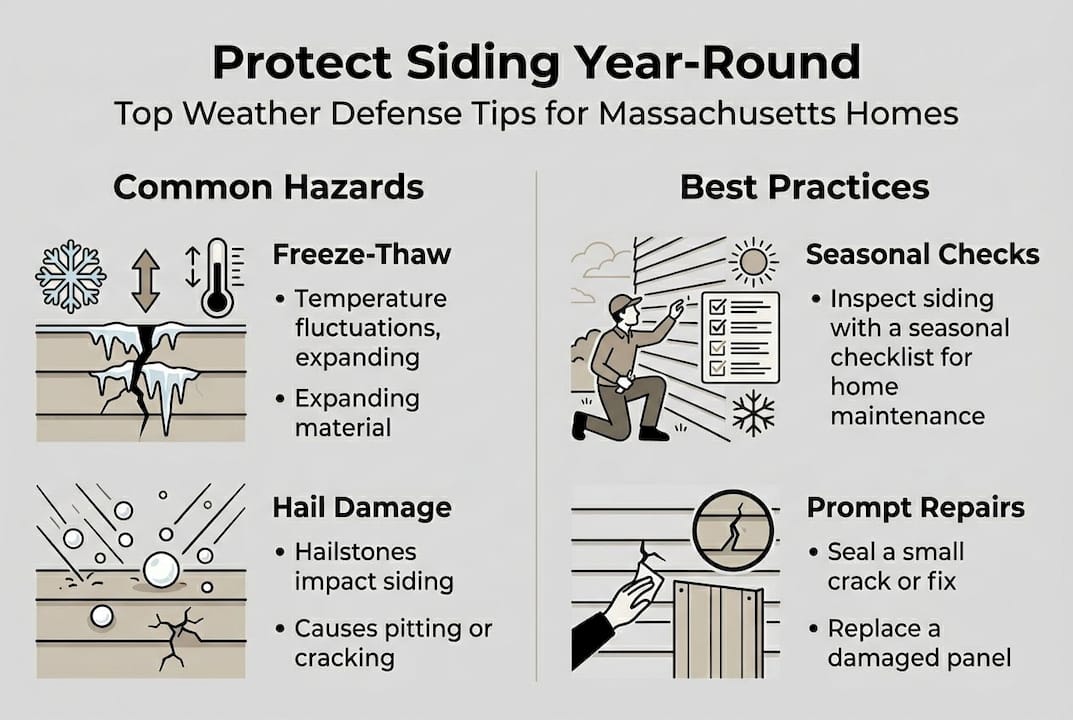
- Freeze-thaw cycles: Cause vinyl siding to crack and pull away from the wall as panels repeatedly expand and contract.
- Wind: Forces panels to flex, loosening fasteners over time and allowing moisture to get behind the surface.
- Hail: Even small hailstones dent or puncture vinyl, while repeated strikes chip away at fiber cement edges.
- Heavy rain: Infiltrates gaps opened by wind or freeze damage, leading to moisture problems behind the siding.
- Snow and ice accumulation: Adds weight and pressure to siding panels, especially lower courses near the foundation.
For ice specifically, one of the most overlooked risks in Massachusetts is ice dams forming along rooflines, which can push water behind siding and into wall cavities. Reviewing ice dam prevention tips alongside your siding strategy is worth the effort.
“Storm events don’t just cause immediate visible damage. Each impact, each freeze cycle, and each burst of wind accelerates the underlying aging of your siding materials, often in ways that aren’t obvious until years later.”
Research on cumulative hail effects reveals something that many homeowners find surprising: sub-severe hail cumulatively weakens siding materials through repeated granule loss and micro-impacts, accelerating aging even when no single storm causes obvious damage. Massachusetts storms regularly produce this type of weather. Pairing solid storm protection strategies with quality siding is the smarter approach for this region.
How different siding types respond to weather extremes
Not all siding handles Massachusetts winters and storms the same way. The material you choose makes a real difference in how long your home’s exterior stays intact and attractive.
Vinyl siding is the most common choice for Massachusetts homeowners because of its low upfront cost and easy installation. But vinyl has a well-documented weakness in cold climates: it becomes brittle below freezing, which means hail strikes, flying debris, or even accidental impacts can crack it when temperatures are low. The expansion and contraction from freeze-thaw cycles also causes panels to loosen from their fastening strips over time.
Fiber cement siding is denser and far more stable. Research confirms that fiber cement resists freeze-thaw damage, moisture infiltration, and physical impacts better than vinyl or wood, and it typically lasts 30 to 50 years compared to vinyl’s 20 to 40 years. That’s a meaningful lifespan difference for a Massachusetts home.
Wood siding has aesthetic appeal but is genuinely vulnerable in New England’s climate. Moisture causes wood to swell, rot, and warp. Paint and sealant protect it, but regular repainting is required and any gap in that maintenance can lead to water intrusion.
Here’s a quick side-by-side comparison:
| Feature | Vinyl | Fiber cement | Wood |
|---|---|---|---|
| Freeze-thaw resistance | Low | High | Medium |
| Moisture resistance | Medium | High | Low |
| Impact resistance | Low (cold) | High | Medium |
| Typical lifespan | 20-40 years | 30-50 years | 15-30 years |
| Maintenance needs | Low | Low-medium | High |
If you’re already noticing issues like cracks, warping, or bubbling on your current siding, these signs siding needs replacement can help you decide whether repair or a full upgrade makes more sense.
Pro Tip: When choosing new siding for a Massachusetts home, prioritize materials tested in freeze-thaw conditions. A slightly higher upfront investment in fiber cement often pays for itself in lower repair costs and longer service life.
- Assess your current siding material before the next harsh season.
- Compare expected lifespan against your home’s age and your long-term plans.
- Factor in maintenance costs over the full lifespan, not just the installation price.
- Get a professional evaluation to see how your current siding is holding up to local weather.
How storms, hail, and ice impact your siding over time
The damage from a single major storm is obvious. What’s harder to see is how repeated, moderate weather events slowly degrade your siding year after year. This is where most Massachusetts homeowners get caught off guard.
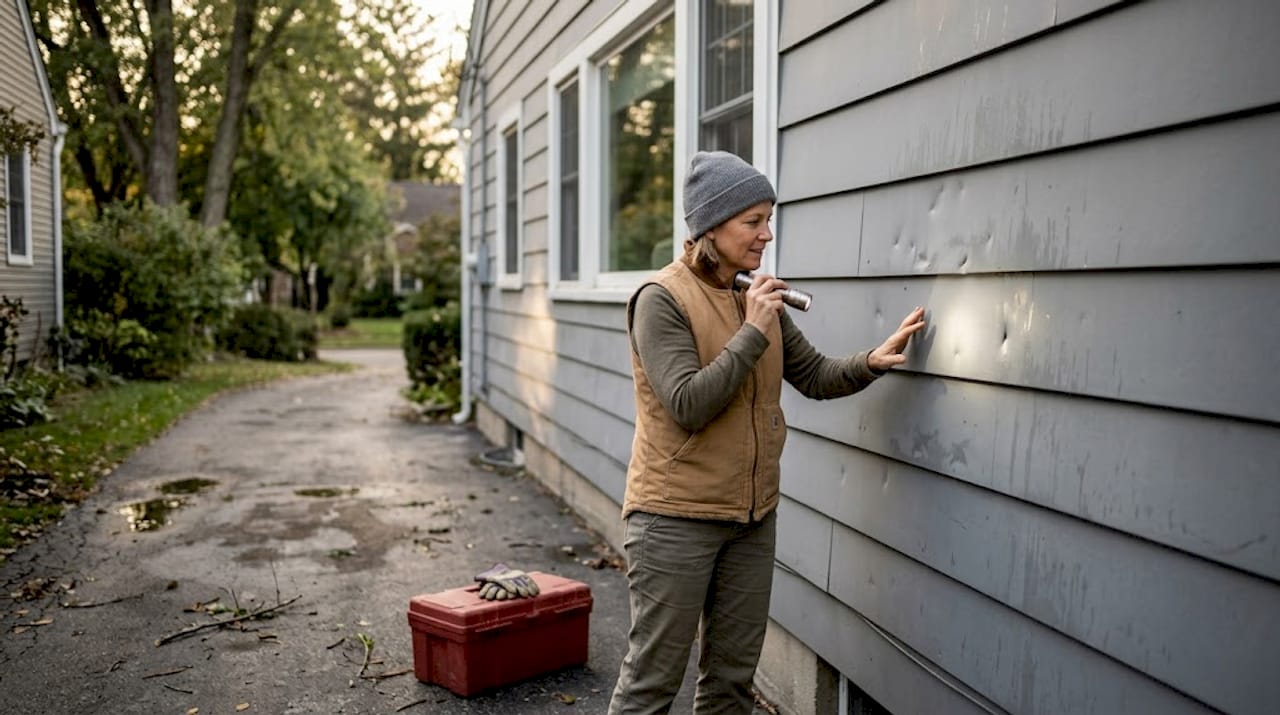
Research shows that wind and hail cause cracking and denting in vinyl (which is especially brittle in cold temperatures), chipping in fiber cement, and that ice and snow weight warps siding panels over time. These aren’t just cosmetic issues. Warped panels allow air and moisture to enter wall cavities, contributing to energy loss and potential mold growth inside your walls.
Hail is a particularly tricky threat. Studies on storm damage patterns show that sub-severe hail accelerates aging through repeated micro-impacts, even when the stones are too small to leave obvious dents. Over multiple storm seasons, this compounds significantly.
Here’s how cumulative damage builds by siding type:
| Weather event | Vinyl impact | Fiber cement impact |
|---|---|---|
| Freeze-thaw cycling | Cracking, panel gaps | Minimal if properly sealed |
| Hail (sub-severe) | Surface erosion, micro-cracks | Edge chipping over time |
| Snow/ice weight | Warping, panel distortion | More stable, less warping |
| Wind-driven rain | Water intrusion behind panels | Better resistance with proper install |
The key takeaways from this pattern:
- Damage is cumulative and often invisible until a threshold is crossed.
- Vinyl is most at risk from hail and freeze-thaw in Massachusetts conditions.
- Even fiber cement needs periodic inspection to catch edge chipping before it allows moisture in.
- Snow load on lower siding panels deserves attention every winter.
Staying ahead of this requires a seasonal mindset. Following a solid seasonal maintenance checklist after each major weather event helps catch damage before it compounds. For specific cold-weather prep, the winterizing tips offer practical steps that apply to siding as much as to decks and other exterior surfaces.
Smart strategies to protect siding from Massachusetts weather
Knowing what damages siding is only half the equation. The other half is building a consistent protection routine that keeps small issues from becoming expensive failures.
Here’s a practical approach to siding protection built for Massachusetts conditions:
- Inspect twice a year: Walk the perimeter of your home in spring and fall. Look for cracks, gaps, warping, or discoloration. Catching problems early is always cheaper than fixing full panel damage.
- Clean your siding annually: Dirt, mold, and algae buildup hold moisture against the surface, accelerating wear. Learning how to clean siding properly prevents unnecessary surface degradation.
- Repair minor damage before winter: A small crack in vinyl that’s ignored through fall will almost certainly worsen through the first freeze-thaw cycle of winter.
- Address caulking and seals: Check around windows, doors, and corners where siding meets trim. Failed caulk is an open door for moisture.
- Consider upgrading materials: If your vinyl siding is older than 20 years, the investment in fiber cement pays dividends. Research confirms that fiber cement lasts 30-50 years while resisting the freeze-thaw, moisture, and impact challenges Massachusetts throws at it.
Pro Tip: Seal all panel edges and trim joints with a high-quality exterior caulk rated for freeze-thaw conditions before each winter season. This single step prevents the majority of moisture infiltration problems.
Additional steps worth building into your routine:
- Trim back tree branches that hang over or brush against siding during wind storms.
- Clear snow from lower siding panels after heavy snowfall to reduce prolonged weight and moisture contact.
- Check for ice dam formation at rooflines each winter, as meltwater running behind siding causes hidden damage.
Using a complete winterize home checklist that covers all exterior surfaces gives you a reliable system rather than relying on memory each season.
What most Massachusetts homeowners overlook about siding longevity
Here’s what 15-plus years of working on Massachusetts home exteriors has taught us: most homeowners worry about the big storms. They check their siding after a named nor’easter or a hail event that makes the local news. That’s understandable. But the reality is that the quiet, repeated weather events are usually what actually shortens siding life.
Scientific research on storm damage confirms that cumulative sub-severe hail impacts weaken materials through granule loss and micro-damage over time. In Massachusetts, this type of storm activity is seasonal and frequent. The failure isn’t dramatic. It builds slowly until one winter the damage becomes impossible to ignore and the repair costs are far higher than they would have been with earlier attention.
The homeowners who get the best value from their siding are the ones who treat it like a maintenance item, not just an installation. Acting before visible damage appears, rather than waiting for cracks or gaps to become obvious, is what separates a 40-year siding lifespan from a 20-year one. If you’re unsure where your current siding stands, a professional assessment of new siding signs gives you a clear starting point.
Enhance, protect, and upgrade your home siding with expert help
Understanding how Massachusetts weather damages siding is the first step. Taking action on that knowledge is what protects your investment and keeps your home looking sharp for decades. Whether you’re dealing with an aging vinyl installation, thinking about upgrading to fiber cement, or simply want a professional eye on your current exterior, expert guidance makes a real difference.

At Sabatalo Contracting, we’ve been working with Massachusetts homeowners on siding, roofing, and exterior upgrades for over 15 years. We know exactly what local weather does to home exteriors and how to fix it. From helping you increase home value through the right material upgrades to connecting you with experienced Massachusetts siding contractors, we’re ready to help. If you’re thinking about selling, we also specialize in helping homeowners prepare home sale exterior upgrades that make a strong first impression.
Frequently asked questions
What is the most weather-resistant siding for Massachusetts homes?
Fiber cement siding lasts 30-50 years and resists freeze-thaw cycles, moisture, and physical impacts better than vinyl or wood, making it the top choice for Massachusetts’ demanding climate.
How does hail affect siding durability?
Wind and hail crack and dent vinyl, especially when it’s cold and brittle, while fiber cement holds up to impacts but can chip at the edges over time with repeated strikes.
What routine maintenance extends siding life in harsh climates?
Annual inspections, prompt repairs before winter, and regular cleaning prevent moisture infiltration and surface deterioration, which are the two biggest drivers of premature siding failure in Massachusetts.
Are small weather events as damaging as major storms?
Yes. Sub-severe hail and freeze-thaw cycles cumulatively weaken siding materials over multiple seasons, often causing more total damage than a single major storm event.
Recommended
- Signs You Need New Siding: Complete Guide for MA Homes | Sabatalo Contracting
- Roof Damage Repair Near Me – Protecting Your Massachusetts Home | Sabatalo Contracting
- Siding And Window Replacement Cost In Massachusetts | Sabatalo Contracting
- Storm Roofing Company: Protecting Massachusetts Homes | Sabatalo Contracting
- Siding Maintenance Guide 2026: Cut Storm Damage 40% & Save 15%
