Moss growing on your roof isn’t just unsightly; it actively damages your shingles, traps moisture, and can shorten your roof’s lifespan by years. Massachusetts homeowners face this challenge more than most due to the state’s humid climate, abundant shade, and coastal conditions that create perfect breeding grounds for moss, algae, and lichen. This comprehensive guide walks you through professional removal methods, prevention strategies, and maintenance practices to keep your roof clean, functional, and attractive for decades to come.
Table of Contents
- Why Moss Grows On Roofs And Why It Matters In Massachusetts
- Preparing For Moss Removal: What Homeowners Need To Know
- Step-By-Step Guide To Effective Roof Moss Removal
- Maintaining A Moss-Free Roof: Prevention And Long-Term Care
- Protect Your Home With Professional Roof Moss Removal Services In Massachusetts
Key takeaways
| Point | Details |
|---|---|
| Soft washing is safest | Low-pressure cleaning with eco-friendly solutions removes moss without damaging shingles. |
| Manual and chemical methods | Each approach has specific benefits; professionals combine techniques for optimal results. |
| Prevention extends roof life | Zinc strips, regular cleaning, and tree trimming stop regrowth and protect your investment. |
| Professional services recommended | Complex roofs, steep pitches, and extensive moss coverage require expert handling for safety. |
Why moss grows on roofs and why it matters in Massachusetts
Moss thrives in environments with consistent moisture, limited sunlight, and organic debris. Your roof provides all three when conditions align. Shaded areas, poor ventilation, and accumulated leaves or pine needles create the perfect habitat for moss spores to take hold and spread. Once established, moss acts like a sponge, holding water against your shingles long after rain stops.
Massachusetts’s humid climate particularly encourages moss, algae, and lichen growth. The state’s combination of coastal moisture, tree cover, and seasonal temperature fluctuations means roofs stay damp longer than in drier regions. North-facing roof slopes receive less direct sunlight, staying cool and moist throughout the day. Low-pitch roofs drain slowly, allowing water to pool and moss to establish deeper root systems.
The damage moss causes goes beyond aesthetics. Moisture trapped by moss lifts shingle edges, creating gaps where water infiltrates the underlayment and decking. This leads to rot, leaks, and premature roof failure. Moss roots work into the granular surface of asphalt shingles, breaking down the protective layer that shields against UV damage and weathering. What starts as a small green patch can reduce your roof’s expected lifespan from 25 years to 15 or less.
Key factors that accelerate moss growth on Massachusetts roofs include:
- Overhanging tree branches that block sunlight and drop organic debris
- Clogged gutters that overflow and keep roof edges perpetually wet
- Poor attic ventilation that creates condensation on the underside of roof decking
- Proximity to bodies of water or heavily wooded areas with high ambient humidity
Ignoring moss growth affects your home’s curb appeal and resale value. Potential buyers see a moss-covered roof as a red flag indicating deferred maintenance and potential hidden damage. Regular annual roof inspections catch moss early, before it becomes a costly problem requiring full replacement.
Preparing for moss removal: what homeowners need to know
Safety must be your first consideration before attempting any roof work. Steep pitches, wet surfaces, and unstable footing create serious fall risks. If your roof has a pitch steeper than 6:12 or moss coverage exceeding 30% of the surface area, professional moss removal services are recommended. Professionals have proper safety equipment, insurance, and experience working at heights.
For homeowners tackling smaller moss problems on accessible roofs, gather the right tools before starting. You’ll need a soft-bristle brush or broom, eco-friendly moss treatment solution, garden sprayer with adjustable nozzle, safety harness or roof jacks, non-slip shoes, and eye protection. Avoid metal scrapers or wire brushes that gouge shingles and create more damage than the moss itself.
Choosing between DIY and professional services depends on several factors. Consider the extent of moss coverage, your roof’s age and condition, your comfort working at heights, and whether you want a warranty on the work. When evaluating contractors, inquire about their methods to ensure they use shingle-safe techniques and environmentally responsible products. Companies offering warranties demonstrate confidence in their work and provide recourse if moss returns prematurely.
Pro Tip: Schedule moss removal during dry weather when shingles have maximum grip and treatments can penetrate effectively. Wet or frosty conditions make roofs dangerously slippery and reduce chemical effectiveness.
Never use pressure washing or harsh chemical cleaners on asphalt shingles. High-pressure water blasts away protective granules, shortening your roof’s lifespan more than the moss itself. Bleach-based solutions kill moss but also damage plants, corrode metal flashings, and require extensive rinsing. The table below compares common removal approaches:
| Method | Effectiveness | Shingle Safety | Cost | Best For |
|---|---|---|---|---|
| Manual brushing | Moderate | High if gentle | Low | Small patches, accessible areas |
| Chemical treatment | High | Moderate | Moderate | Widespread moss, prevention |
| Soft washing | Very high | Very high | Moderate to high | All roof types, professional results |
| Pressure washing | High | Very low | Low to moderate | Never recommended for shingles |
Understanding these preparation steps ensures you approach moss removal with realistic expectations and proper resources. Whether you choose DIY or hire professionals, knowing what safe removal looks like protects your investment and prevents costly mistakes. Following professional roofing standards ensures work meets industry best practices.
Step-by-step guide to effective roof moss removal
Begin by inspecting your entire roof from ground level using binoculars to identify all affected areas. Check weather forecasts to ensure at least 48 hours of dry conditions after treatment. Clear debris from gutters and roof valleys so runoff flows freely during rinsing.
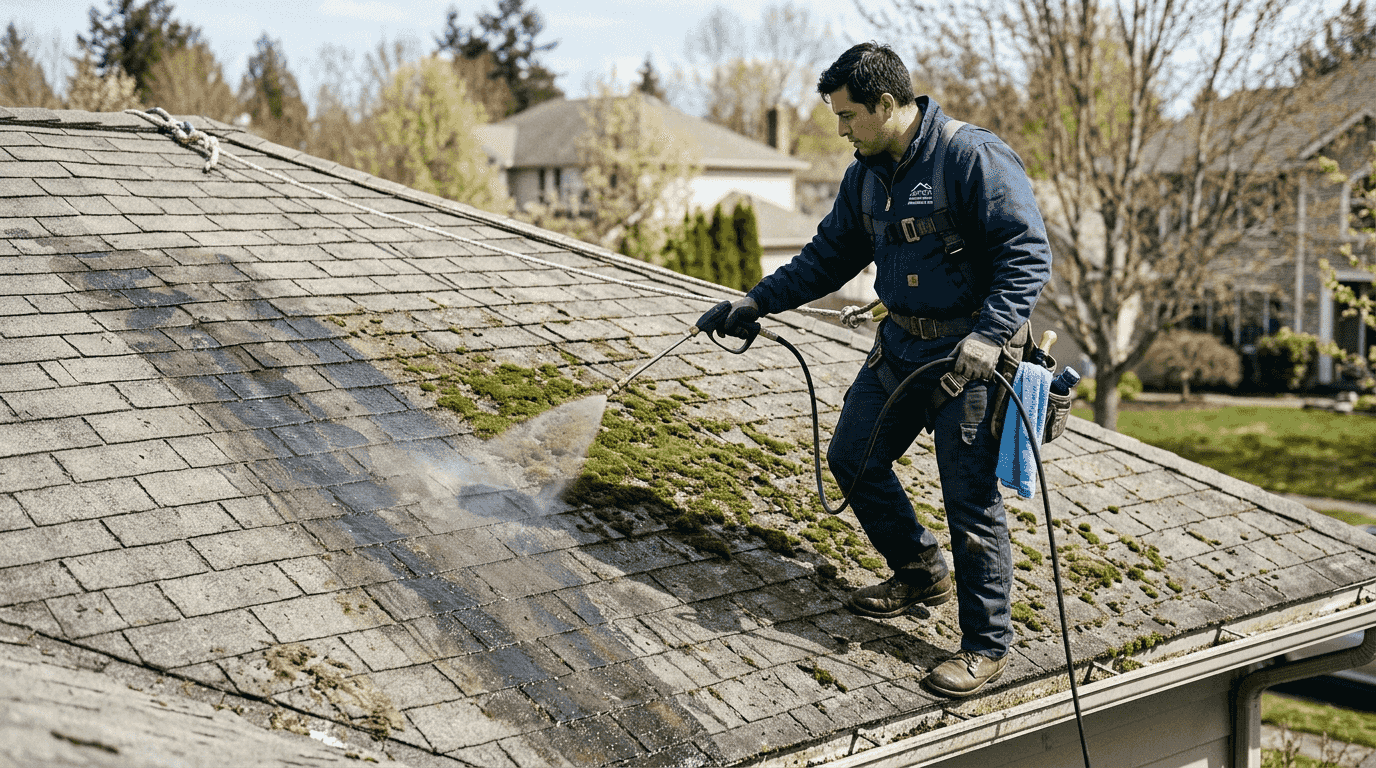
- Apply professional-grade soft-wash solution using a garden sprayer, starting at the roof peak and working downward. Avoid over-saturating areas where runoff could damage landscaping.
- Allow the treatment to dwell for the manufacturer’s recommended time, typically 15 to 30 minutes. The solution kills moss at the root level without requiring aggressive scrubbing.
- Gently rinse treated areas with a garden hose using low pressure, letting gravity do most of the work. Direct water flow downward, never upward under shingles.
- Remove loosened moss with a soft brush, using light downward strokes that follow the shingle pattern. Never brush upward or sideways, which lifts shingle edges.
- Clean gutters immediately after rinsing to prevent moss debris from clogging downspouts and creating new moisture problems.
Soft-wash roof cleaning safely removes moss and algae without damaging shingles, with results lasting at least two years when combined with preventive measures. This method uses biodegradable surfactants that break down moss’s grip on shingles while killing spores to prevent regrowth.
Pro Tip: Work in sections no larger than 10 by 10 feet to maintain control over chemical application and rinsing. This prevents solution from drying on shingles before you can rinse it properly.
Timing your removal correctly maximizes effectiveness and minimizes risk. Spring and fall offer moderate temperatures that keep chemicals active without evaporating too quickly. Avoid summer’s intense heat, which can cause rapid drying and reduced penetration. Winter freezing makes roofs hazardous and renders most treatments ineffective.
After completing removal, inspect your work from multiple angles to identify any missed spots. Stubborn patches may require a second application after the initial treatment has had time to work. Document before and after conditions with photos for your maintenance records. This helps track moss patterns and informs future prevention strategies.
Incorporate roof cleaning into your regular spring cleaning checklist to catch moss early. Early intervention requires less aggressive treatment and prevents the deep root systems that cause shingle damage. Consistent maintenance costs less than emergency repairs from neglected moss problems.
Maintaining a moss-free roof: prevention and long-term care
Prevention delivers better long-term results than repeated removal. Installing zinc or copper strips along your roof ridge creates a protective barrier that inhibits moss growth for years. These metal strips release ions when it rains, washing down the roof and creating an environment hostile to moss, algae, and lichen.
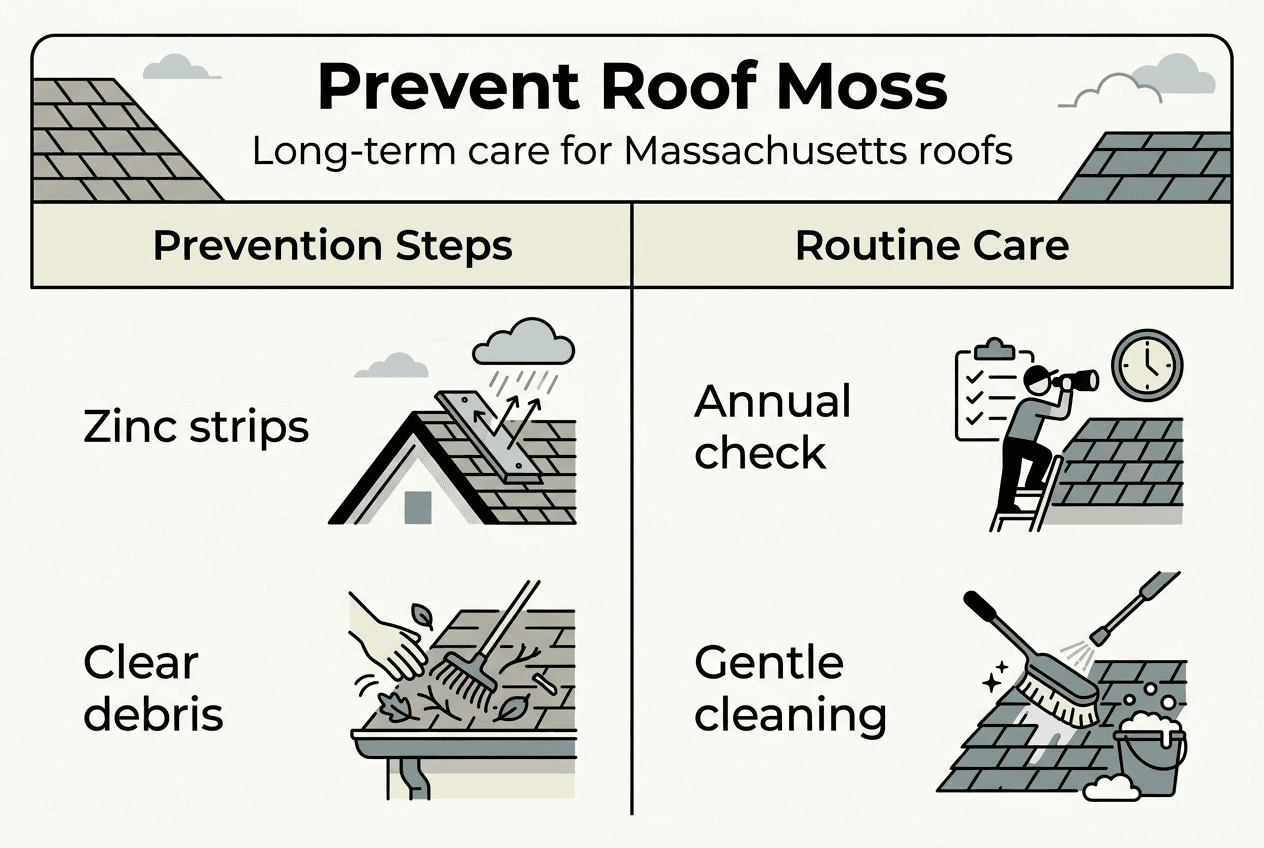
Position strips 2 to 3 inches below the ridge cap, ensuring at least 2 inches of metal remains exposed to rainfall. As water flows over the metal, it picks up trace amounts of zinc or copper ions that coat shingles below. This microscopic layer prevents moss spores from establishing without harming the shingles themselves. One properly installed strip protects approximately 15 to 20 feet of roof below it.
Regular cleaning, gutter maintenance, and tree trimming are essential to prevent moss. Schedule professional inspections twice yearly to catch problems early. Clean gutters every spring and fall, removing leaves, pine needles, and other organic matter that holds moisture. Trim tree branches to allow at least 6 feet of clearance above your roof, improving sunlight exposure and air circulation.
Environmental management reduces conditions that favor moss growth:
- Remove overhanging branches that create perpetual shade on roof surfaces
- Improve attic ventilation to reduce condensation and moisture buildup
- Install gutter guards to minimize debris accumulation between cleanings
- Apply preventive treatments annually in early spring before moss season begins
Compare prevention methods to find the right combination for your situation:
| Prevention Method | Upfront Cost | Longevity | Maintenance | Effectiveness |
|---|---|---|---|---|
| Zinc/copper strips | Moderate | 10+ years | None | Very high |
| Regular cleaning | Low | Ongoing | Seasonal | High |
| Chemical treatments | Low to moderate | 1 to 2 years | Annual | Moderate to high |
| Tree trimming | Moderate | 2 to 3 years | Periodic | Moderate |
Combining multiple prevention strategies provides the most comprehensive protection. Zinc strips offer passive, long-term defense while regular cleaning addresses immediate threats. Chemical treatments fill gaps during high-risk periods, and environmental management tackles root causes.
Document your prevention efforts in a maintenance log, noting dates, products used, and observed results. This record helps identify patterns, such as specific roof areas prone to regrowth or seasons when moss appears most aggressively. Use these insights to refine your approach over time, focusing resources where they deliver maximum impact.
Consistent prevention costs a fraction of premature roof replacement. A new asphalt shingle roof in Massachusetts averages $8,000 to $15,000, while annual prevention runs $200 to $500 when combining DIY cleaning with professional treatments. Following a comprehensive seasonal home maintenance plan protects your investment and maintains your home’s value.
Protect your home with professional roof moss removal services in Massachusetts
When moss coverage exceeds what you can safely handle, or when you want guaranteed results backed by warranty, professional services deliver peace of mind. Experienced contractors use commercial-grade soft-wash systems that penetrate deeper than consumer products, killing moss at the root level and preventing regrowth for years.

Qualified roofing professionals assess your entire roof system, identifying not just moss but underlying issues like damaged flashing, worn shingles, or ventilation problems that contribute to moisture retention. They provide comprehensive solutions that address causes, not just symptoms. Professional moss removal improves curb appeal immediately, making your home more attractive to visitors and potential buyers.
Investing in expert moss removal protects your home’s value and extends your roof’s functional life. The cost of professional treatment represents a fraction of premature replacement expenses while delivering superior, longer-lasting results. Massachusetts-based contractors understand local climate challenges and tailor their approaches to regional conditions. Learn how exterior improvements increase home value and discover strategies for maximizing curb appeal when preparing your home for sale.
FAQ
What is the safest method to remove moss from my roof?
Soft washing is considered the safest method, using low-pressure application of biodegradable cleaning solutions that kill moss without damaging shingles. This approach avoids the granule loss and shingle lifting caused by pressure washing. Professional soft-wash systems penetrate moss roots, preventing regrowth for at least two years while protecting your roof’s integrity and warranty.
When is the best time of year to remove moss from my roof in Massachusetts?
Summer offers the best conditions because dry weather helps chemical treatments penetrate effectively and work efficiently. Warm temperatures keep solutions active longer without freezing or rapid evaporation. Dry conditions also make roof access safer, reducing slip hazards. Schedule removal during extended dry spells for optimal results. Plan moss removal as part of your summer home maintenance routine for best outcomes.
How can I prevent moss from growing back on my roof?
Installing zinc or copper strips along your roof ridge provides long-term prevention by releasing ions that inhibit moss growth when it rains. Combine metal strips with regular gutter cleaning to eliminate moisture sources and trim overhanging trees to increase sunlight exposure. Annual inspections catch new growth early, making treatment easier and less expensive. Follow a comprehensive seasonal maintenance checklist to stay ahead of moss problems.
Should I attempt DIY moss removal or hire a professional?
DIY attempts often lead to short-term results and risk damaging shingles through improper technique or harsh chemicals. Professionals offer safe, warranty-backed services using commercial-grade equipment and proven methods. If your roof has steep pitches, extensive moss coverage, or you’re uncomfortable working at heights, professional removal protects both you and your investment. Professionals also identify underlying issues that contribute to moss growth, providing comprehensive solutions rather than temporary fixes.
Recommended
- Annual Roof Inspections in Massachusetts: A 2025 Guide for Homeowners | Sabatalo Contracting
- Ice Dams on Roofs Prevention Guide for Homeowners | Sabatalo Contracting
- Roof Replacement Options for Massachusetts Homes | Sabatalo Contracting
- Roof Damage Repair Near Me – Protecting Your Massachusetts Home | Sabatalo Contracting
- Roof painting workflow for Melbourne heritage homes 2026
- Prevent Mold with HVAC: Protecting Tampa Homes
